
Is guilt good for us? Yes, says Chris Moore
Dal prof's book, The Power of Guilt, combines science and personal experience to tackle this complex emotion
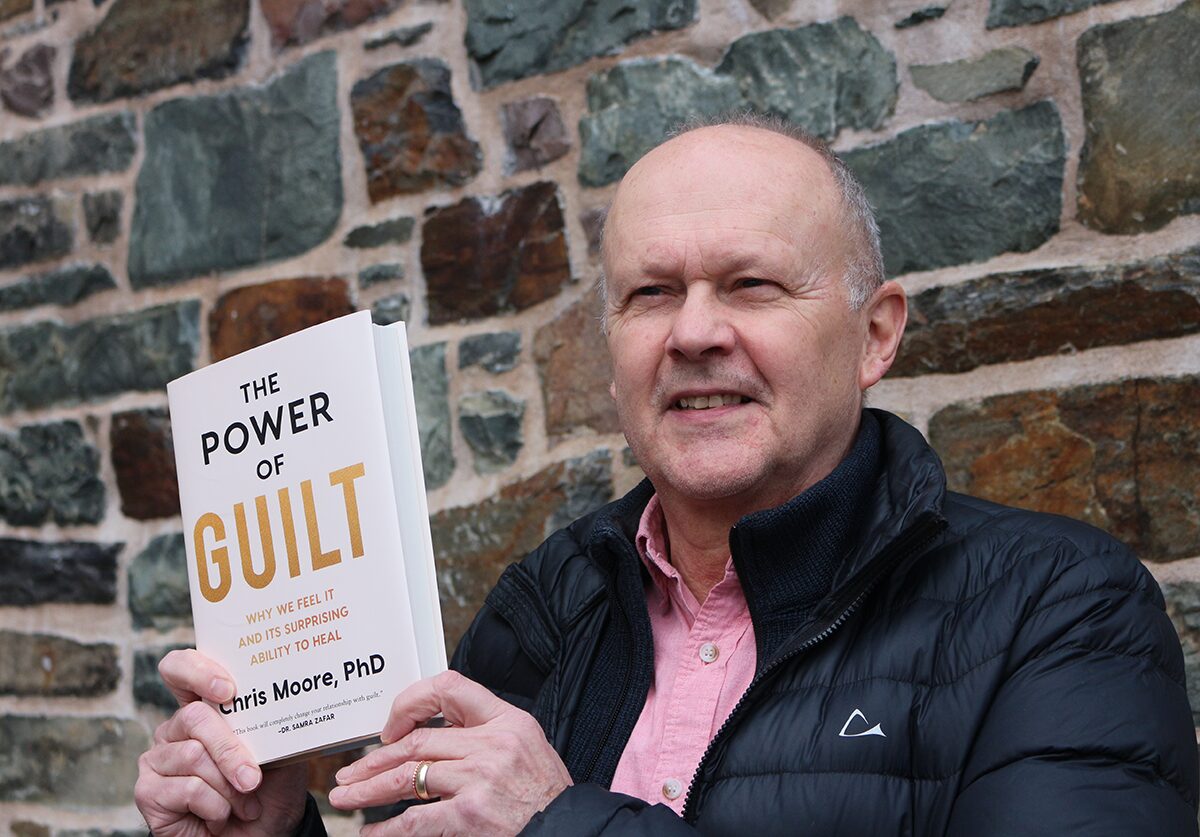
caption
Chris Moore poses with his first book, The Power of Guilt, outside The Social at Dalhousie University.Guilt is typically seen as a negative emotion. But for author and Dalhousie psychology and neuroscience professor Chris Moore, it was the start of a journey through healing, discovery, and a career in psychology.
The year was 1979. Moore was in his second year at Cambridge University in the U.K.
Exam season had ended, and Moore and a few of his friends decided to go to a party to celebrate.
“It was out of town from where we lived, we were all celebrating and had a lot to drink,” said Moore in a phone interview with The Signal.
“We were trying to figure out how to get home, and there was a car in the driveway with the keys in the ignition,” said Moore.
Moore and his friends took the car and started their drive back into town. Moore, who was in the passenger seat, fell asleep.
The next thing he remembers is sitting by the side of the road surrounded by ambulances and police cars.
The following day, Moore learned from his hospital bed that the car had hit a group of cyclists, fellow students, and one of them had died.
Moore said he was “in the depths of despair” following the accident. It was the forgiveness of the students who had been hit and friends of the victim that affected him most.
“I noticed, as a budding psychologist, that in offering their forgiveness, not just them but also my parents and other friends, the negative feelings I had, most importantly, the guilt and shame that I had, started to dissipate,” said Moore.
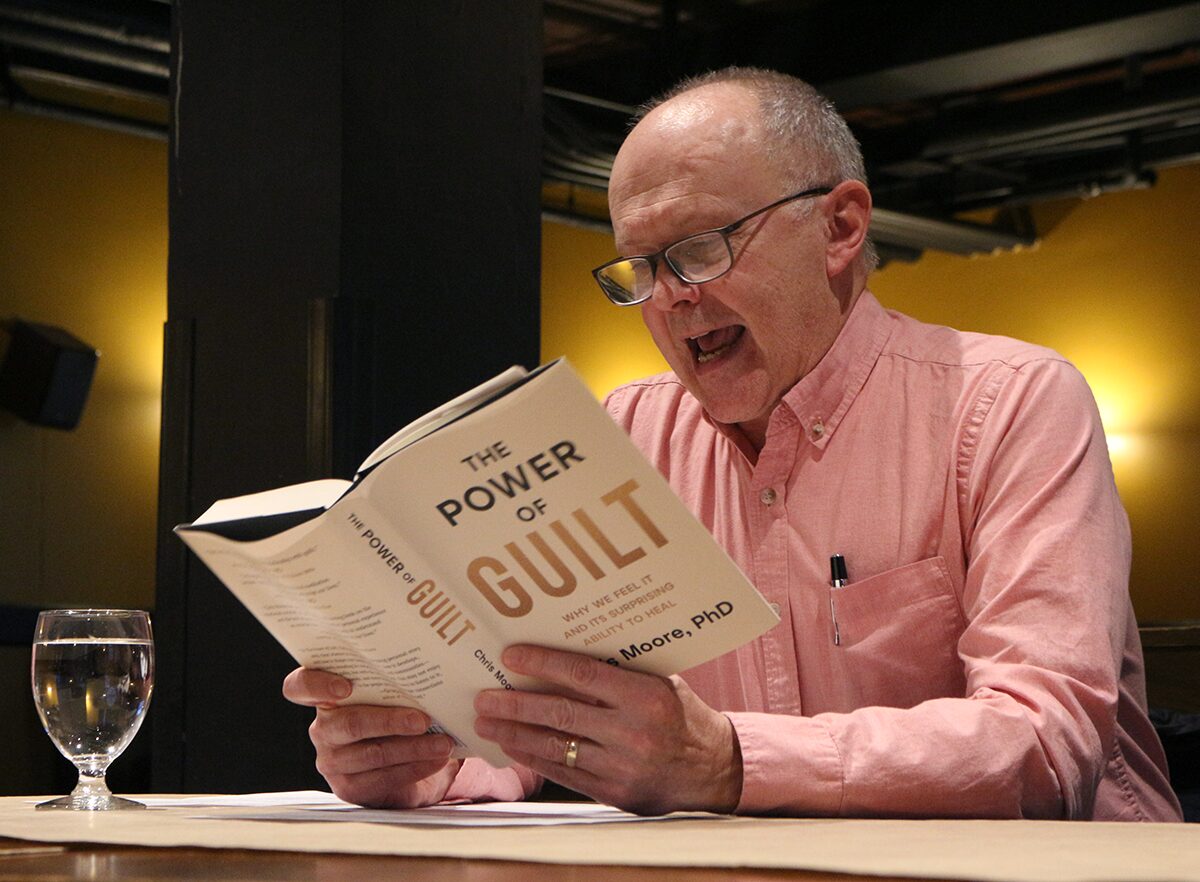
caption
Chris Moore reads a passage from The Power of Guilt for his friends and colleagues on Tuesday night at The Social.Moore has had a long career in psychology and was the dean of science at Dalhousie University until 2021. But his fascination with guilt never truly left him. In Halifax this week, Moore celebrated the release of his debut book on the subject: The Power of Guilt: Why We Feel It and Its Surprising Ability to Heal.
“I sort of feel like in a way, I was carrying a secret around with me,” said Moore. “And now it’s out in the open, and everybody knows.”
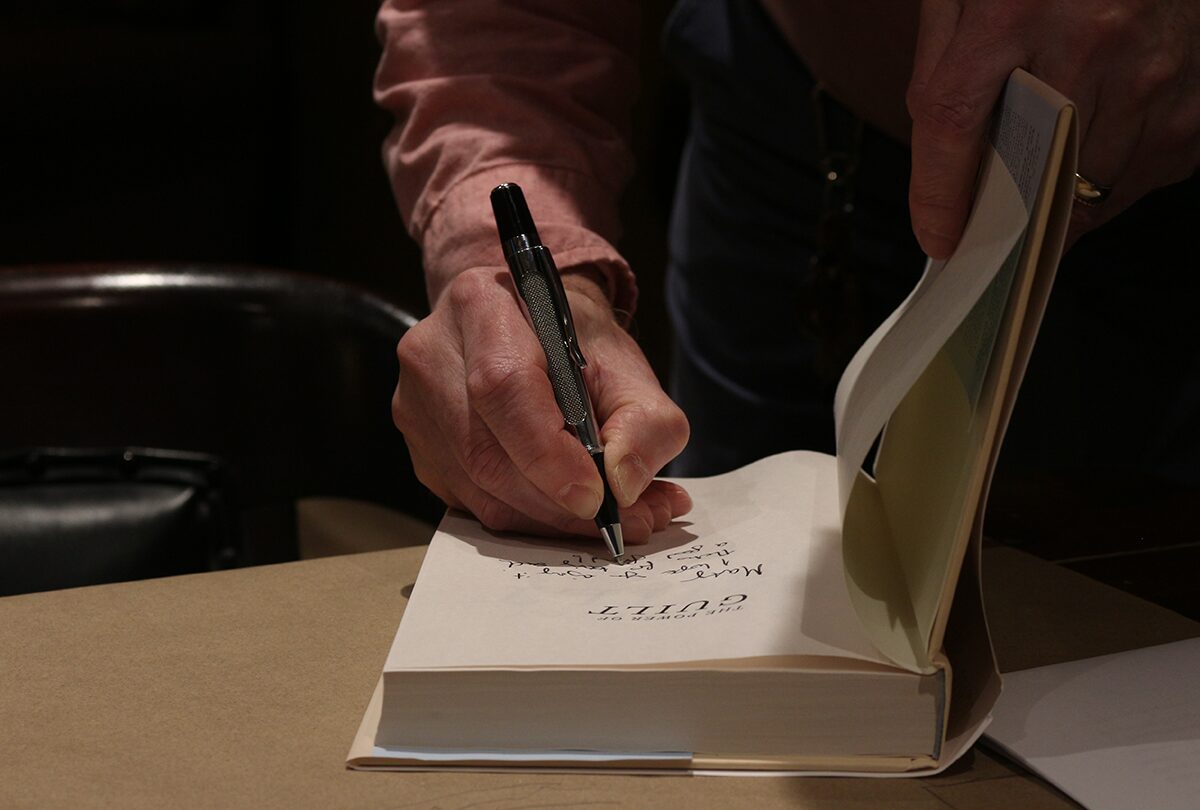
caption
Chris Moore signs The Power of Guilt at The Social on Tuesday night.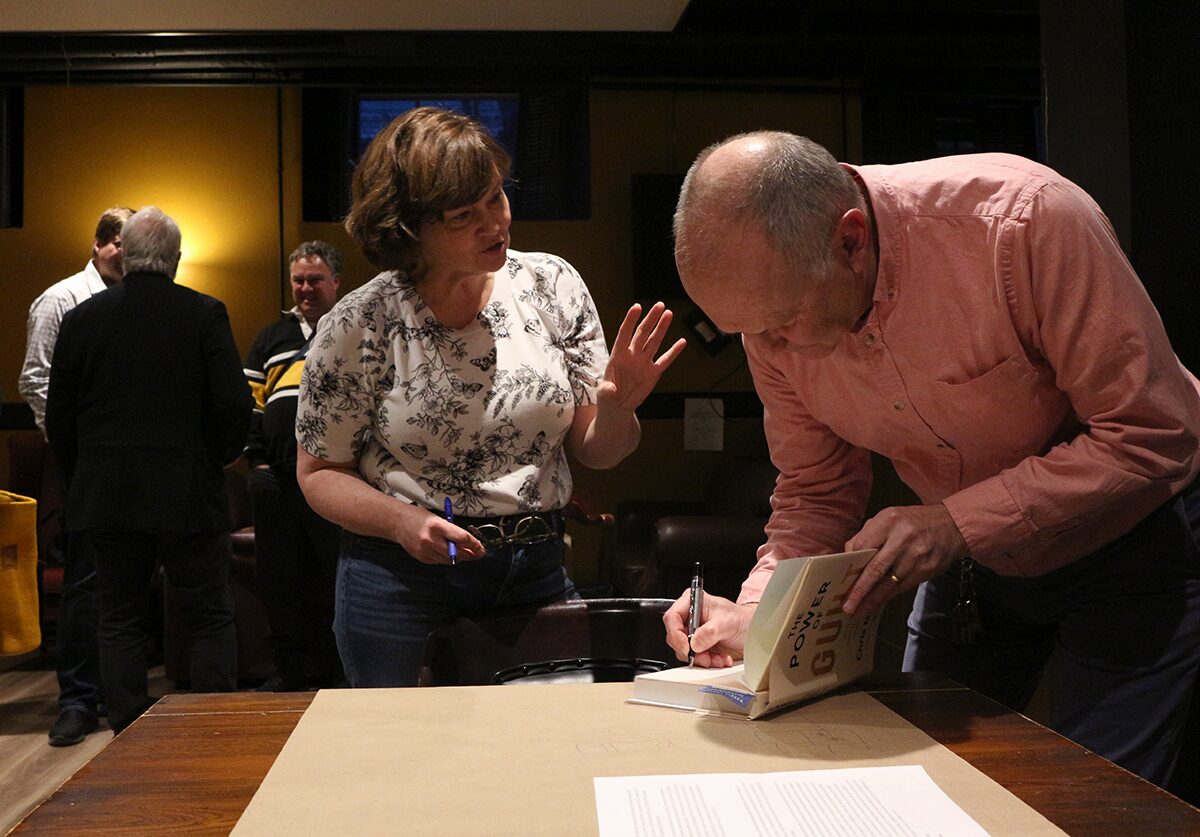
caption
Chris Moore signs a copy of his book, The Power of Guilt, for a reception attendee.The book challenges preconceived notions of guilt as a negative concept. In it, Moore argues that guilt is actually a positive force.
“It feels bad for sure, right? Nobody wants to feel guilt, but it actually has a positive function in that it motivates us under ideal circumstances,” said Moore. “It motivates us to try to heal relationships that have been damaged.”
Take gossip, for example. According to Moore, when a person gossips about someone they care about, they feel “terribly guilty.” Not over the action itself, but over how this action may damage their relationship with that person.
Guilt “is a relationship management emotion,” said Moore. “That’s the big picture.”
Sheila Blair-Reid, a colleague of Moore’s who attended the launch, said, “Anyone who reads it can see parts of their own life in the book. So I’m very proud of him and excited for him.”
caption
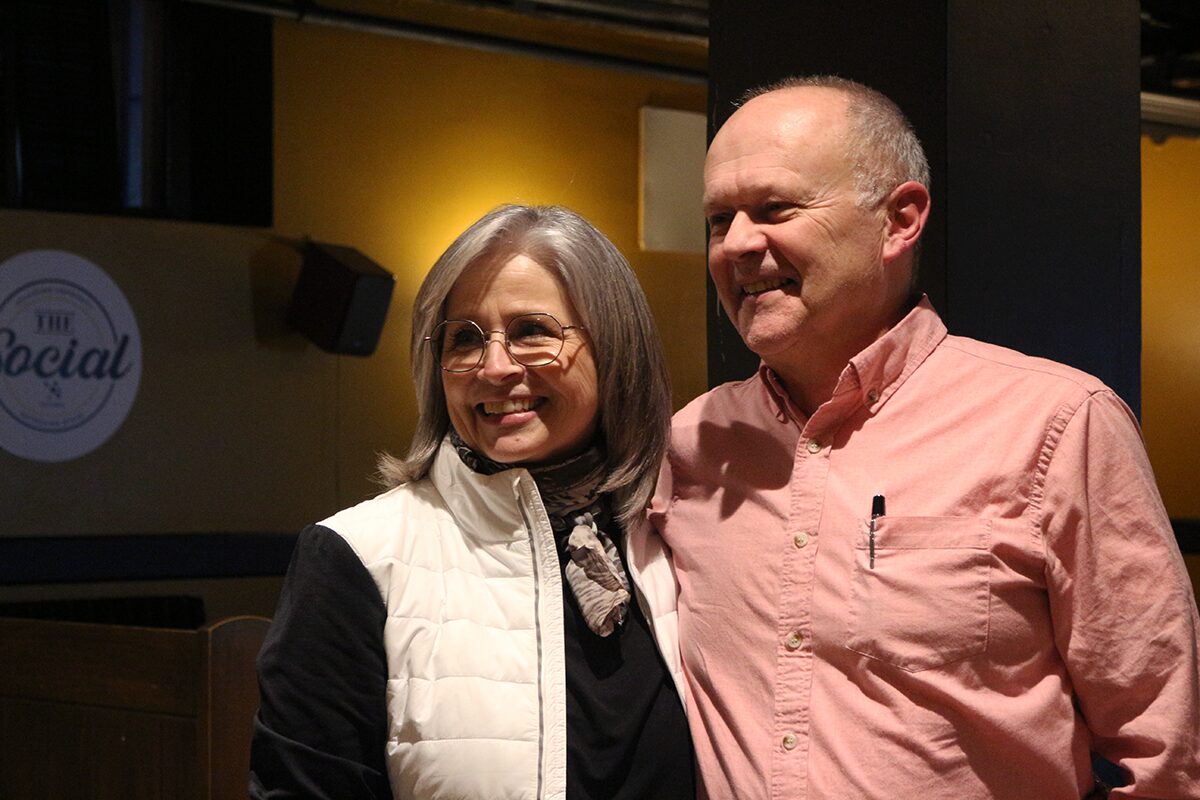
Chris Moore with his wife Shannon Macgillivray. Moore references his wife’s own experiences with guilt in his book.Callia Fieldhouse is a fifth-year undergraduate student. She was a part of one of Moore’s seminars last semester.
“He discussed the book with us quite a bit,” said Fieldhouse. “And it struck my interest.”
Fieldhouse brought a copy of the book to the event, and Moore signed it.
At the end of the event, Moore expressed his thanks to the room for their support and encouragement. He teased that he is writing a new book, which he hopes to publish in the near future.
About the author

Serra Hamilton
...

Leave a Reply