Black dance celebrated at Dalhousie Art Gallery
It’s About Time: Dancing Black in Canada examines history of dance and resistance in Black communities

caption
Kay Macdonald performs their social-dance-inspired performance piece at the opening reception of It’s About Time: Dancing Black in Canada 1900-1970 and Now.Dancer Seika Boye noticed something curious when she was researching Canadian dance for Dance Collection Danse, the country’s only dance archive.
Boye, a trained dancer, dance scholar and professor at the University of Toronto, was inspired to curate an exhibition that opened on Thursday at Dalhousie Art Gallery.
“I noticed a real lack of folks who looked like me and Black dancers. At that time, [Dance Collection Danse] was very focused on dance made for the stage: so ballet, jazz, tap, musical theater, modern, also known as contemporary dance. It wasn’t as diverse in representation of social dances and street dances,” said Boye.
The gallery opened the exhibit with an event celebrating African Nova Scotian dance and music, featuring performances by Aquakulture, Kay Macdonald, George Elliott Clarke, and Studio 26 Dance Company.
It’s About Time: Dancing Black in Canada 1900-1970 and Now features a collection of archival materials that detail the sociopolitical context of dance in Canadian Black communities during the 20th century.
“Just because there aren’t resources about something doesn’t mean that there isn’t a rich history there to be documented. And so I set about doing that work.”
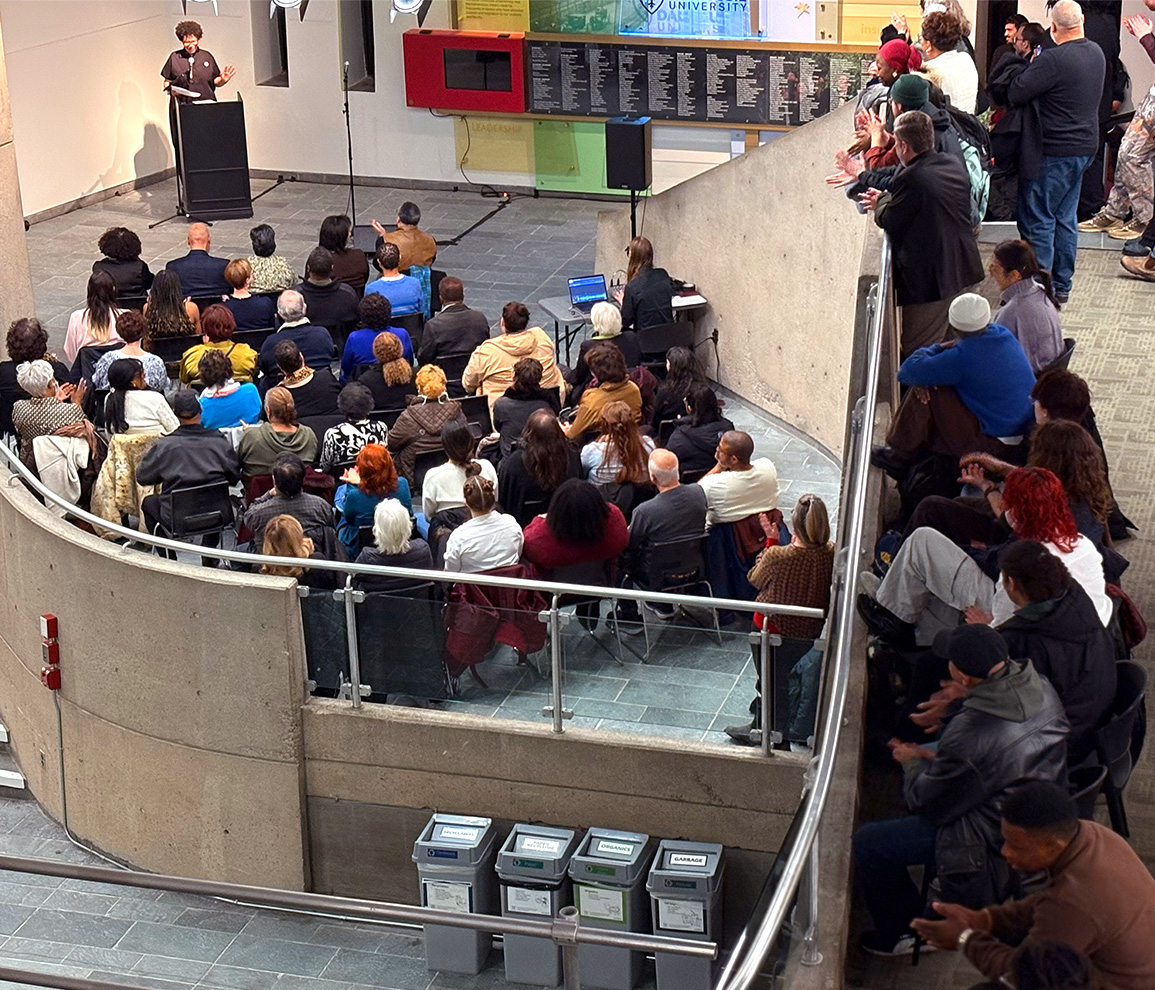
caption
Seika Boye presents to a crowd in the atrium of the Dalhousie Arts Centre at the opening reception for the exhibition she curated for the Dalhousie Art Gallery.Boye focused her doctoral research on the history of social dance in Canada, wanting to include both Halifax and Toronto communities, but was encouraged to focus on one community, Toronto, to begin with.
“One of the reasons for that is the histories are just so different,” Boye told the Signal in an interview before the opening. “It’s very meaningful to finally be here in Nova Scotia working with Pam Edmonds.”
Pamela Edmonds has been the director and curator of the Dalhousie Art Gallery for almost three years. She is dedicated to exhibiting and advocating for Black artists in the space. Edmonds and Boye included the work of contemporary Nova Scotian artists Anja Clyke, Ibe Ananaba, Allen D. Crooks, Kay Macdonald and Preston Pavlis in the exhibition.
“I think there’s an infectious joy in the show and in this type of movement,” Edmonds said.
The exhibition features a series of photographs by Allen D. Crooks from a family wedding in 2025. Crooks said his favourite photograph is of his uncle entering the wedding dancing.
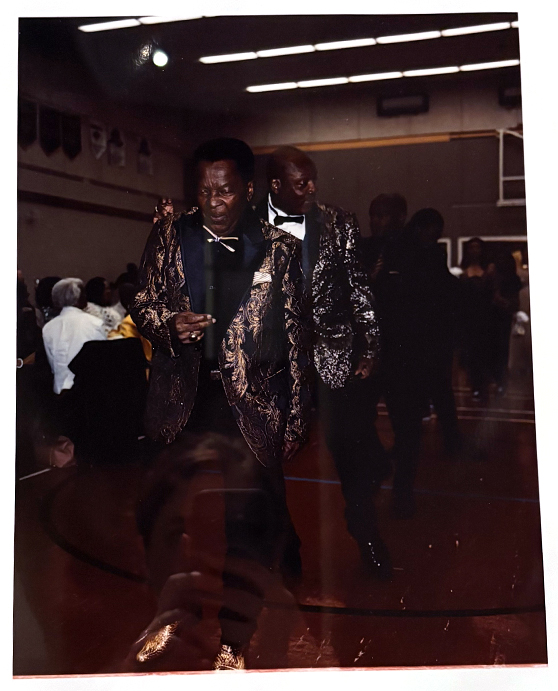
caption
Photographer Allen D. Crooks’ uncle enters his wedding dancing in the spring of 2025.“I get this shot, and I just love it because, you know, when you look at his face, you don’t know whether it’s the spirit of dance, or the fact that he’s going to renew his vows with the woman he married 50 years ago. It’s just got so much energy and joy.”

caption
Photographer Allen D. Crooks speaks about his work taken at a family wedding.Kay Macdonald is a Halifax-based African Nova Scotian performance artist who performed a social-dance-inspired piece to music produced and mixed by Carmel Farahbakhsh at the opening.
“I think in relation to anti-Black racism and the way Black communities have been required to flourish in this territory and in this place,” said Macdonald, the exhibition “provides us some reflection.”
Kay will perform throughout the exhibition’s run. They told the Signal that they hope people will be inspired by the exhibition and feel rooted in the reality of Canadian history.
George Elliott Clarke, who was on Boye’s doctoral research committee at the University of Toronto, attended the opening. He performed poetry and spoke about his upbringing in Nova Scotia.
“We need to remember that in Halifax, one of the issues in the 1960s that was perpetrated by the police was the idea that Black people were not allowed to stand on the sidewalk in front of their own homes,” Clarke told the Signal at the opening reception.
“The ability for our bodies to be free to move is still a political question. So in a sense, this archive is an archive of resistance, which may not have looked like resistance, except that it was resistance in a very physical way, by injecting one’s body into spaces where they weren’t supposed to be, and moving in ways that were also supposed to be incorrect.”
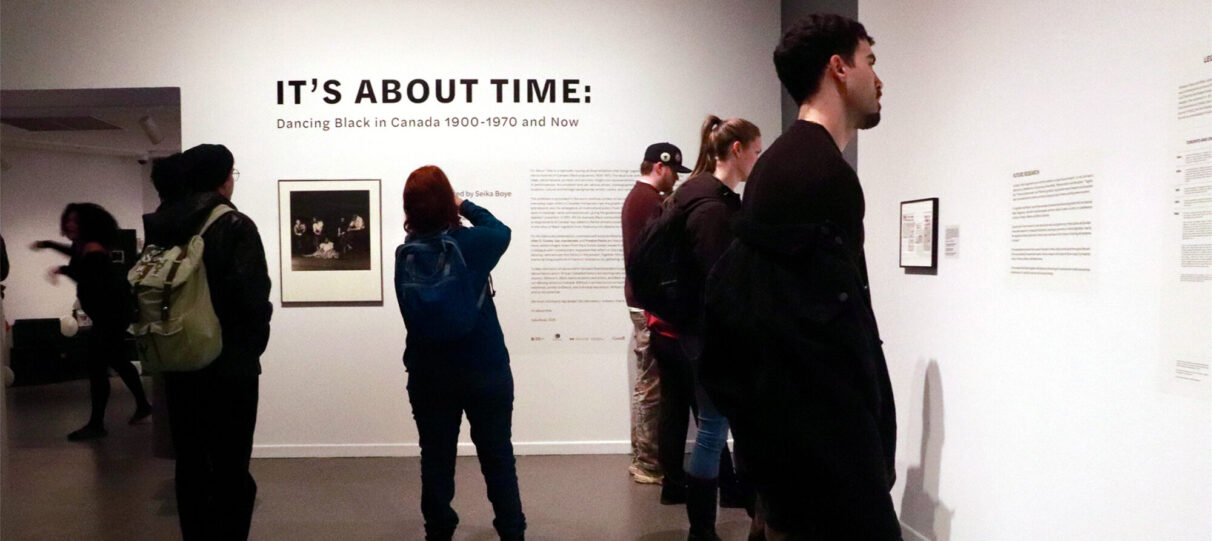
caption
Visitors look at the art at the Dalhousie Art Gallery opening reception for the latest exhibition, It’s About Time: Dancing Black in Canada 1900-1970 and Now.Alyssa Thomas is the co-owner of Studio 26 Dance Company. The Dartmouth-based dance company also performed at the opening reception.
“It was a great learning experience for the kids,” Thomas said. “I think sometimes they see dance as just what’s current and what’s happening now, and they don’t really understand the roots of dance and where it comes from and that people have been doing this, you know, since the beginning of time.”
Boye says she hopes the exhibition will prompt further research.
“I think there’s so much here that will reveal new and exciting nuances and details about Nova Scotian history.”
It’s About Time: Dancing Black in Canada 1900-1970 and Now will be open at the Dalhousie Art Gallery from Jan. 23 to April 12.