
Uranium exploration in N.S. decried as unsafe, damaging
Bridgewater forum discusses potential risks of mining, exploration
caption
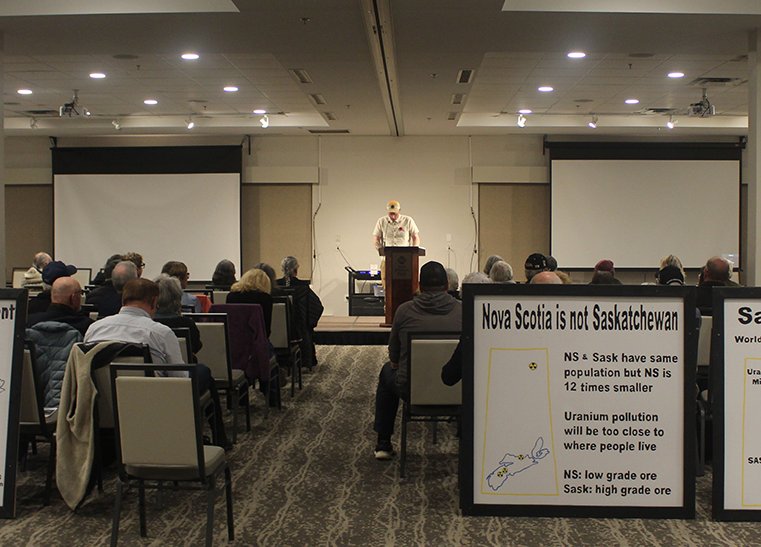
A.J. Jamieson speaks at a forum on the risks of uranium mining in Bridgewater, N.S.At a public event on Monday, East Dalhousie resident A.J. Jamieson shared his fears surrounding proposed uranium mining in the province.
Jamieson, whose son has Down syndrome, says uranium mining would put his son at increased risk of cancer.
“(Studies show) children with Down syndrome . . . (are) more likely to develop leukemia in their lifetime,” he said in an interview. “Leukemia is a cancer that is commonly associated with uranium exposure or increased levels of radiation in their environment.”
Jamieson organized the Nov. 9 information session in Bridgewater with Citizens Against Uranium Mining & Exploration in Nova Scotia. The event featured speakers with expertise in public health, geology, engineering and Mi’kmaw land rights.
In 1981, the province placed a moratorium on uranium mining, and in 2009 Darrell Dexter’s government entrenched the moratorium into law as a ban on uranium mining and exploration.
At the time, former minister of natural resources John MacDonell cited health concerns as a driving force behind the legislation.
But the Tim Houston government lifted the moratorium in March 2025, saying the province should allow for research and support industry.
Almost every booth at the Bridgewater information session featured a petition to restore the ban on uranium mining and exploration. As of September, the petition has over 10,000 signatures.
Surprise decision
caption
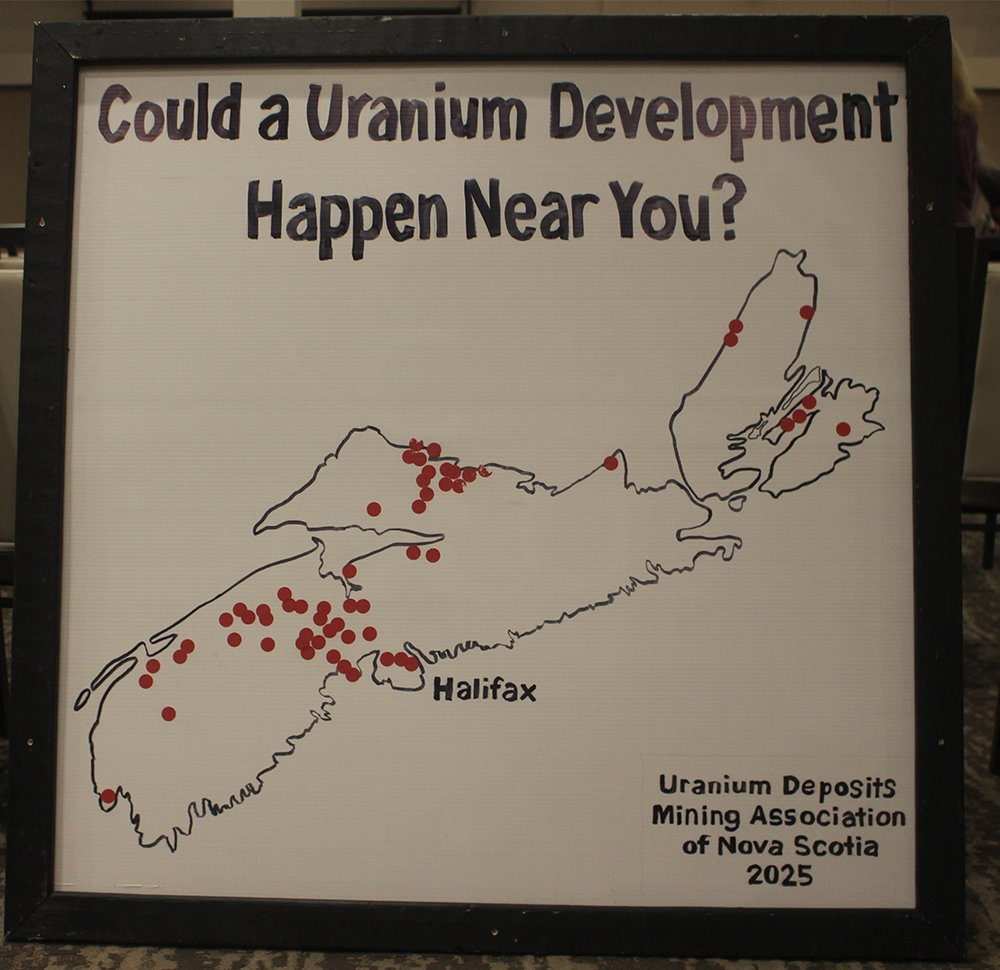
A map of uranium deposits in Nova Scotia is displayed at the forum.“The voters that elected this super majority government have had no say in many of the actions taken by this government,” says Kacy DeLong, a councillor for the District of Lunenburg.
“There is no responsibility. There’s no surety for us, the citizens, (on) clean air, clean drinking water.”
Janice Wilson, a woodlot owner in East Dalhousie, owns property that sits on one proposed location for exploration.
She said her 200 acres of land has been designated for possible uranium exploration.
“You may be able to understand how upset and shocked we were in May of 2025 when we read the CBC report saying the request for proposals had been issued to explore and mine uranium, and our land was included,” she said.
“No consultation with communities, Mi’kmaw, landowners, and no mention of this during the previous fall election campaign,” she said as some members of the crowd yelled “shameful.”
She said she has only recently discovered there is a two-year licence taken out to explore her land, and only at the end of that process will she find out what is intended to be mined.
“(In) mid-October . . . last week, and again this morning we witnessed a very low-flying aircraft doing grid patterns over our property,” she said.
She said she thinks this could be part of a mining exploration project.
“Who’s left to clean up when a mining company takes what they want, destroys the landscape, contaminates the water, and moves on? It’s us, the taxpayers of Nova Scotia.”
High risk, low reward
caption
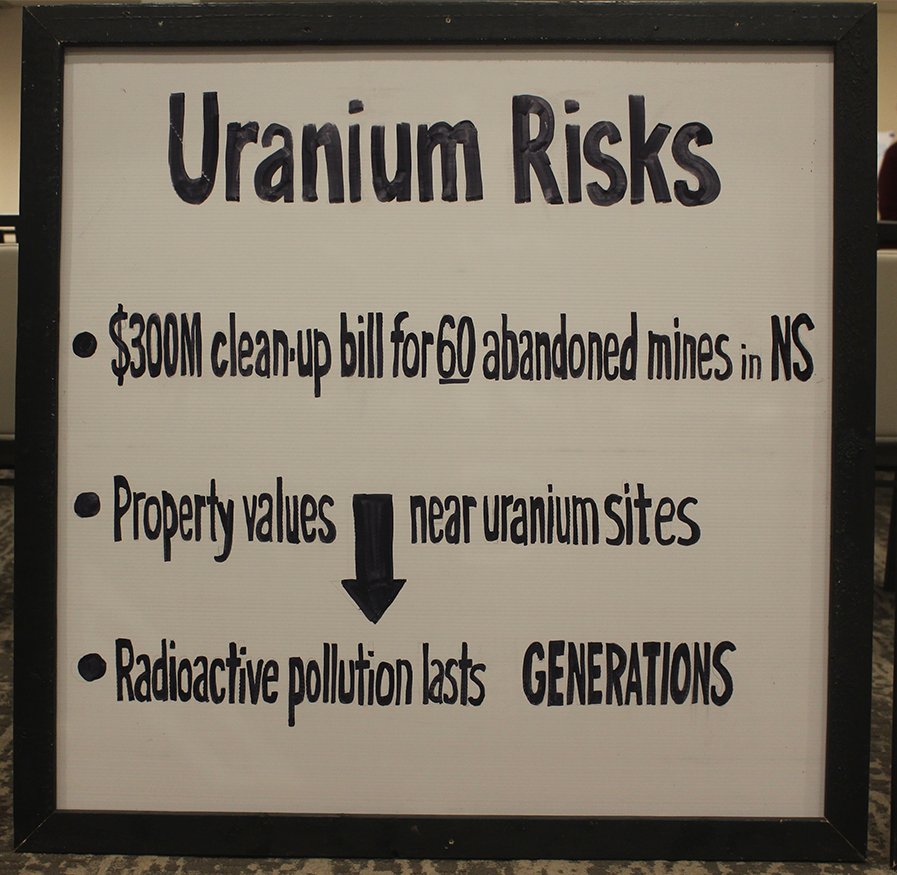
Another sign at the forum points out some of the risks of uranium mining.Karen McKendry, an outreach co-ordinator with the Ecology Action Centre, said documents from freedom of information requests show that corporations and individual prospectors have frequently violated environmental regulations during previous exploration projects.
She said there’s low fiscal benefit to mining operations in the province.
“When a corporation comes to mine in the province, a percentage of profit from that mineral must be paid to the province,” she said, “and uranium currently does not have an assigned royalty.”
About the author

Nick Wells
Nick is a master of journalism student at King's. He is passionate about politics, sports and telling the stories of Nova Scotians through their...
Leave a Reply