CanLit criticism moves online, but audiences are tough to find

caption
Canadian authors and publishers are showcased at Agricola Street Books in Halifax. Owner Oona Craig puts a maple leaf sticker on the spine of books by Canadian authors.Book critics remain hopeful for the future of Canadian literature
In the 2000s, Steven W. Beattie was part of a vibrant and visible Canadian book reviewing community. Now, he’s among the last of the old guard “pushing the boulder up the hill,” in the words of former Globe and Mail books editor Mark Medley.
Leaning back in his chair, Beattie clapped his hands and laughed at Medley’s boulder metaphor.
Beattie’s small home office in Stratford, Ont., has him wedged between two floor-to-ceiling bookshelves: one cream-coloured and glass-paneled, another open and mahogany. Amid stacks of books on his floor, some reaching his knees, Beattie says he would “quibble” with Medley’s description.
“I don’t see myself as somebody condemned to a life of eternal punishment. I do this by choice,” he said.
Sitting at his computer in a Stephen King Pet Sematary shirt, the 53-year-old independent critic fondly mentions a short story by King called Survivor Type. But big-name authors like King or Dan Brown will always get publicity and be visible to the public.
Beattie, though, wants to draw attention to lesser-known authors, reviewing the finest work across genres printed, edited, and published by Canadian-owned presses, like Goose Lane in Fredericton or Freehand Books in Calgary.
Beattie says the Canadian publishing community is alone in the world in supporting foreign books over its own; Canadian published books make up five per cent of domestic book sales annually.
“If there’s good work out there, it deserves someone to back it.”
As recently as the 2000s, national Canadian newspapers ran dozens of reviews in huge pullouts — the largest The Globe and Mail ran was 64 pages. Today, mainstream reviews are scarce.

caption
Steven W. Beattie speaks during a 2016 interview on Radio-Canada about Quebecois-published books not being sold outside the province.Along with a handful of old guard reviewers, hordes of review bloggers discuss Canadian literature. But Beattie says too many niche sites and a lack of professionalism among reviewers make it hard to attract readers.
He started That Shakespearean Rag as a side project blog in 2006; it’s now a subscriber site. Beattie still hopes professionally-run, general-interest online venues championing CanLit can find readers.
His blog turned into a serious endeavour around 2021 after he left Quill and Quire, a Canadian publishing industry magazine. As review editor, he would assign freelancers to review books from small presses nationwide and would expect brief analyses about immigrants in Montreal, indigenous societies in the west, or small town living in Ontario.
According to Beattie, the last two generations of Canadian writers and publishers have pushed the boundaries of English-language expression and he reviewed these books even if they weren’t focused on the Canadian experience. He points to Russell Smith’s 2025 novel Self Care, published by Biblioasis; Beattie says Smith’s exploration of millennial sexual relationships evokes earnestness through unpretentious, unadorned language.
On That Shakespearean Rag he’ll delve into full criticism — 1,000-1,500-word pieces dig into metaphor patterns, subverting cliches, and more. The analysis is more ambitious than his Quill content, but the goal is largely the same: to fill the void Canadian mainstream media left behind.
The fall of newspaper book sections
“I long for the time you could go to the Globe and Mail on a Saturday and spend two hours with that book section,” Beattie says.
That thought is echoed by former colleague Martin Levin, a former Globe and Mail book section editor who started in 1996 and took a buyout in 2013.
“Even though I’m not there anymore, the memories still persist,” Levin told The Signal. “To watch the Globe go from one of the biggest book sections in the English-speaking world to basically nothing … it’s very painful.”
In those days, local papers had vibrant book sections — Halifax’s Chronicle Herald averaged six to seven reviews a week.
Beattie used to write for the Vancouver Sun, Edmonton Journal, and Ottawa Citizen.
“There was this enthusiasm for reviewing (CanLit), promoting them in the way people today would write about Taylor Swift,” he said.
Former book reviewer Deborah Dundas always wanted to be the Toronto Star books editor. When she was 18, Dundas was walking on Yonge Street and saw a Japanese-Canadian man with a Beatles bowl cut, big rectangular glasses and a bushy yet fine goatee.
As the man in a slightly overlarge suit came closer, Dundas recognized him as the same man whose photo adorned the Star’s books section.
“Oh my goodness, that’s Ken Adachi!” she remembers thinking during the “fangirl” moment as she crossed paths with the man who held her dream job.
She landed that dream job in 2014, but by then the books section had been reduced to two pages per week. Advertising once provided the majority of newspaper revenue — when that dried up in the late 2000s, book sections got fewer pages.
As for book section editors — “There’s no one. There’s no one,” Medley says flatly. “I mean, the Winnipeg Free Press was the last independent paper I’m aware of that had a (full-time) book section editor … I’m going to Google …”
The soft clatter of a keyboard came over the phone before Google confirmed Morley Walker as the former editor.
The water cooler is moved
Steven Beattie is under no illusion that vibrant book sections will return. He says for publishers — even multinational houses — to regularly take out newspaper ads and support Canadian reviewing would cost money that “simply doesn’t exist.” He said the only way to push for a mainstream comeback is a grassroots movement led by passionate bloggers.
“In the absence of money, it’s up to us. It’s up to the people who care about it.”
In the early 2000s, there an explosion of literary blogs in Canada. At the time, it looked as if they could appeal to the masses. Medley says sites like Book Ninja felt like the morning news; Book Slut was like a secondary book section; and they all served as the water cooler for the Canadian literary world, fostering discussion about CanLit.
Rohan Maitzen is a former reviewer for Beattie, and has a literary blog called Novel Readings. She has maintained it since 2007, but she says literary blogging energy has faded; spirited comment sections have moved to social media. Content under #BookTok — usually shorter, snappier videos — on Tik Tok have a collective 370 billion views as of 2025.
Despite dwindling readership, more people have book blogs than ever before — many of them only cover niche subgenres, while others lack professionalism. Beattie says these qualities contribute to their unpopularity. He believes criticism on topics like 12th century mystery writing floods the internet, “so much of it is poorly written, poorly argued,” he says.
Many original bloggers with general interest sites producing quality commentary have abandoned their posts.
“It was a labour of love for them; they were doing other jobs to support their blogs,” Medley said. “Do that for ten years, and you get tired.”
As for the $5 per month fee for access to That Shakespearean Rag, Beattie wrote on the site, “one ancillary enthusiasm is the ability to feed oneself … it is hoped that this will help offset authorial penury and allow the creation of more material in the future.”
Hope for the future
Beattie notices bright young reviewers popping up.
“I’ve worked with a number of young writers who are really sharp, smart, and tapped into literature and Canadian culture,” he says. “If you look for them, they’re out there.”
That gives Beattie hope for a future with quality Canadian reviewing and CanLit visibility.
Alison Manley never saw herself reviewing books. The Miramichi Reader is a New Brunswick site emphasizing Canadian writers across a variety of genres, from short stories to biography. While working as a health sciences librarian for the Miramichi Regional Hospital, she found one of her co-workers to be The Reader editor-in-chief James Fisher.
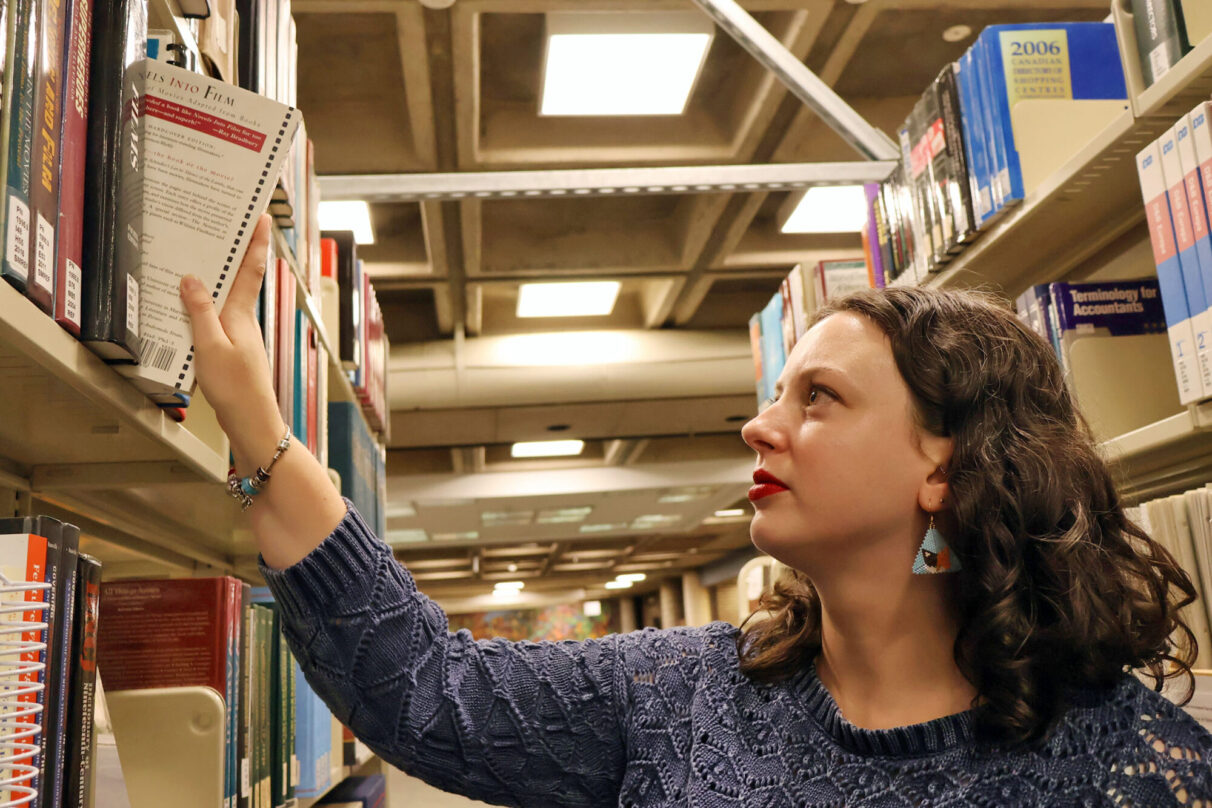
caption
Alison Manley, shown here at the Patrick Power Library in Halifax, is a metadata librarian for Saint Mary’s University. She also reviews books for online Atlantic Canadian publishing site The Miramichi Reader.Manley resisted Fisher’s requests to review books for The Reader until he finally wore her down. Only five years into reviewing, the 33-year-old has had excerpts from her reviews used on book covers to promote Canadian literature.
She’s most proud of being chosen for Hotline, Montreal writer Dimitri Nasrallah’s 2022 novel about a Lebanese immigrant in Montreal working as a weight loss-centre hotline operator.
Regional sites like The Miramichi Reader further fuel Beattie’s hope.
“They do great work,” he says. The Miramichi Reader did over 400 reviews in 2024, mostly focused on CanLit, all with editing done by a seven-person editorial team. The freelancers and executives work for free.
“We’re a team that really believes in getting reviews out there,” Manley says.
According to co-editor in chief Emma Rhodes, The Miramichi Reader had 186,873 site views in 2024.
Beattie would like to see something even more comprehensive with money behind it, to bring a bunch of different voices in on the project. He says someone should go to the Canada Council for the Arts to get funds for something that’s online, thoughtful, and writes on a range of work.
He pauses and looks up, taking a beat to think before saying, “I don’t know why I can’t do that…”