
Cooking class supports Muslim converts during Ramadan
Bedford session is a chance to experience holy month traditions together

caption
The women fill and form cheese samosas with precision as instructed, focusing on the form of the food.What began as a small iftar gathering at business owner and community member Lama Issa’s home three years ago has grown into a community cooking initiative that supports Muslim convert women during Ramadan.
On a Sunday in late February, Muslim convert women gathered in a Bedford apartment building common room for a cooking class led by Issa.
The event focused on teaching participants how to cook and prepare traditional Middle Eastern dishes commonly served during the holy month, while creating a supportive space for converts who may be experiencing Ramadan, which ends on March 19, without family traditions or established social networks.
Issa said the idea for the cooking class grew out of a gathering she hosted at her home in Ramadan of 2023.
“I invited the revert group to my house to have an iftar with me and my family about three years ago,” she said.
“They really enjoyed the gathering and loved the food, and they started asking about the recipes after that.”
That interest led to the idea for a cooking workshop. The following year, Issa and fellow organizer Dania decided to turn the requests into a hands-on learning experience.
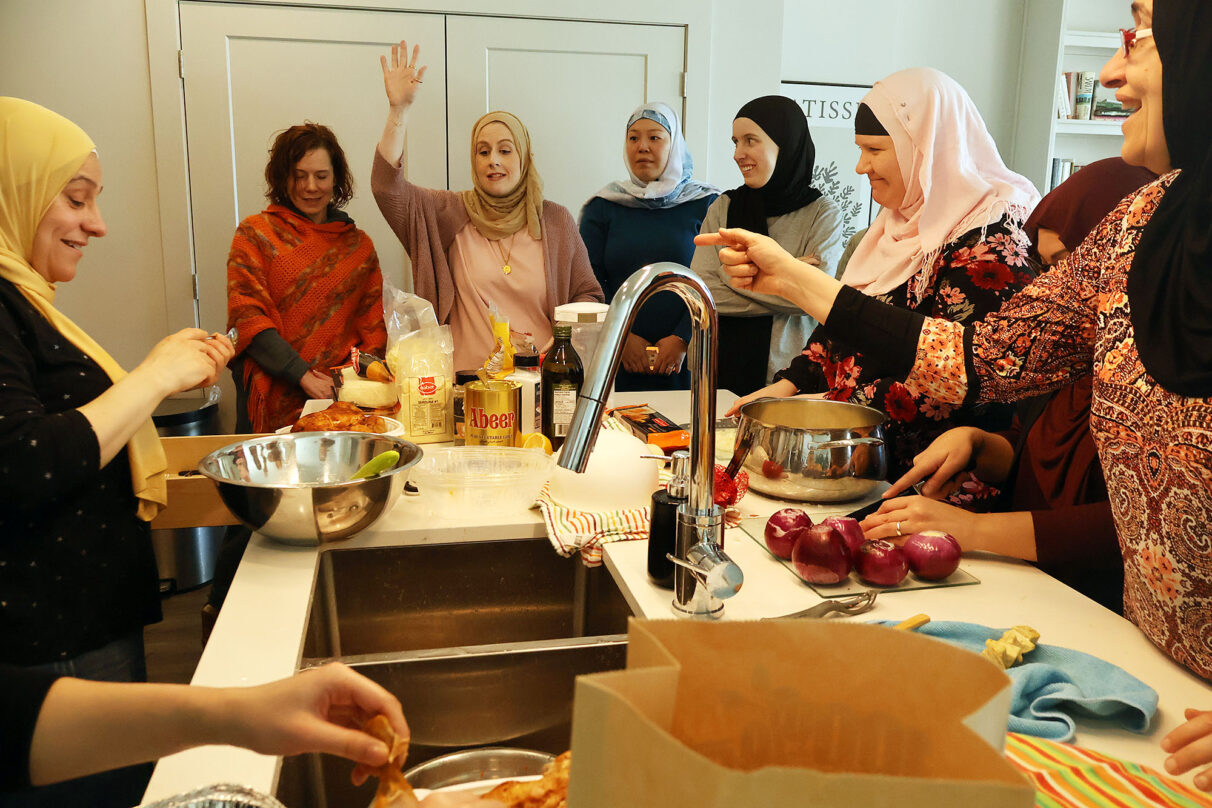
caption
Convert women gather around a kitchen island as Lama Issa (left, by the bowl) leads a Ramadan cooking class in a Bedford apartment common room on Feb. 22.“We thought about doing cooking classes where they can work together and get recipes to try at home,” Issa said.
“This year we created a new menu based on what we thought they would be interested in.”
While Ramadan is widely recognized as a month of fasting, prayer and communal gatherings, the experience can look very different for Muslim converts — often referred to in the community as “reverts.” The term describes someone who has returned to Islam, reflecting the belief that individuals return to their natural state of faith at birth.
For revert women, especially those without Muslim family networks, the holy month can bring both spiritual meaning and social isolation.

caption
The women fill and form cheese samosas with precision as instructed, focusing on the form of the food.Alongside mosque dinners, group prayers and community events, hands-on teachings offer something more intimate — a chance to learn traditions often passed informally through families.
For many Muslims who grew up in practising households, Ramadan traditions — from preparing iftar meals to gathering with family for prayer — are deeply embedded in everyday life. For converts, however, those traditions are not always present.
Participants say this difference can bring a new perspective to long-standing practices. Reverts often approach Ramadan with a sense of curiosity and appreciation, reminding others of the deeper meaning behind traditions that some born Muslims may take for granted.
For Holly Groshok, a community member and event organizer with the Ummah Revert group, the impact goes beyond learning recipes.
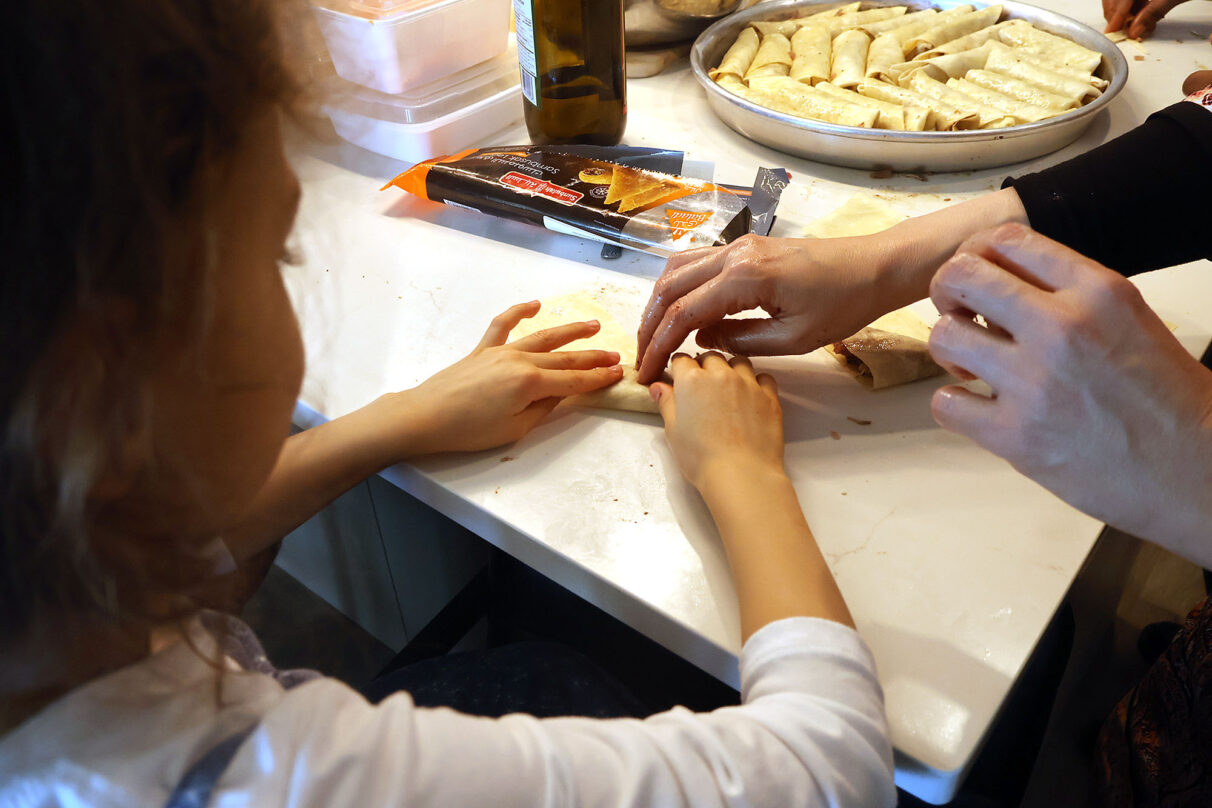
caption
Hajar Prom helps roll samosas for the first time.“Every event we do has a huge effect on these ladies,” Groshok said. “Some of them are really shy, some are nervous, and some don’t have that confidence.”
She said many participants may not have family members who share their faith, which makes community gatherings like this especially meaningful.
“A lot of people are shy and nervous, and maybe some of their family members don’t even know that they are Muslim,” she said. “Having these events means they have other people they can rely on and trust.”
Groshok said the group often becomes an important support system for many members.
“Some people don’t have anyone. Some don’t have a husband or partner to share that experience with,” she said. “So this group really becomes their life and their family.”
Throughout the afternoon, women moved between chopping boards and stovetops as the dishes were prepared together. Hands kneaded samosa dough while others shredded cheese.
The sharp slicing of onions echoed through the room as attendees gathered to watch how the soup was prepared step by step. The room was warm, not only with cooking aromas but also with laughter and conversation.
Moments like these help recreate the communal atmosphere. Beyond the recipes themselves, the class offers participants a chance to learn cultural practices, exchange experiences and build friendships within the broader Muslim community.


Leave a Reply