
Dance the night away
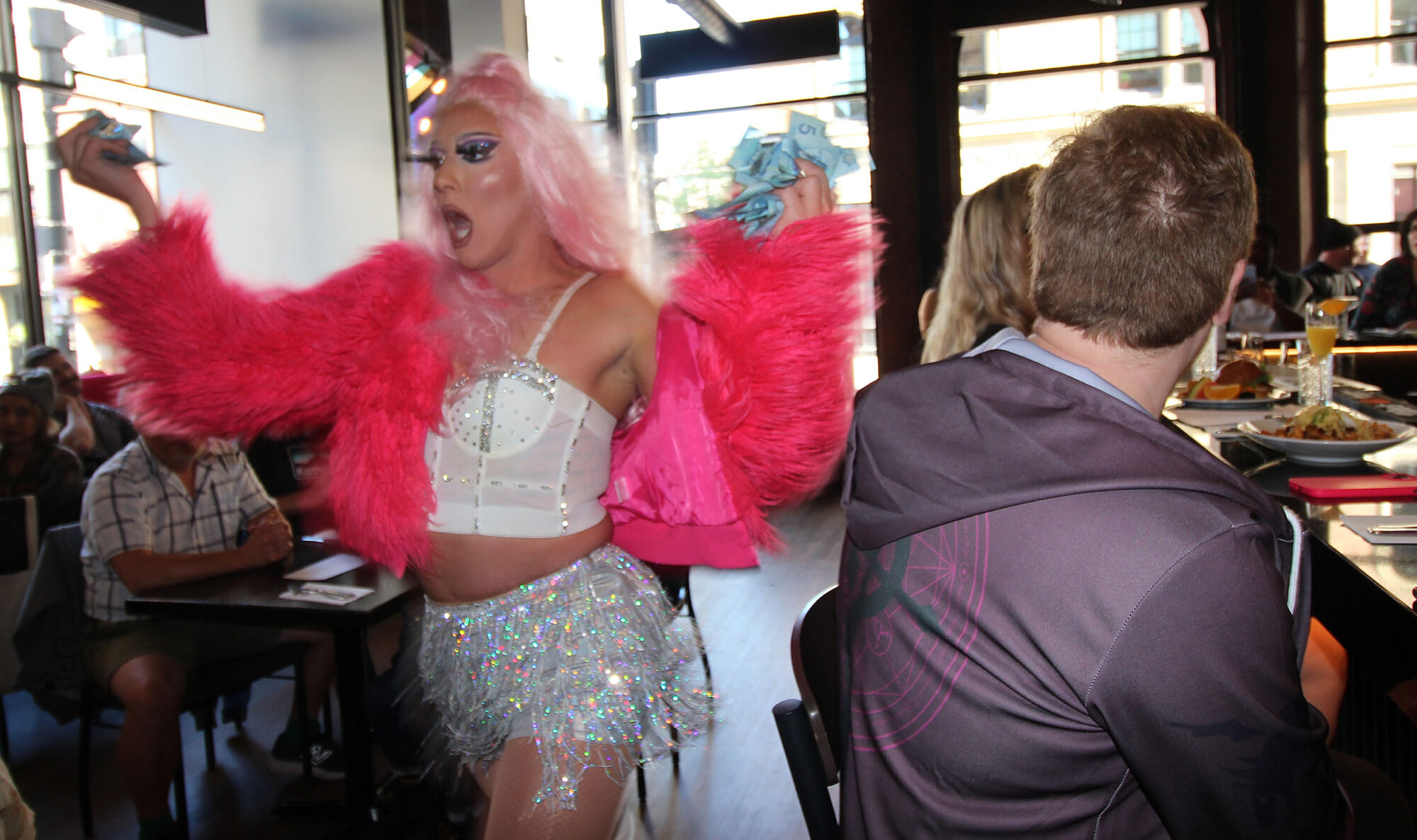
caption
Mya Foxx dancing through the crowd at the Stardust Bar's weekly drag brunch.The first Canada’s Drag Race performer of Inuit heritage, Dillon Ross is ready for a star turn
The self-proclaimed queen of the north touches up her lipstick. The bassline booms through the Stardust Bar on a Saturday morning. Rising from the platform stage, dazzling the back wall with a silver glitter backdrop, a staircase rises to a second level. The music pulses a hypnotic two-step beat. Thump thump hisss – the sound system belts out Nelly Furtado purring her 2006 chart topper, Maneater.
“She’s a maaaaaneater, make you work hard, make you spend hard, make you want all her love.”
Tables are filled with sizzling eggs Bennys and mimosas. Up above a figure appears, a commanding energy in baby pink and faux fur drawing the eyes of the brunch crowd. The figure begins a saunter down the staircase. A magnetic swirl of beauty, confidence, and femineity fold into Furtado’s anthem as drag artist Mya Foxx struts to the stage.
She stomps her white leather, knee-high boot onto the stage, transforming it into her canvas. This is the moment she’s been preparing for. As she swaggers and spins, giving a sultry mix of dance and lip-sync homage to one of her musical favourites. She slays the room and brings in the finale with a full-font split.
Applause erupts, transforming what would have been a dreary late fall morning in Halifax. The next two hours celebrate comedy, dance, and a “be yo badass self” energy.
Maritime roots
Sunk into his couch, playing video games, Dillon Ross is relaxing on a day off from drag performance and work. The well-spoken, studious-looking human resources manager is 31 years old, fit, with short brown curly hair. Sharing the one-bedroom apartment in downtown Halifax with his partner François, there’s the smell of chicken dinner as the rain drizzles outside. Catching photography taken by François from his travels in the Navy decorate the far wall. It’s cozy and clean, with a feeling of warmth that fills the room, letting someone know they’re in a home.
Follow the coastline northeast and you’ll arrive in Cape Breton. The small community of Whitney Pier is Dillon’s hometown. It spawned from multicultural roots and hard blue-collar workers. During the First World War and Second World War the Dominion Iron and Steel Company brought industry and jobs. Arrivals from the Caribbean, Europe, and the Maritimes created a melting pot.
Proud Maritimers, his father is of Scottish and Romanian ancestry, his mother Inuit and Scottish ancestry.
Together, those lineages wove a quiet code into him: work hard, look out for others, and treat your community like something you’re responsible for tending.
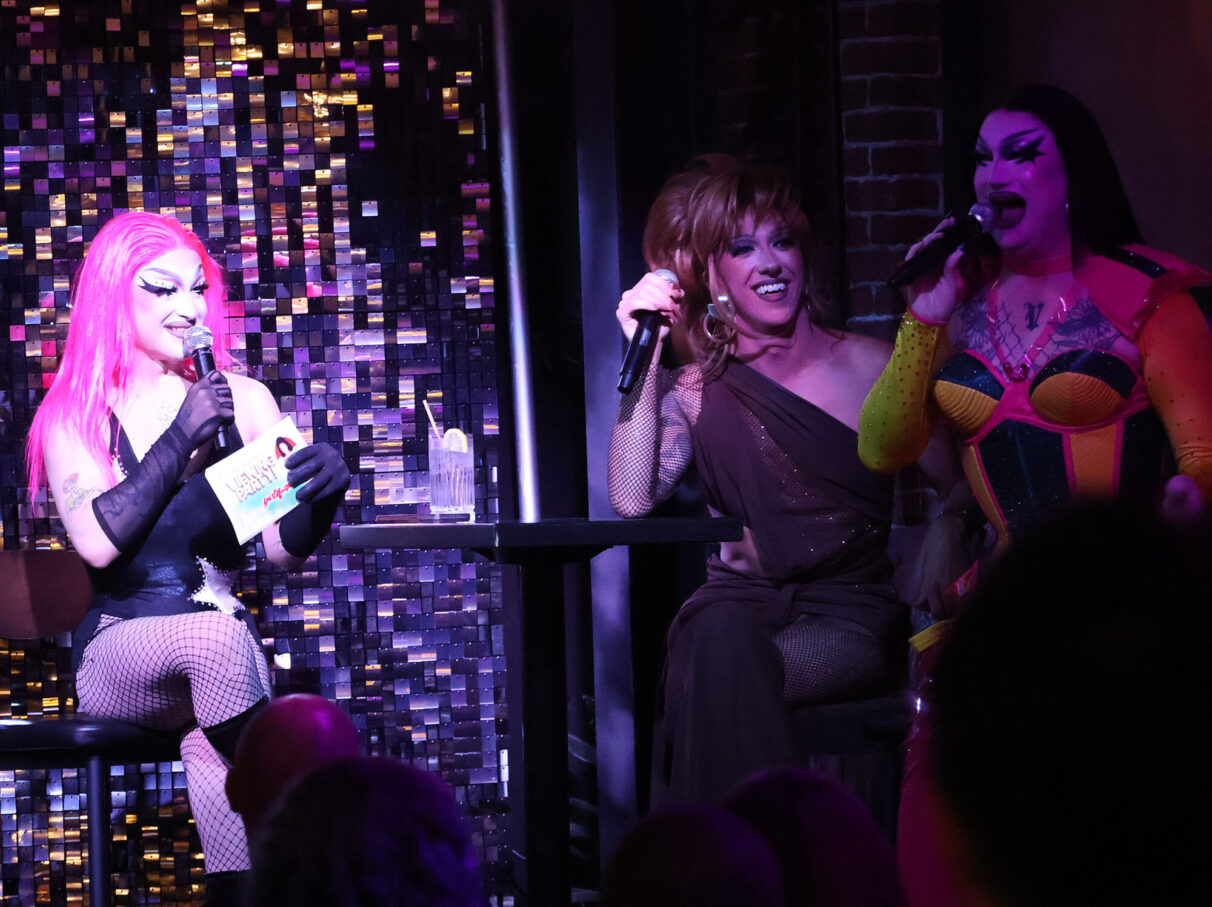
caption
Mya Foxx (middle) at a Canada’s Drag Race Season 6 viewing party at the Stardust queer bar in Halifax. On the left is Zara Matrix and on the right is Van Goth, fellow drag queens.Seed of doubt
The moment was brief but damaging. Six-year-old Dillon is at a first soccer practice. Jumping up and down, eager as kids line up for drills.
As children, our worldview feels boundless. Innocence falls away as we learn to exist in a society divided by labels and lines we’re told to fit within.
He’s bouncing around until the moment slows to a crawl as a boy in line utters to another “that’s so gay.” Dillon is instantly deflated. Words hold power, even when we don’t fully understand them. A seed of doubt is planted, the wound fresh and raw. There is a hyper-awareness now of what is and is not OK for him to be. The feeling of wanting to shrink. To blend in and conform to a norm.
Fast forward to junior high. A 12-year-old Dillon gets home from basketball. After school he’s usually alone for a few hours. He sets up his laptop and is careful to close all the blinds. On the screen, the Pussycat Dolls dance their hit Don’t Cha.
For queer kids, coming out is not a static event. Dillon is still navigating his sexuality and identity. For someone to potentially see him doing something so feminine, would be “the worst thing.” In the dining room, working out routines that inspire him, a joyful sense of pride starts to form with each sequence he nails.
Five minutes before his mom will be home he shuts everything down. No one knows what he’s been up to. When she gets in, they go pick up his younger sister, who’s been training in multiple styles of dance, including jazz and hip-hop, since age two. Watching the class practice, Dillon feels envious of their fierceness, emotion, and attitude. For the next five years, while his sister takes classes Dillon quietly teaches himself, watching shows like So You Think You Can Dance and more female-dominated dance acts. He’s not ready to emerge just yet; his truest self is still forming.
Going for it
University brought Dillon from Cape Breton to Halifax. In the city he was coming out of his shell, hitting old school dance clubs like G Lounge and Reflections. His friend Nick was adamant about Dillon taking a dance class. Yet he was hesitant at the thought of being vulnerable. “I’ll go with you,” Nick said. Dillon finally agreed. It was either let fear take over or go for it.
Dillon went for it.
Quickly picking up the choreography, he had that same feeling of watching his sister’s dance classes. It was fire.
Queens like Lulu LaRude, Rouge Fatale and Elle Noir were performing in Halifax gay bars during the early 2000s, paving the way for drag to go from the underground to the mainstream.
Building on earlier LGBTQ movements, drag has been at the forefront of activism, since the gay liberation movement of the 1960s and ’70s. Despite the positive global impact, drag remains criminalized in many countries.
Around 2018, the Haus of Rivers drag trio featuring Racheal Lush, Trinity Foxx, and Brooke Rivers was performing around Halifax. Dillon had been posting his dance classes on Instagram, and it got the attention of the trio. They invited him to perform as a backup dancer. Then during the pandemic, there was a guest drag spot. Still, the voice of doubt lingered. He worried about being so exposed. “You got it,” Lush said.
Taking Dillon under her wing, Lush became what is known as Dillon’s drag mother. Like your favourite aunt or cool older cousin who takes you to the mall and helps you pick out the most fly outfit to wear to the dance, and then shows you how to do your makeup – girl to girl. The first time he “put on his face” Lush gave a push. “I’ll do this half and then you’re going to do the other half.”
“I wouldn’t be the performer that I am right now,” Dillon says, “if it wasn’t for the other drag performers and dancers in the city”.
That was the build-up to Dillon’s first solo performance. Finally letting go of his last reservations. The audience went wild.
She felt fabulous, looking like a beauty queen in training wheels that first show. As the good witch Glinda said, “You’ve always had the power, my dear. You just had to learn it for yourself.”
And Mya Foxx was born.
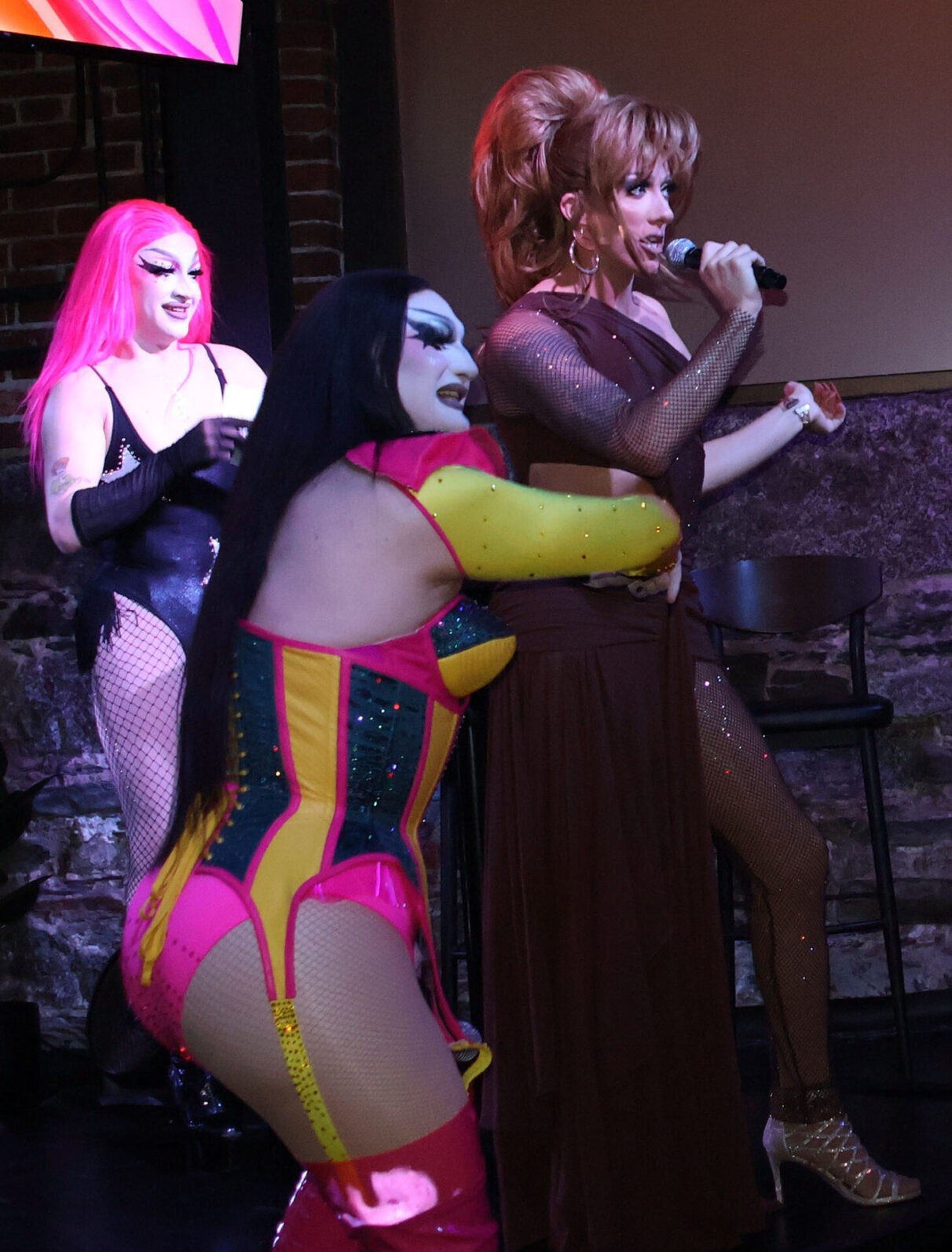
caption
Mya Foxx (right) hosting the viewing party with Zara Matrix (far left) and Van Goth.Empowerment is contagious
Pop sensation Jessie J’s bold upbeat Burnin’ Up brings a mood to match Mya’s magnetism. The crowd of 640 cosplayers attending the 2025 Hal-Con Sci-Fi and Fantasy Convention are amped. Her dance movements start smooth, then snap hard with the track.
The energy of the room shoots from a happy eight to a make-your-heart-pound eleven. “I got the mat-ches; you got the gas-o-line.”
There’s this feeling as if we all just teleported into a Britney Spears concert as Mya does her thing, walking up and down the aisles with diva attitude, connecting with fans. Think of the feeling you get when you’re really pumped – you’ve just got that job you’ve been gunning for; you finally dumped the lover who was the worst for you; you’re writing the last few pages of that book. Shit’s rolling off your shoulders, and you’re letting go of any barriers, any internal blocks. You are unapologetically you. It’s like that feeling.
At the end of the show girls in their late teens and early 20s rush the stage to meet Mya. In this moment Mya’s confidence is front and centre, yet Dillon’s kindness shines through. Consideration is taken to connect to each of the girls, say hello, take a selfie, sign an autograph and ask how they liked the show. Mya is to Dillion what Sasha Fierce is to Beyoncé. Mya is charisma, sass and sensuality; Dillon is lived experience, thoughtfulness, a softer side. Mya comes off stage and struts through to the back of the room, the gaggle of girls following behind single file like ducklings following their mother.
Mixed tensions
1770. The land breathes in spring and sighs out summer, painting the landscape with broad strokes of orange and pink in the late sunset. European missionaries have arrived. Their mission is to convert the Inuit people of northern Labrador, Nunatsiavut, to the Christian faith.
This is where Dillon comes from. He is of mixed race, Inuit and European. A product of worlds colliding. His Inuit ancestors moved down to southern Labrador, NunatuKavut, as colonization took its toll on their traditional territory.
The Inuit have been living with the land since time immemorial. Once communities roaming freely, their movements were attuned to the environment around them. Colonial structures have neatly folded the land into lines and compressed it to dots on a map, putting artificial borders on paper. Traditional ways of being were forced to make way for economic systems, dictating who belongs where and who can claim what.
“There’s a responsibility,” Dillon says, “with being Inuk … understanding your history, where you come from, what the impacts have been.”
Being mixed is like walking a tightrope, a constant push and pull between layered identities in both worlds. For Dillon, there’s the tension of being both “the colonized and the colonizer.” With his white-passing appearance, he feels the sharp edge of both worlds. Too much of one, never enough of the other.
“I feel like my purpose as a mixed person,” Dillon says, “is to be that person in-between, to be able to educate people.”
The Inuit that travelled south, settling and creating families with Europeans, present day are the NunatuKavut Community Council. Being Indigenous, Dillon says is “about understanding who your people are, who they were and where you want them to go.”
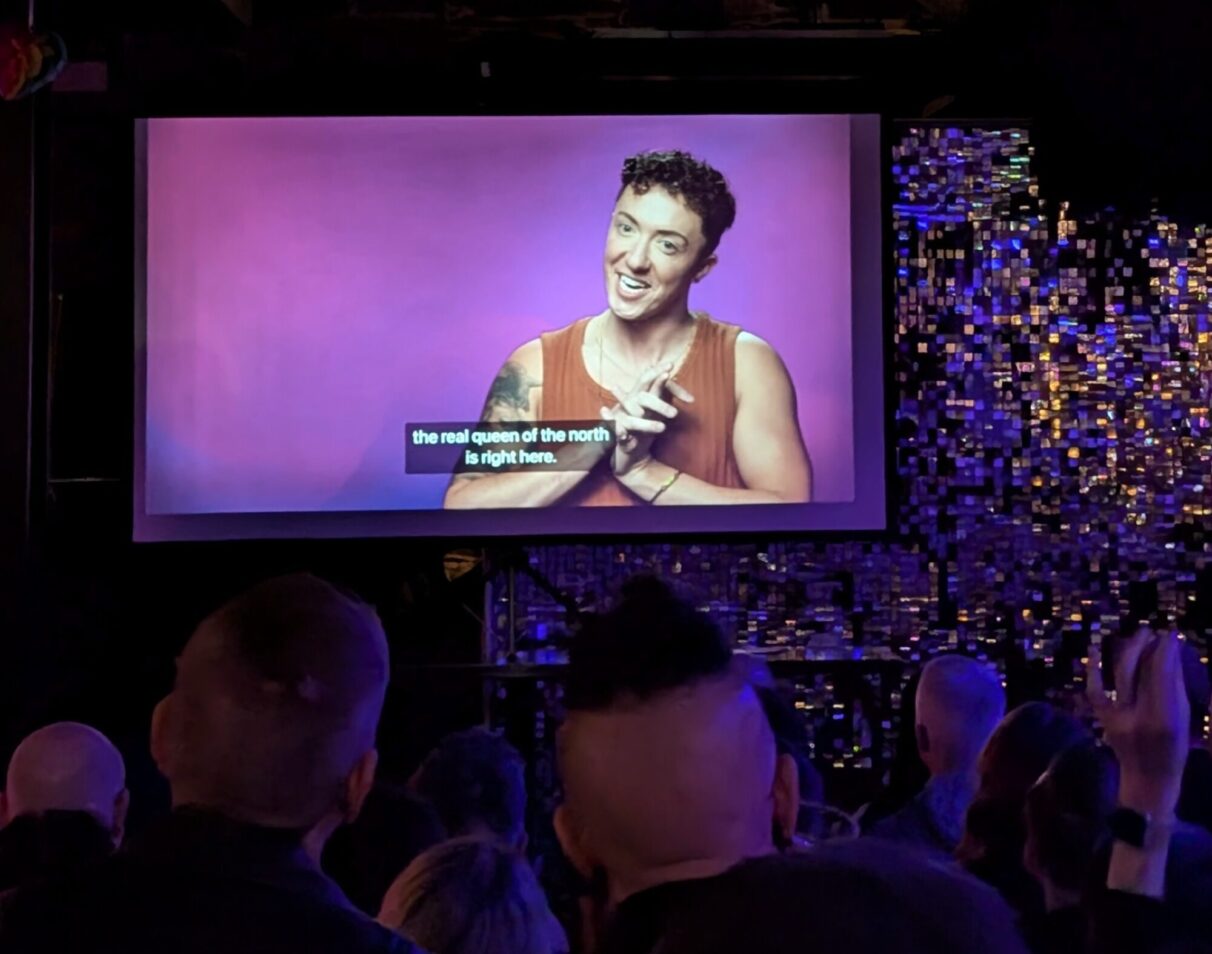
caption
Dillon Ross, who performs as Mya Foxx, is seen on the Stardust’s large viewing screen.Season 6
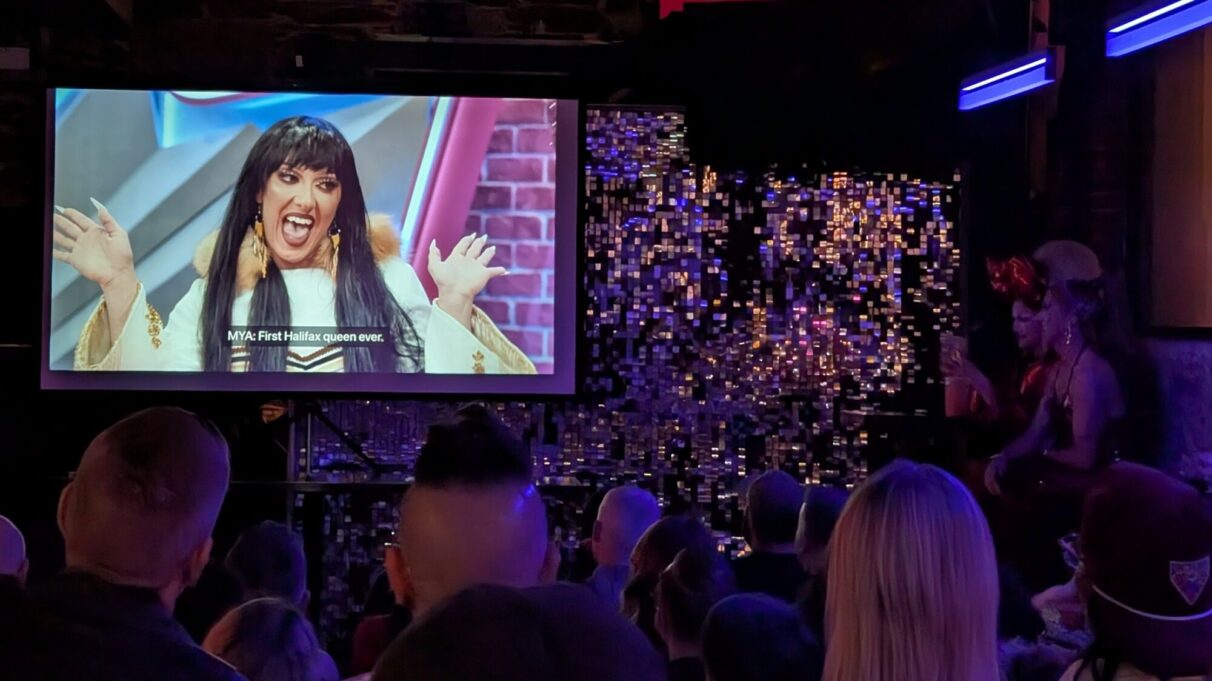
The drink special tonight is the “DIRTY MOTHER FOXXER” and the bar is slinging them out. It’s the premiere viewing party at the Stardust, kicking off Canada’s Drag Race Season 6. After two auditions and years of relentless one-woman hustle, Mya’s moment of success has arrived. She’s been chosen to be on the show, and her Halifax community has gathered to celebrate. Mya’s drag brunches have sold out almost every weekend. She and cofounder Anna Mona Pia started them over a year ago.
Rows of chairs face a big-screen TV on the small stage. An hour before showtime, the room buzzes and fills quickly.
Low lighting bathes the room, highlighting a large rainbow neon sign: “Cheers Queens”. Mya enters, waving and smiling to fans. Front and centre sit Dillon’s sister, mother, father and François.
A humble gratitude settles into her face, framed by sharp-winged eyeliner, offering a glimpse of Dillon beneath. She’s come prepared to do a special performance for the occasion. The tropical 2000s pop-rap song Switch by Iggy Azalea, featuring Brazilian musician Anitta, starts playing. It’s the first song Mya ever performed to, and is in homage to the reggaeton music Dillon grew up with in Cape Breton, giving this performance a full circle moment. Her long auburn high ponytail whips back and forth during the high-energy hip-hop/jazz funk choreographed steps. She’s flaunting metallic bronze genie pants and a brown snakeskin leather halter top while executing a Naomi Campbell catwalk through the crowd. She accepts five-dollar bills and fan love.
At 10 p.m. the first episode is here. Eyes are glued to the TV. There are cheers, claps, finger snaps, and gasps as the episode reveals the glitz, glamour, wigs, and shade of what’s to come throughout the season. Mya’s entrance outfit for the show is an Inuit parka paired with beaded earrings crafted by another Inuk artist.
In the first episode she playfully calls herself the “Queen of the North.” The room fills with a sense of pride that Maritimers share when one of their own make it.
Dillon’s father comes up to the bar. He’s a slender, clean-cut, kind-looking man with short grey hair. Asked what he thinks of the show, he looks straight ahead but his voice is directed somewhere else. It is introspective and soft. “I’m very proud.”
Flowers
Some moments stay with us…
Backstage at a small rural venue in Nova Scotia, Mya finds flowers waiting for her. They are a gift from an admirer she’s never met. Someone struggling with their queer identity in a small town similar to where Dillon grew up. The person never thought a drag show would come through.
For Mya, it’s a performance as usual. For the person on the other side of the flowers, it’s deeper. It’s the hope that things can change. It confirms the inspiration to be unapologetically oneself.
A quiet revolution has unfolded in Dillon’s life. He has flipped the script and reclaimed power over the narrative. The narrative we tell ourselves, and the one society writes for us. He has come to understand that the struggle is the triumph.
He’s pushed past imposed hierarchies and boundaries with fierce authenticity. If the goal of colonization was to erase the Indigenous, to erase the very possibility of mixed identities, and if the discrimination faced by queer people was designed to suppress the feminine, then Dillon has eclipsed them.
What would he say to the next generations?
“Recognize who you are, what you’re good at, and what your responsibility is to other people. And then go do the damn thing.”
caption
The boisterous Stardust viewing party of the first episode of Canada’s Drag Race enjoyed seeing Mya Foxx appear on national television.About the author

V. Patterson
V. Patterson is a 3rd year journalism student.