
Every meal matters: More students attending food banks
Higher food prices, rising cost of living drive more students to Dalhousie Student Union Food Bank
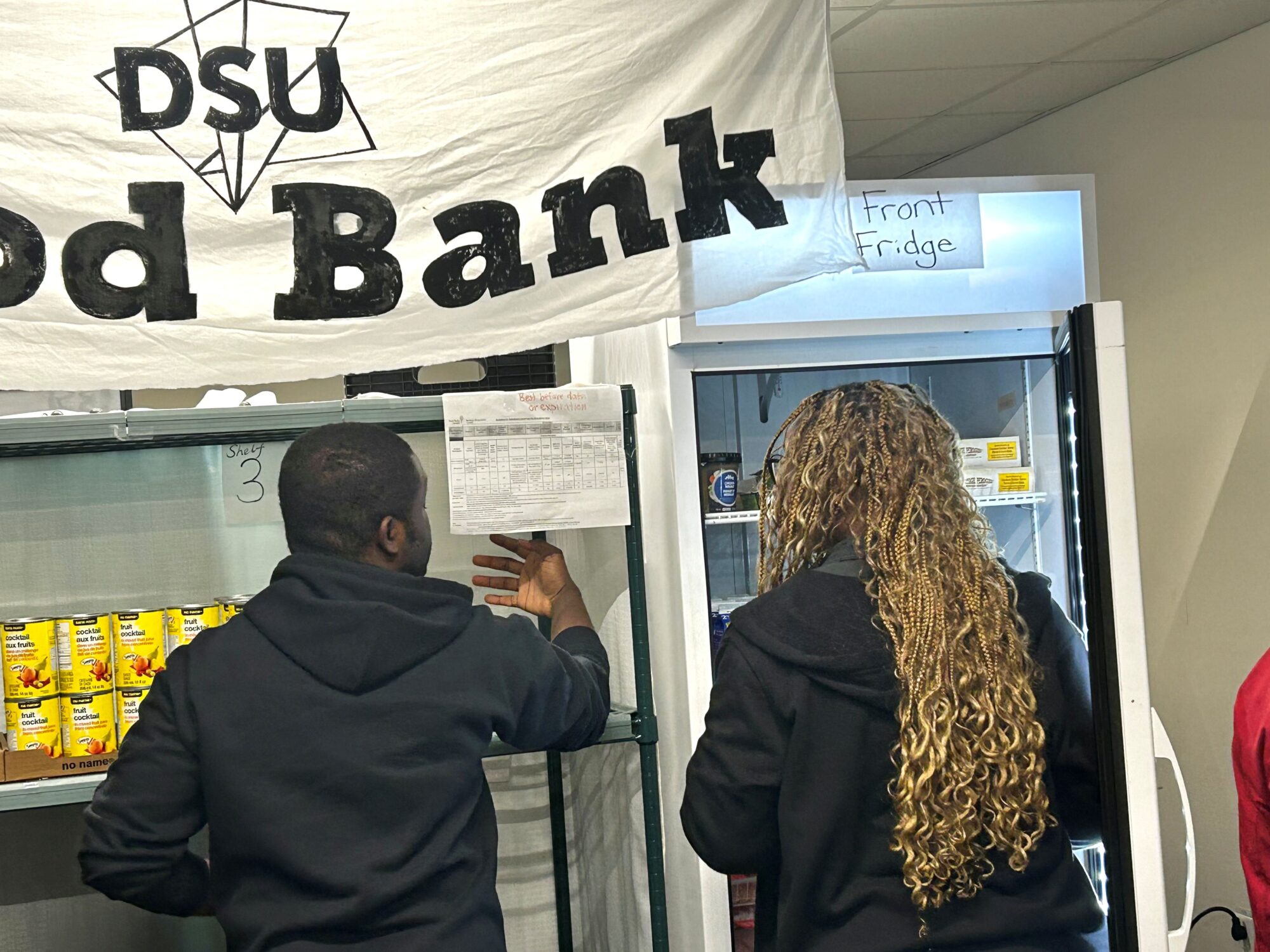
caption
Akiwasi Wirekoh helps out a student shopping at the Dal Student Union Food Bank.Only a few weeks into 2026, the Dalhousie Student Union Food Bank is seeing an increase in student demand for food.
The food bank opens once a week, on Thursdays, and is seeing 210 students, a jump from when it was open bi-weekly and only saw 150 students per open day.
Maren Mealey is the Dalhousie Student Union president and supervises the DSU Food Bank. She says the organizers of the campus food bank have seen “unpleasant developments” since the fall of 2025.
“We have been seeing really high rates of people coming to our food bank and that definitely links to the food insecurity crisis,” Mealey said.
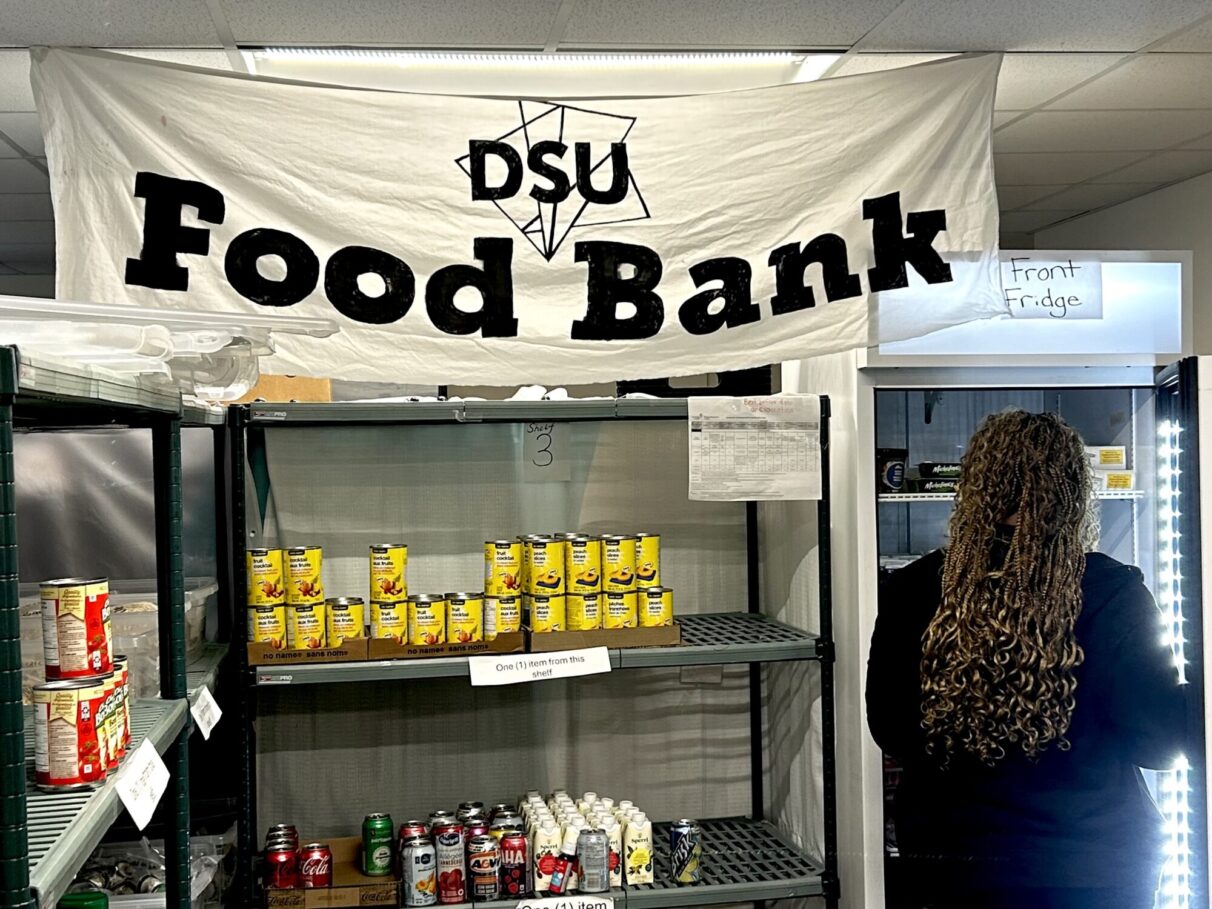
caption
A student browses the refrigerator at the DSU Food Bank. Food bank organizers say food bank use among students is rising.According to Mealey, increased demand is only one side of the issue. Donations to the food bank are declining.
“There’s a few different streams where we get food from. The big one is food that comes in from Feed Nova Scotia. Because food costs are high and because of increased demand across their locations, we have seen less donations, especially since last fall.”
Food Banks Canada’s 2025 Hunger Count report says that there has been a 10.3 per cent increase in total visits to food banks in Nova Scotia during 2024-25 and a 69.4 per cent increase from 2019-2025.
Sue Kelleher of Feed Nova Scotia has noticed an increase in food bank attendees for a number of reasons.
“People not having access to enough income, having unaffordable rent and housing, and with the cost of essentials like groceries, like utilities going through the roof, food insecurity is growing at a really alarming rate, and we have been really alarmed by this,” said Kelleher, the organization’s director of community partnerships, innovation & advocacy.
Feed Nova Scotia collects donated food from individual businesses and receives money to buy food to distribute to food banks, shelters, and meal programs across the province. They have also taken a recent role in food insecurity advocacy. However, higher food prices have made it harder for people to donate, because they have less money.
“So, with food donations, we’ve seen some fluctuation over the last couple of years. But overall, donations are trending downward,” Kelleher said.
According to Feed Nova Scotia Food Banks Statistics 2025, 17 per cent of people who use the food bank are post-secondary students.
Akiwasi Wirekoh is DSU’s food bank co-ordinator and takes great pride in helping students in need, but says the DSU Food Bank needs help too.
“I feel privileged and honoured to serve the community and help against the food insecurity issue,” said Wirekoh.
“We help solve some aspects of the food insecurity issues, but we can’t solve the volume of donations, most of our shelves are empty. There’s a limit to how much we can buy.”
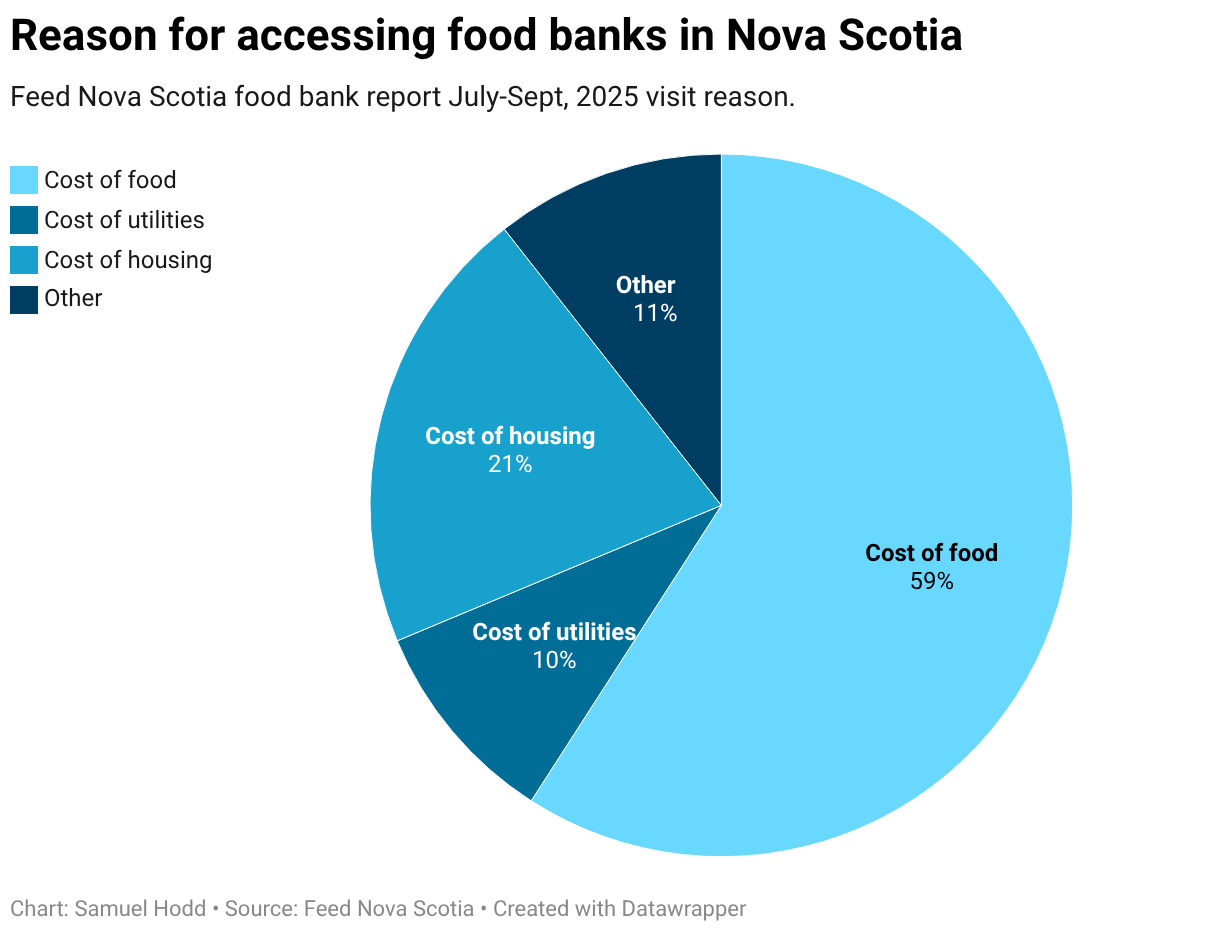
The recent Feed Nova Scotia Food Bank Access Report stated that 89.4 per cent of clients say they are visiting food banks because of the higher cost of living. This was further broken down by cost of food (59.1 per cent ), cost of housing (20.7 per cent ), and cost of utilities (9.6 per cent).
Kelleher said the solution to the problem of food insecurity extends beyond their programs.
Nova Scotia’s minimum wage will increase to $16.75 per hour on April 1 and to $17 per hour on Oct. 1. The current rate is $16.50 per hour and is the lowest rate in the country, while according to Canada’s Food Price Report 2025 the province has the highest rate of food insecurity in the country at 28.9 per cent.
“The solution, I think to be honest, is I don’t see the food insecurity crisis in Feed Nova Scotia becoming less acute without there being policy change. So anything that we do is in response to meet an immediate need, but the actual cause of this for everybody is around affordability and income,” Kelleher said.
About the author

Samuel Hodd
Sam is a fourth year journalism student at the University of King's College and Broadcaster for the UKC Blue Devils.
