
Most Halifax drivers who kill pedestrians face no criminal charges
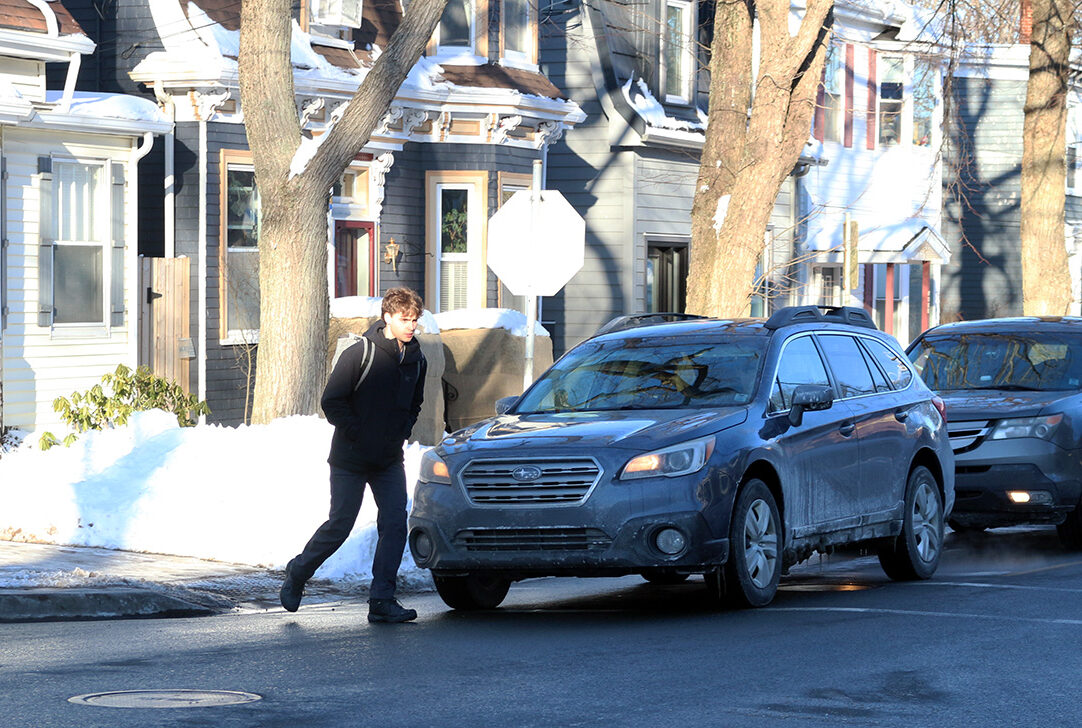
caption
A pedestrian moves around a car blocking the road at Jubilee Road and Vernon Street. The pedestrian had began crossing the road when the car drifted into the intersectionNo surprise, say experts, who say this is standard nationwide
Kathleen Warren was walking through a marked crosswalk in Dartmouth in March 2020 when she was hit by a car turning right on a red light. The driver received a ticket for failing to yield to a pedestrian, and Warren, 68, was rushed to the hospital, where she died a week later.
Though police noted the car’s driver was driving “aggressively,” he was never criminally charged.
An analysis from The Signal found 85 per cent of drivers who killed pedestrians in the Halifax Regional Municipality since 2018 faced no criminal charges. Experts are not surprised.
“In the vast majority of the fatalities that I’ve done, and I’ve done these on a civil basis, you don’t see charges,” said lawyer and road safety advocate Patrick Brown, who has represented clients suing drivers in Ontario for over 25 years.
The Signal analyzed the municipality’s publicly available traffic collision data set, which reported that 20 pedestrians were killed from January 2018 to December 2025. In eight of the collisions, the driving was classified by police as “aggressive.”
Only three drivers who killed pedestrians during that period were criminally charged; all three were convicted and were sentenced to prison time, ranging from six months to four years.
Police often don’t lay charges in pedestrian deaths because there’s insufficient evidence to prove who’s at fault, according to Brown.
“Even when they do charge, our court system is so backlogged that the person pleads down to a lower offence and then is given a small fine,” he said. “That’s a big problem.”
Halifax Regional Police spokesperson Const. Martin Cromwell declined to speak with The Signal before the deadline about how the force charges drivers who kill pedestrians.
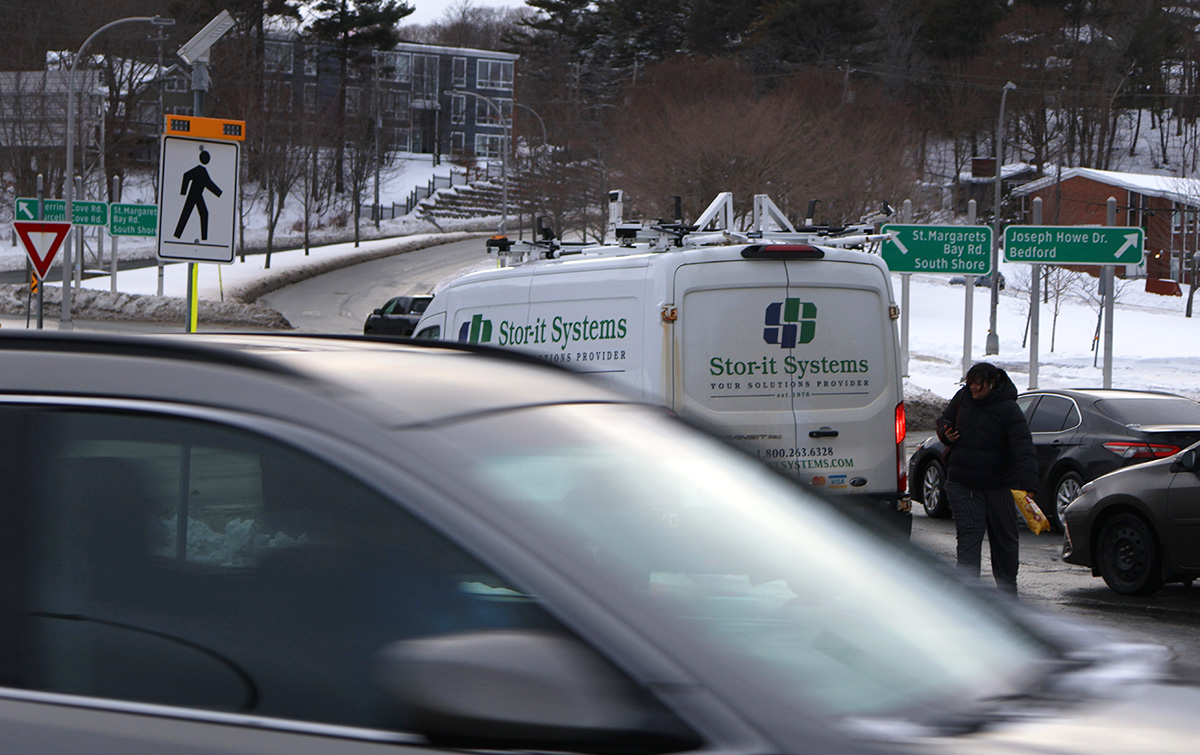
caption
A woman crosses the busy intersection at the Armdale rotary on Feb.2. The rotary is heavily used by vehicles throughout the day, particularly during the evening rush hour when this photo was taken“Every collision is unique, which is why an investigation follows to determine the circumstances that resulted in the collision,” Cromwell said in a statement. “The information and evidence gathered throughout the investigation will help determine if there are grounds to lay criminal charges or issue summary offence tickets.”
Summary offence tickets are issued for violating provincial and some federal laws, including traffic violations. Tickets may result in fines up to $5,000 and six months in prison.
Only two drivers who killed pedestrians since 2018 are reported to have been issued summary offence tickets. The Signal was unable to verify that none of the other drivers received summary offence tickets.
Grant Gottgetreu, a retired police officer and forensic traffic consultant in British Columbia, said he isn’t surprised the majority of drivers who kill pedestrians aren’t criminally charged, but said they shouldn’t face charges because most cases don’t meet the criminal threshold.
“In Canada, you’ve got criminal negligence causing death and dangerous driving causing death,” he said. “The Crown can prove that you were either dangerously driving or you did something that was criminally neglectful … and if it doesn’t meet that, there is a ticket available.
“Of course, people go, ‘Wow, a ticket for killing somebody.’ It’s like, ‘Yeah, but it’s not murder. So quit clutching your pearls.’ ”
People close to the victims say even when criminal convictions are handed down, the sentences drivers receive aren’t enough.
Deepak Sharma was sentenced to four years in prison on Sept. 22 for killing Dalhousie University student Alexandria Wortman in January 2025 while she was walking home from campus through a marked crosswalk. His driver’s licence was also suspended for 10 years.
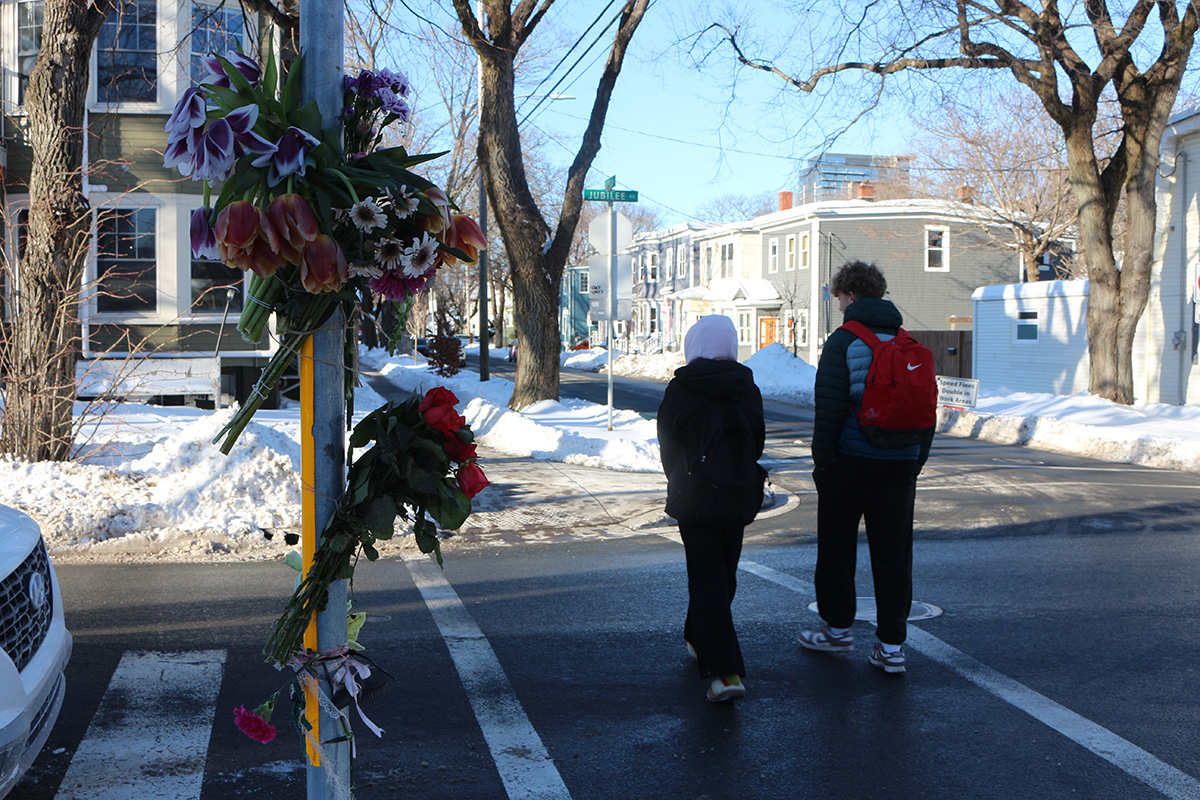
caption
Two students cross the street at Jubilee Road and Vernon Street around 5:45pm, the same time Alexandria Wortman was killed on Jan.27. Fresh flowers were left at the crash site for the one-year memorial of Wortman’s death.Sharma rear-ended a vehicle on Jubilee Road and was fleeing the scene of the accident when he struck Wortman, going 126 km/h in a 50-km/h speed zone. He continued driving with Wortman still on his windshield before stopping further down the road when he struck a parked vehicle.
Initially charged with manslaughter, Sharma, who had multiple previous driving offences, pleaded guilty to leaving the scene of an accident and criminal negligence causing death. Liam Coady, Wortman’s ex-boyfriend, said the sentence Sharma received isn’t justice.
“Who is satisfied with an average sentence length of four or five years for a crime like this, and why are we expected to take that in stride?” Coady said.
“Not only is Alex gone, but the punishment is just so astoundingly short. It’s shorter than her degree would have been if she’d been allowed to finish it.”
Coady said society is desensitized to how powerful vehicles are, and the public shouldn’t accept the legal precedent of drivers only receiving a few years in prison for killing pedestrians.
“There’s a big disconnect in how people think about what cars actually can do — the amount of power and weight and force behind a vehicle,” he said. “They’re incredibly dangerous for everybody involved, for the driver and pedestrians.”
The dangers of vehicles aren’t taken seriously because of “car culture,” Brown said. He thinks drivers face relative impunity because collisions are a necessary evil in a car-dependent society.
“That type of culture … flows into our legislature,” he said. “It flows into our police who enforce the laws. It also flows into people that are actually driving and do these offences.
“That whole culture has created this system that has left virtually no deterrence to people who do this.”
To Brown, deterrence looks like lowering and enforcing speed limits, educating the driving public and adding infrastructure to reduce vehicle speed.
“There’s far too many pedestrians being killed with very little infrastructure and very little effort from the people who can make these changes,” he said.
A dedicated budget line item titled “Road Safety Improvement” has been included in Halifax’s capital budget since the 2019-2020 fiscal year, according to Jake Fulton, a public affairs spokesperson for the municipality. This figure doesn’t include general upgrades to sidewalks and road infrastructure that are part of larger capital projects, said Fulton.
The HRM has spent $27.1 million in road safety improvements — including intersection and roadway modifications; installation and upgrading of marked crosswalks; and traffic calming — since 2019.
But 2025 saw the most pedestrian fatalities, four, in the HRM since 2019, according to the municipality’s own data.
“All the stats show, and everybody knows from road authorities to legislatures to engineers that speed kills,” Brown said. “But there’s very limited proactive steps being taken to reduce speeds in cars. They can set speed limits, but if you have a speed limit and it’s not being enforced, it’s useless.”
Last month, Coun. Tony Mancini said Nova Scotia will implement speed cameras on some roads in the HRM by the end of this year, but the province didn’t confirm.
The drivers are speeding in most fatal pedestrian cases Brown represents, but he said they rarely face speeding charges because it’s considered an acceptable part of “car culture.”
“Here in Ontario, for instance, we had speed cameras put in. They were giving out thousands of tickets to speeders, and the government revoked it because they know the travelling public likes to speed, and they’re not prepared to curtail that.”
With files from Emma Breton, Sam Hodd, and Callum Watson
About the author

Marielle Godfrey
Marielle is a fourth-year journalism student at the University of King's College. She enjoys beach days, reading, and her golden retriever, Angus.

Jenna Olsen
Jenna is a fourth-year journalism student at the University of King’s College and the editor-in-chief of the Dalhousie Gazette. Jenna is also...

Leave a Reply