
Halifax road safety hinges on council, activist says
caption
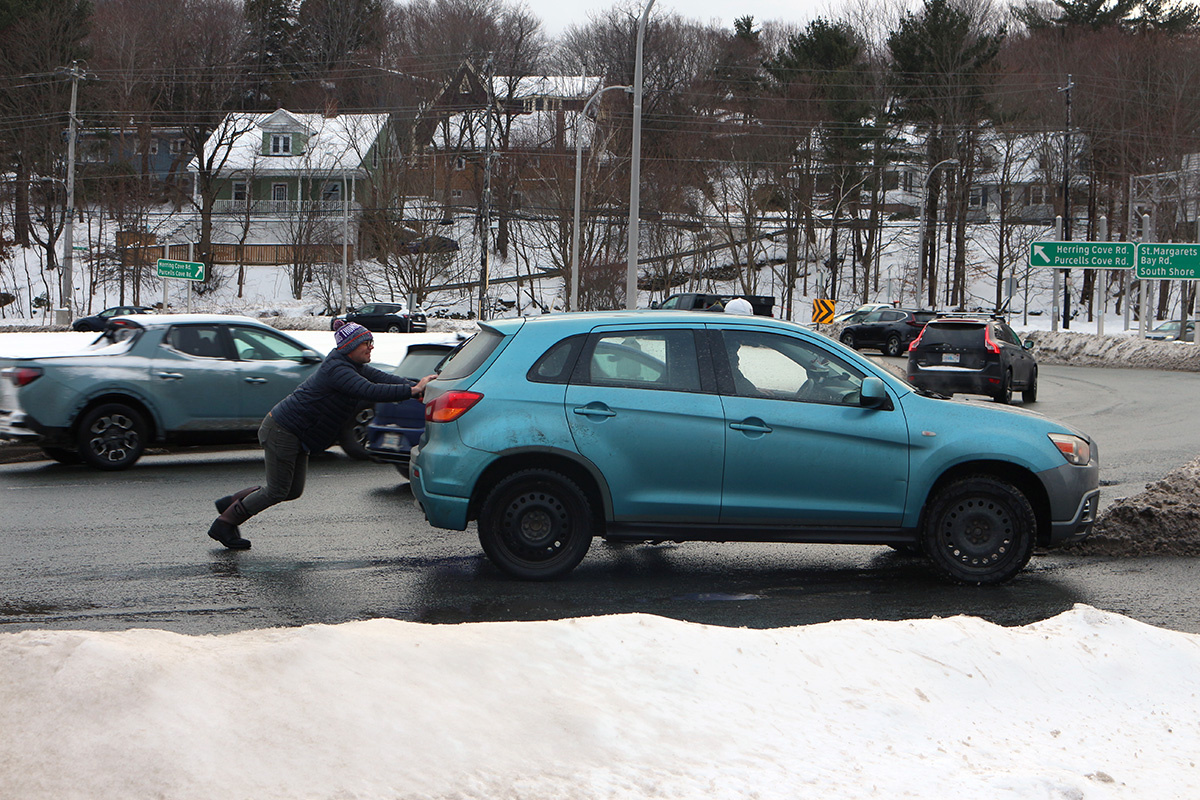
A man pushes a vehicle that stalled on the Armdale rotary on Feb. 2. The rotary is one of the most deadly roads for drivers in Halifax with 438 vehicle collisions since 2018Safety changes in HRM will take 'courage and determination,' says advocate
Despite adopting a road safety framework eight years ago, the situation with Halifax’s traffic safety has not improved enough, said Coun. Shawn Cleary.
Halifax adopted its first formalized road safety framework in 2018 to bring down the number of deaths and injuries on its roads, saying “any loss of life on our roads is unacceptable.”
That year, four pedestrians were killed by cars. Seven years later in 2025, the same number of pedestrians were killed by cars on Halifax’s streets.
“When you look at the injuries people are sustaining on our roads, and when you look at the deaths on our roads, they’re not improving in the ways I would want them to,” said Shawn Cleary, councillor for District 9.
The rate of collisions and deaths per 100,000 people is slightly lower than it was when efforts began. Citizens, community groups, and academics are stepping in to push for safer driving culture and infrastructure upgrades.
Cleary said the vast majority of calls he gets from his constituents are about traffic and many are about not feeling safe walking the streets.
Analysis of HRM’s traffic collision data found that Cleary’s district, which includes Armdale, Quinpool Road, and Bayers Lake has had the second-most pedestrian-vehicle collisions in the last eight years.
Laurie Batten says she feels unsafe walking the roads where she lives, too.
Batten walks to and from school with her four-year-old and two-year-old sons, and one-year-old daughter in her neighbourhood of Sambro. Most of their route has no sidewalks.
Walking in Halifax has been more of a challenge in recent years for Batten, as she said “it just became a more dangerous reality once you add kids in the mix.”
The highest proportion of pedestrian collisions over the last eight years occurred in District 7, Halifax South Downtown. District 7 Coun. Laura White says she would like to see more active transportation in the HRM.
“We’ve got a very car-dominant society and it is not safe.”
White would like to see measures follow three principles: education, enforcement and engineering. In a November regional council meeting, the councillor called for HRM staff to propose options for a new program aimed at enhancing driver awareness on the road via social media campaigns and other mediums.
Staff has told councillors the program would cost around $250,000, but specifics on how the project would be implemented have not been revealed.
Since launching its formal approach to road and pedestrian safety in 2018, HRM has spent $27.1 million on road safety improvement. This figure doesn’t include general upgrades to sidewalks and road infrastructure that are part of larger capital projects, HRM public affairs advisor Jake Fulton told The Signal in an email.
caption
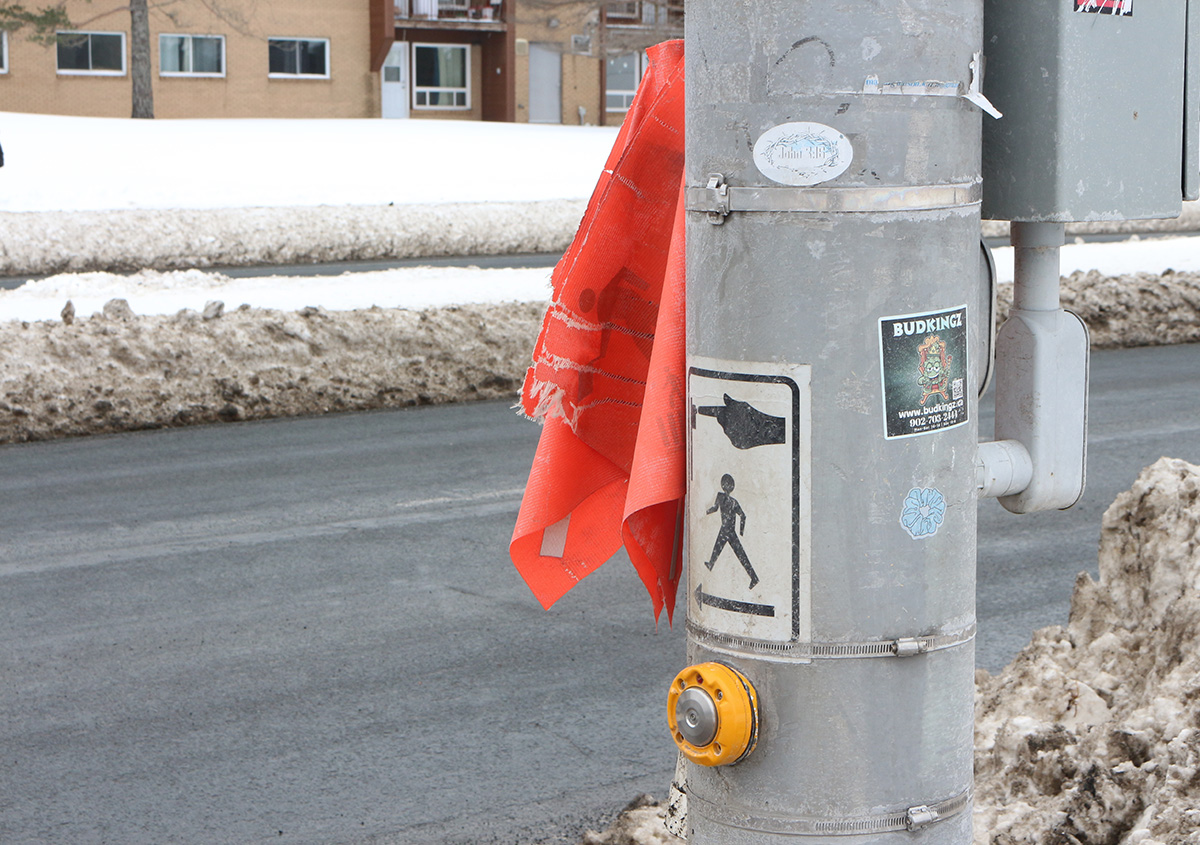
A crosswalk button and pedestrian flags at the intersection of Dunbrack Street and Clayton Park Drive.HRM has tracked the implementation of 471 road safety improvements between 2018 and 2025. These efforts included intersections that give pedestrians a few moments to start crossing the street before cars see a green light, known as leading pedestrian intervals, overhead flashing beacons for crosswalks, flashing signs on the sides of a crosswalk, lowered speed limits and traffic-calming ‘bump outs’.
In 2025, the HRM aimed to implement 115 of these countermeasures, but only 58 were completed.
Asif Anik is with the transportation research group Dalhousie Transportation Collaboratory. While he favours implementing more road safety infrastructure, he envisions Halifax undergoing bigger changes in the future. Through compact development downtown and mixed-use development, Anik says fewer people would depend on cars.
“Longer term, we should focus on more land use changes,” said Anik.
“We have to develop those areas so that we have denser developments there, putting housing, jobs, and retail businesses closer to the transit hubs and transit stops.”
caption
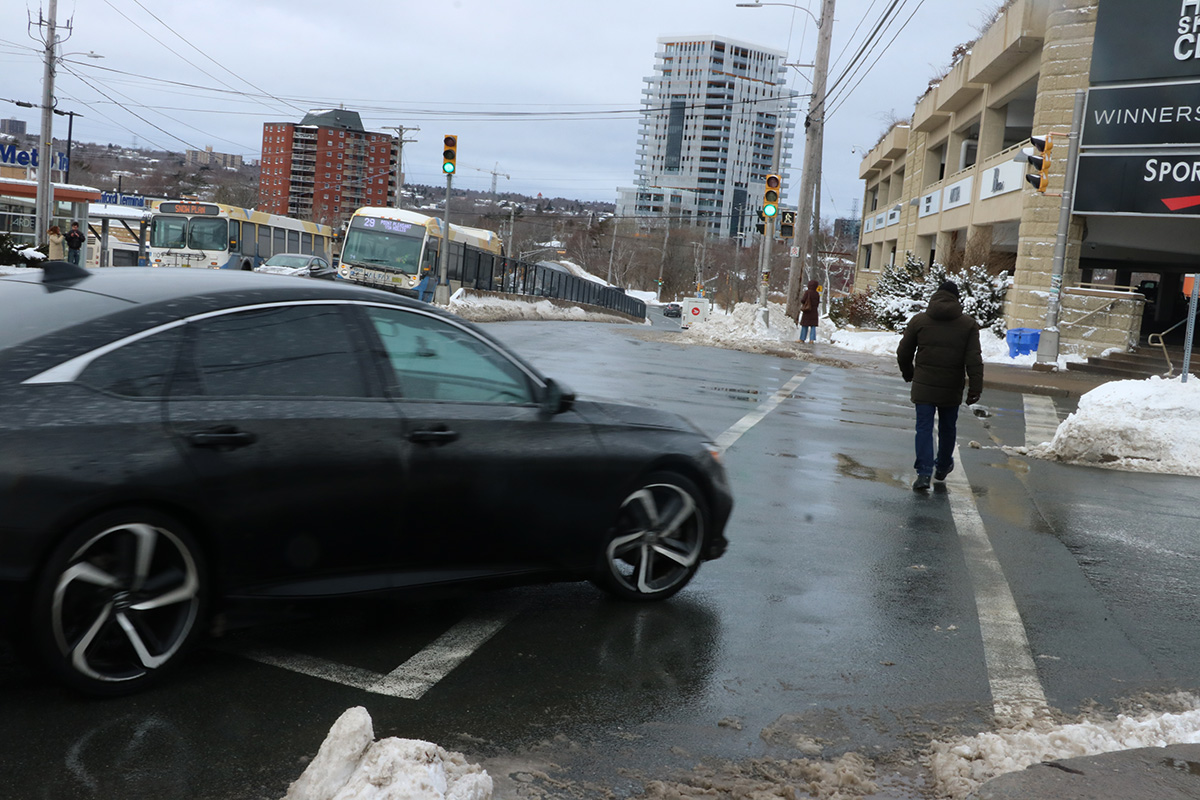
A car turns as a pedestrian crosses the road near the Mumford Bus Terminal on Feb. 2. The highest frequency hot spot for pedestrian involved crashes is Mumford Road, at the Halifax Shopping Centre / Mumford terminal. This had 18 pedestrian crashes.In the meantime, citizens are taking action to make their communities safer for walking. Martyn Williams, the long-time road safety advocate behind HRM Safe Streets for Everyone has spent much of the last 10 years meeting with councillors, attending committee meetings and making detailed requests to the municipal information line 311, all advocating for safety improvements.
Batten created an advocacy group called Safer Steps Chebucto to engage with other community members who want to see changes.
“We need to do more because, you know we’re part of these communities, but we can’t actually walk to our destinations because it’s just not safe.”
Williams said he wants the city to continue working toward its goal of zero road deaths by 2038 in the municipality and maintain a downward trend in the rate of fatal and serious injury collisions.
“That’s going to take courage and political will and determination that’s going to be from staff and our elected representatives.”
About the author

Emily Conohan
Emily Conohan is a fourth-year journalism student from Cape Breton.

Leave a Reply