
Halifax’s first 24/7 bus route, new rural transit, passed by transport committee
The new transit plan will go to regional council for final approval
caption
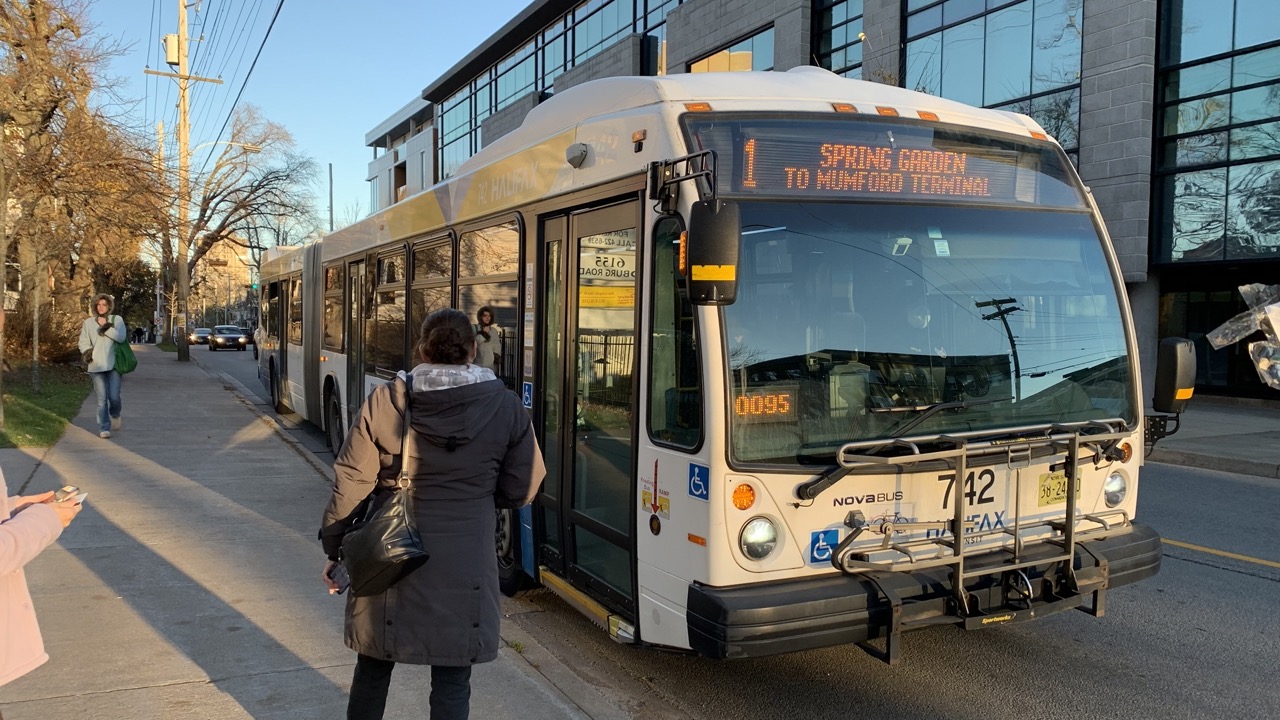
Passengers board a Halifax Transit bus on Coburg Road in Halifax.Halifax’s first 24-hour bus route, 25 route changes and a new system to service the municipality’s rural communities were among the transit changes greenlit by regional council’s transport committee on Monday.
After several hours of deliberation, the transportation standing committee moved both new transit plans, the core service plan and microtransit service plan, to Halifax regional council for final approval at a later meeting.
Twenty-four-hour service is coming to route 320 — which runs between downtown Halifax and the Halifax Stanfield Airport — with the service expansion potentially paving the way for around-the-clock service on other routes, according to Patricia Hughes, director of planning and customer engagement at Halifax Transit.
District 8 Coun. Virginia Hinch urged Halifax Transit to introduce 24-hour service to local routes, saying she’s received complaints from constituents who work downtown late at night.
Hughes said lots of process changes need to be made before that’s possible.
“It will be a bit of a big lift to get to that 24-hour service.”
Halifax Transit announced “improvements” for 25 routes — including increased service, schedule adjustments and route changes — and the introduction of Route 95 Brookline, which would run from West Bedford to Bayers Lake.
The plan includes purchasing 30 new buses — 15 of which are planned to be electric — which Halifax Transit said will improve on-time performance, which has been declining since 2023.
The new buses are estimated to cost $53 million, a figure not included in the municipality’s current budget, with the core service plan costing an additional $10.2 million in annual operating costs once implemented.
To make up for the expense, Coun. Sam Austin inquired if Halifax Transit could cut underperforming routes, but Hughes said they’ve already been removed over the past decade.
For the second year in a row, Halifax is the third-worst city in the country for traffic congestion, trailing only Toronto and Vancouver, according to data from location technology company TomTom.
Transit ridership continues to increase across public transit and ferries, specifically in suburban and rural areas where ridership was previously low. A 2025 Halifax Transit survey revealed the most requested improvement by riders was for increased service frequency and higher bus capacity.
Halifax Transit blamed the service delays on the municipality’s busy roads and the time drivers spend navigating complex intersections.
Austin questioned how more buses would improve congestion without infrastructure changes, like transit priority lanes.
“Throwing more buses into the heap to just have them sit in traffic is counterproductive when what we really need is to get the bus out of the traffic.”
Coun. Trish Purdy was “very happy” to support the plan, but councillors Cathy Deagle Gammon and Nancy Hartling — who do not sit on the transportation committee — were less enthused, lamenting it does little to add transit to Fall River, Prospect Bay and St. Margarets Bay.
The committee also approved the microtransit service plan, intended to service rural communities with lower ridership demand that are currently inaccessible by transit.
Riders would make real-time bookings through an app, with smaller transit vehicles picking up multiple passengers per trip who request rides near each other.
Austin questioned how this was different from ride-share apps like Uber, but Hughes clarified service would not be door-to-door.
Microtransit rides would be more expensive than standard fares, but still free to those who already have access to free transit, like students.
The plan outlined five priority areas within the HRM to introduce the microtransit program: Lucasville, Fall River, Cow Bay and Eastern Passage, Sambro West and Sambro East. Halifax Transit said Lucasville is its priority; the service would come there first as a pilot program with the eventual goal of expanding to the entire region.
Adding the service to Lucasville the first year would cost the municipality about $1.7 million if administered by a third-party vendor, or $2.3 million if run by Halifax Transit. After that, the first phase of plan would cost $1.7 million to operate annually.
The first phase of the plan won’t come until 2027-28, and would not be included in this year’s budget.
About the author

Jenna Olsen
Jenna is a fourth-year journalism student at the University of King’s College and the editor-in-chief of the Dalhousie Gazette. Jenna is also...

Leave a Reply