
New programs target stigma over mental health issues
Bell Let's Talk initiative helps out four Halifax organizations

caption
YMCA staff hand out food to students at the Night of Nourishment Event for Bell Let's Talk Day at the YMCA in Halifax.The stigma surrounding mental health is changing, and so are the programs to address it, say counsellors working in the field.
From increased awareness and funding for programs, the corporate initiative Bell Let’s Talk has for years marked initiatives to destigmatize mental health on one day in late January. This year, four Nova Scotia organizations received part of their program funding from a new grant supplied by Bell Let’s Talk.
One of these organizations, the Halifax/Dartmouth YMCA, received $25,000. To mark the day, the YMCA’s youth mental wellness team held a Night of Nourishment Event on Wednesday at the Anchor Youth Space for kids and families.
T.l. Johannesson is the general manager for youth and leadership development at YMCA Halifax. She says the $25,000 grant will be used to hire staff and increase program materials.
“Kids are struggling. I don’t know if you remember COVID and how hard that was as adults. Imagine if you’re a kid and losing those years in terms of your socialization, your peer support, gone, right? So, kids don’t have the emotional capabilities to deal with life like you and I might,” Johannesson said on Wednesday at the event.
“I have worked with youth for about 27 years now and it’s significant. They’re unable to emotionally regulate and they’re unable to socialize the way that they were pre-COVID. They’re always on their phones, with no problem interacting online, but when it comes to face-to-face interactions, they just don’t have the skills.”
Ryan Feron is a registered counselling therapist and mental performance coach who has also seen a shift in mental health over the past few years.
“I’m seeing more anxiety around performance, more fear of judgment, more burnout, and more pressure coming from social media,” said Feron.
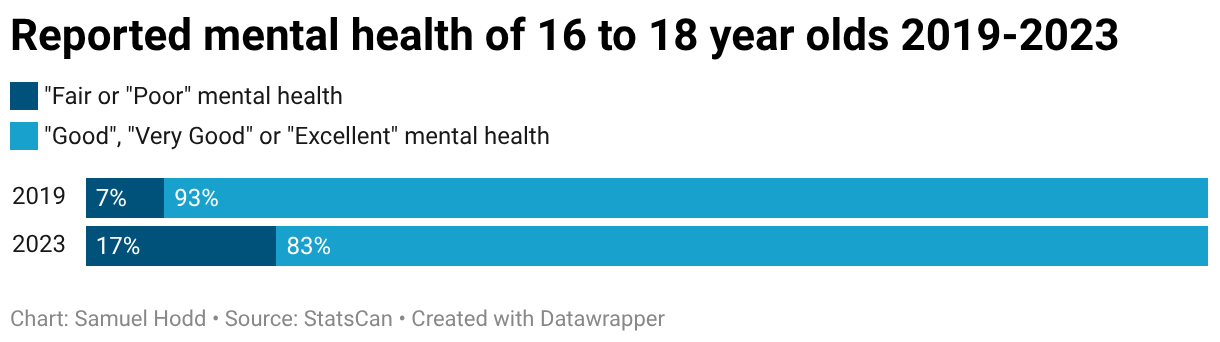
A Stats Canada article released last week with statistics from 2019 to 2023 also indicates shifts in youth mental health.
The 2019 survey showed that 12 per cent of youth aged 12-17 had rated their mental health as “fair” or “poor.” That proportion more than doubled to 26 per cent in 2023, when the respondents were aged 16 to 21 years.
Among the 88 per cent of youth who rated their mental health as “good,” “very good” or “excellent” in 2019, about one in five (21 per cent) reported experiencing a decline to “fair” or “poor” by 2023.
Feron says that some of the changes regarding mental health aren’t entirely negative.
“The interesting shift I’ve noticed is that people are not waiting until things completely fall apart, they’re reaching out earlier, which is a positive shift.”
Deejay Clayton, the program supervisor for youth educational support at the YMCA, has been working with youth for 20 years now. He says the Anchor Youth Space where he works is a safe and inclusive mental wellness centre in Halifax’s North End.
“The programs we run mean a lot. I know it helps the kids,” said Clayton.
“When I was younger mental health wasn’t taken seriously. Now it’s more understandable and there are programs to help, which means so much to me.”
caption
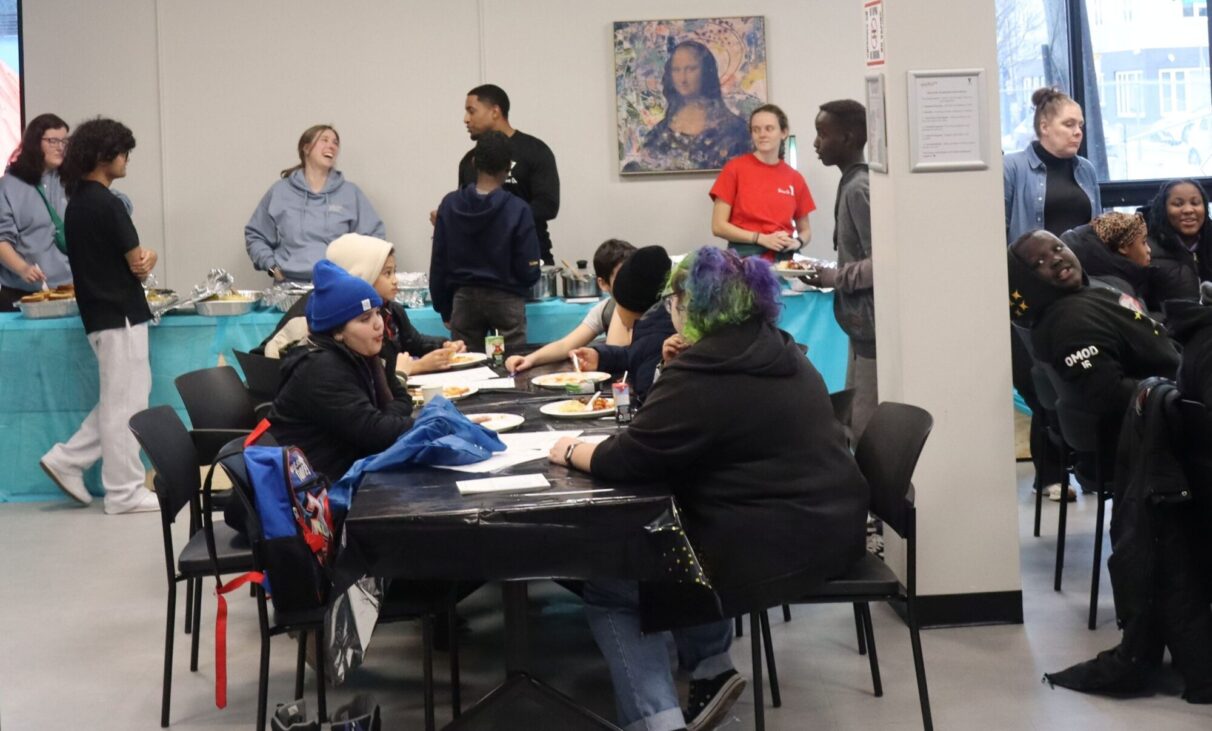
YMCA staff and students chat and socialize at the Night of Nourishment Event for Bell Let’s Talk Day.Another program the YMCA offers is the Y-Mind program, which aims to help youth struggling with mental health through mindfulness exercises and calming techniques. This year the program will be going into several schools in the community.
“This program helps support youth dealing with some challenges. We get calls all the time asking us to come do Y-Mind in our schools and in our community. So the need is really there,” said Johannesson.
Despite these positive shifts around the stigma of Mental Health, Feron says more can still be done.
“There’s definitely more that can be done. I’d love to see mental health services continue to be more integrated into schools, sport organizations, and community programs, not just as crisis response, but as prevention and education. For clients, better insurance coverage and shorter wait times would make a big difference and for counsellors, more support and systems that recognize the emotional load of the work are essential,” said Feron.
“Mental health isn’t a one-day conversation. It’s ongoing. We’ve taken steps forward, but continued investment and education are critical if we want real, lasting change.”
The three other organizations receiving help are the Avalon Sexual Assault Centre, Brigadoon Children’s Camp and Healthy Minds Co-operative.
About the author

Samuel Hodd
Sam is a fourth year journalism student at the University of King's College and Broadcaster for the UKC Blue Devils.
