
Consequences of pedestrian-vehicle collisions go beyond the victims
caption
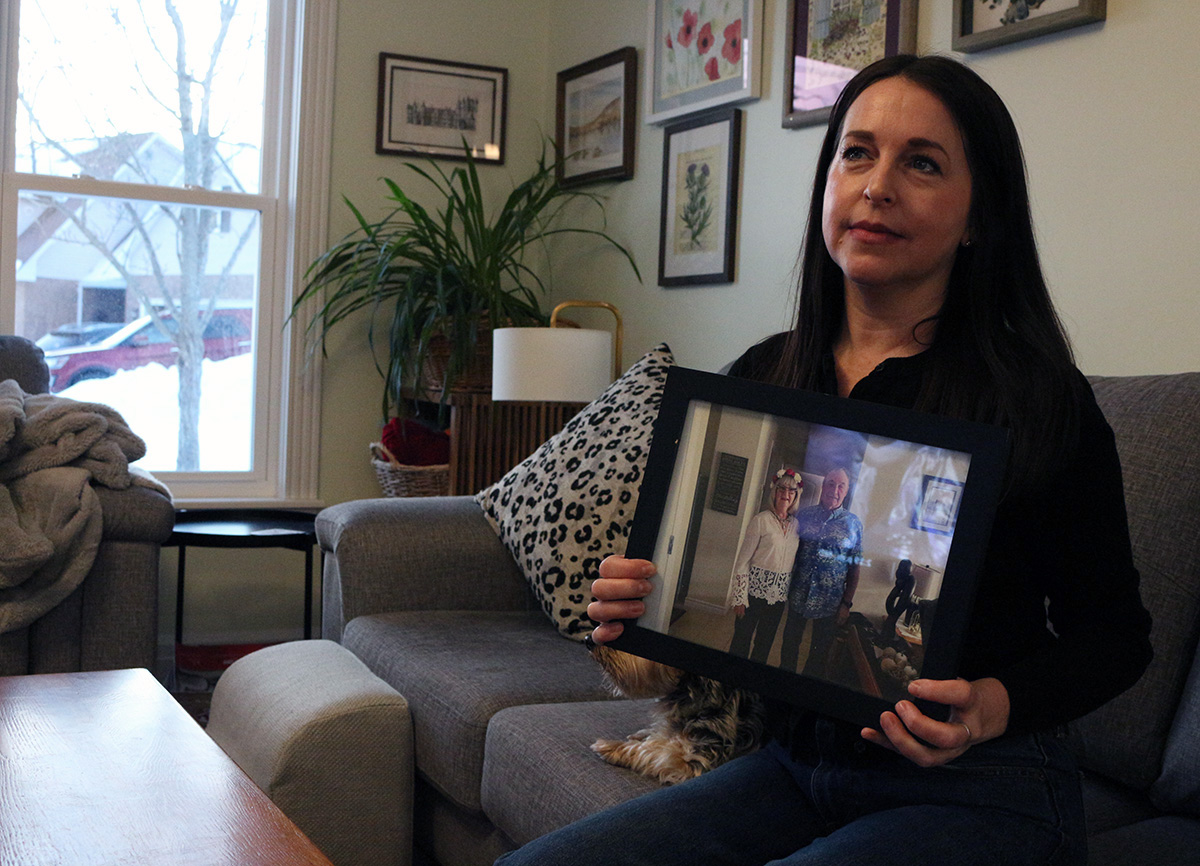
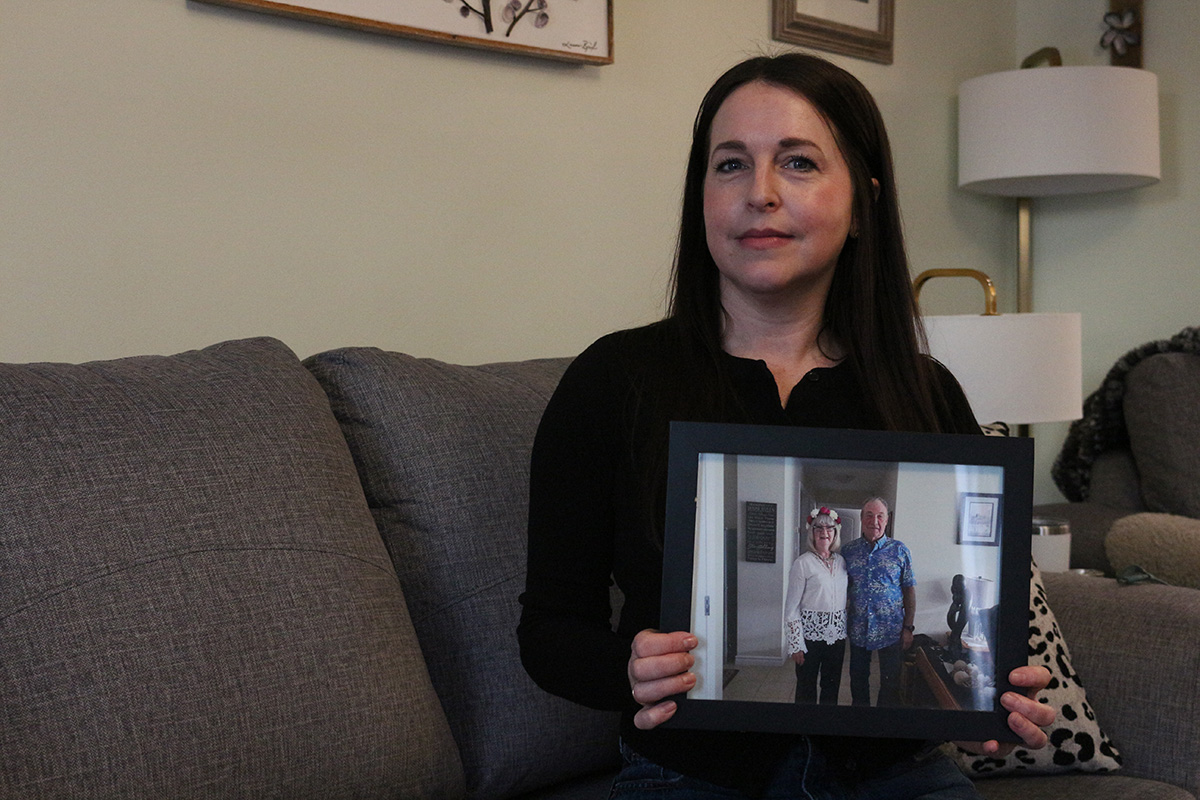
Emma Warren holds a photograph of her deceased parents at her home in Cole Harbour. Warren's mother Kathy was struck and killed by a driver in 2020. Her father, Ernie, died from a few years later from 'a broken heart.'Family members say they still feel the loss of their loved ones long after the accidents that killed them
This is the story of four people in Halifax struck in crosswalks by cars.
Alexandria Wortman, Kathleen Warren, and Dawn Nichols died, while Richard Kent was badly injured.
Warren was killed when a driver turned right on a red light; Nichols was killed by a car in the rightmost of four lanes of traffic; Wortman was killed by a hit-and-run driver; and Kent, who survived, was hit in a crosswalk by a driver.
Despite infrastructure upgrades like sidewalks and lit-up crosswalks, pedestrians are still hit by drivers in vehicles. Family members of victims fight legal battles, stress the importance of retesting, and know firsthand that Halifax is a tough city to drive — and walk — in.
Victims and their family members are left to plead for people to drive safer.
Since 2018, more than 1,300 pedestrians have been hit by a vehicle in the HRM, according to its traffic collision database. In that time frame, 20 pedestrians have been killed, eight of which happened at crosswalks. In 2025, four pedestrians were killed, making it the deadliest year since 2019.
On the night of Jan. 27, 2025, Alexandria Wortman was killed in the Jubilee Road and Vernon Street crosswalk by a car driven by Deepak Sharma. He struck the 21-year-old woman while driving 126 km/h in a 50 km/h zone.
caption
Alexandria Wortman, as seen in her obituary. She was 21 when she died.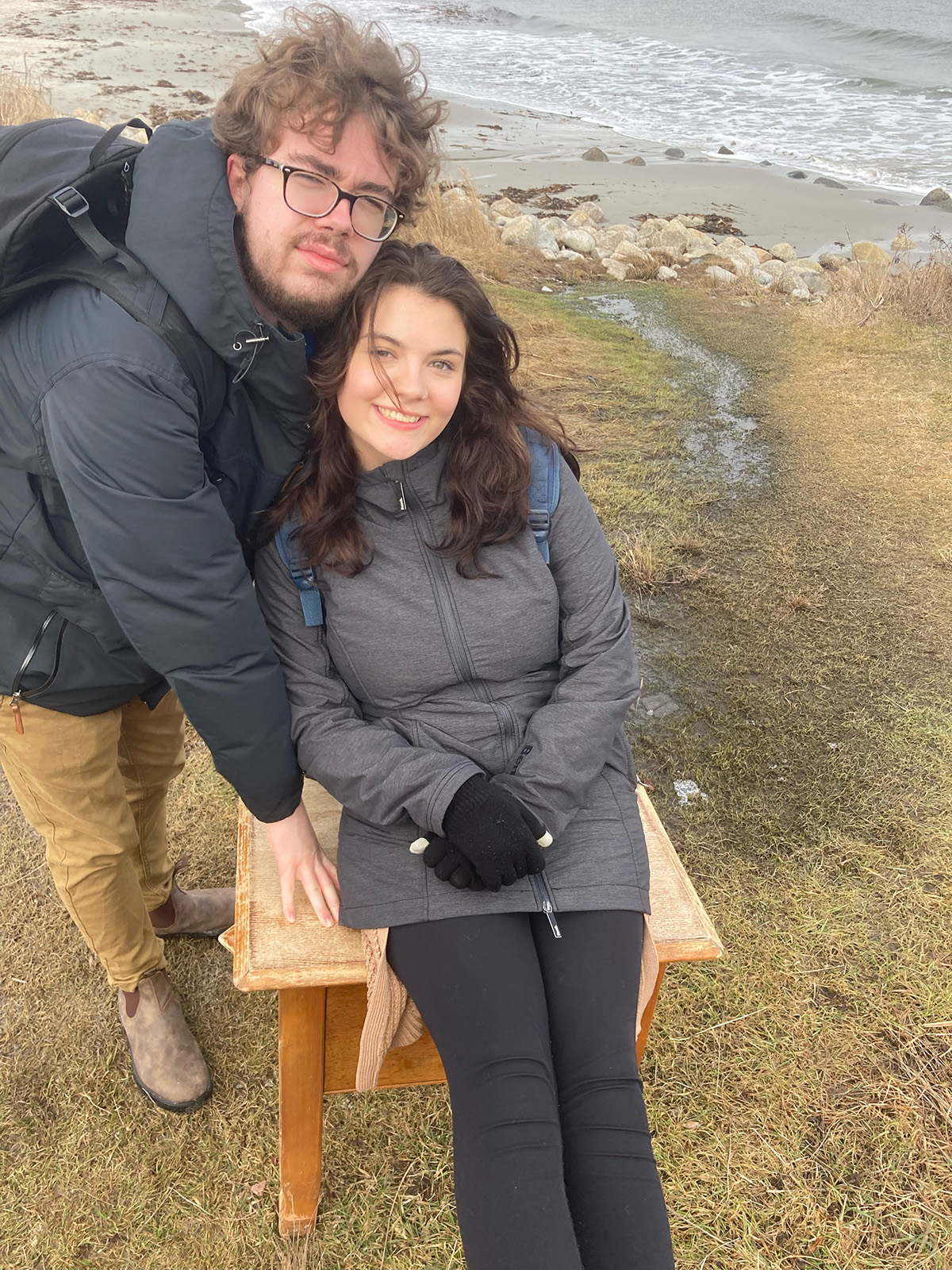
caption
Alexandria Wortman with former boyfriend, Liam CoadySharma was fleeing from another crash and after striking Wortman, continued to speed away with her body on the hood of his car. After a third collision, he stopped.
Liam Coady was Wortman’s boyfriend of two years. They broke up two months before the collision.
“She was amazing. I think that’s the first word I’ll use for her,” Coady says. “She was an incredibly passionate person, incredibly empathetic, incredibly kind, incredibly warm.”
He says she was someone you always wanted in your corner and that she had so much more to give to the world.
“The hardest thing is trying to accept that there was no going back and this is the world now, this is the reality,” Coady said.
caption
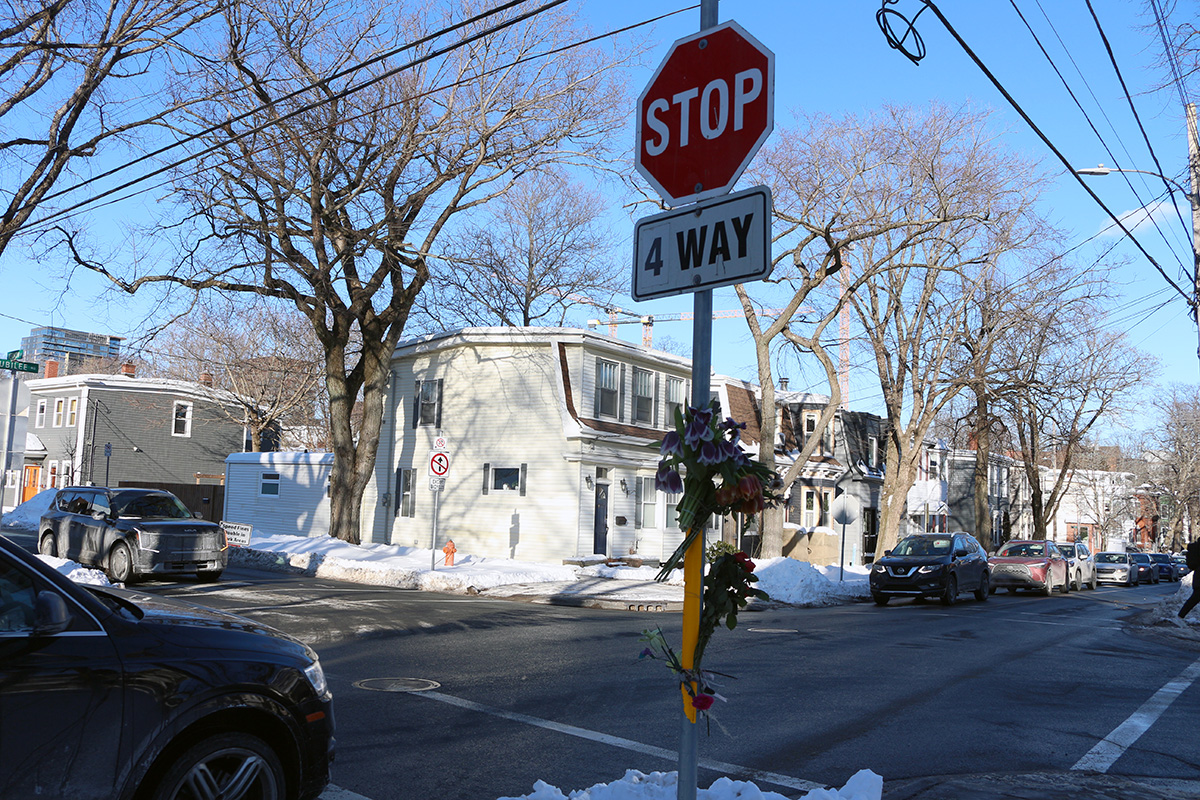
A stop sign is decorated with flowers at the intersection of Jubilee Road and Vernon Street, where Alexandria Wortman was killed. The intersection is used daily by many students of all ages walking to and from school.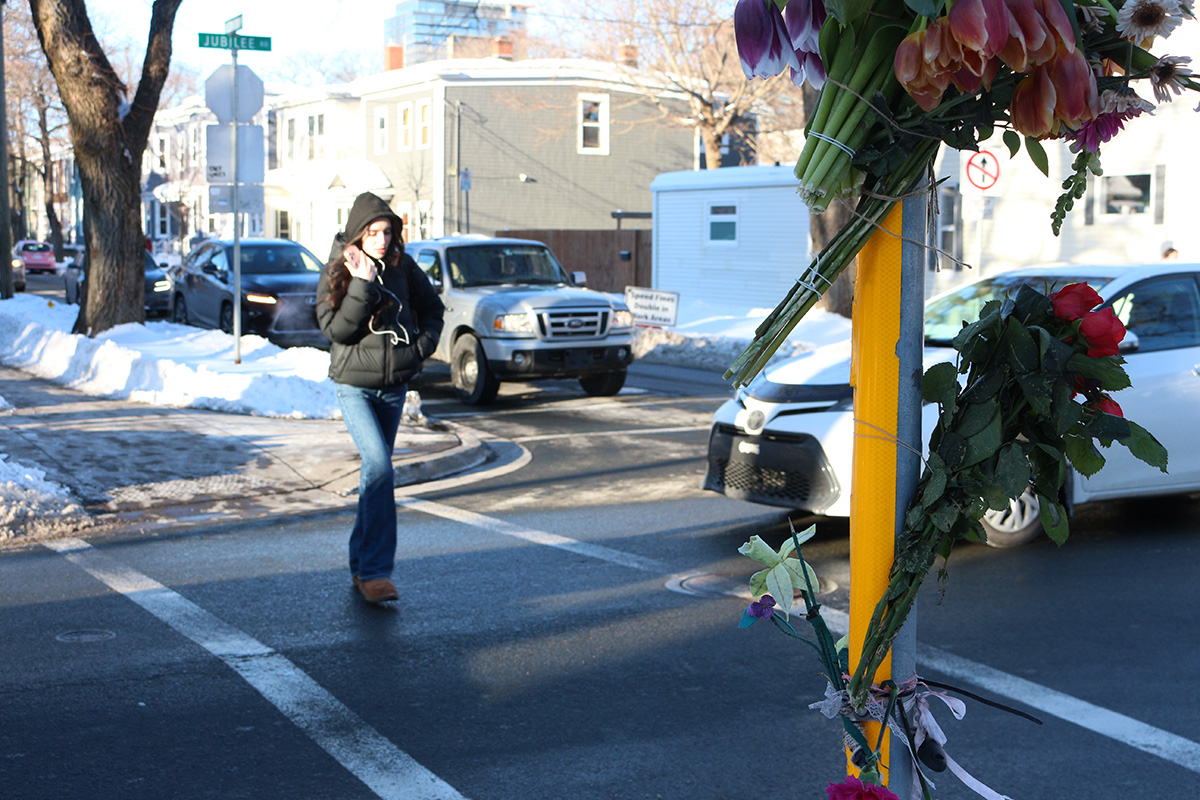
caption
A young woman crosses the street as a car turn into the intersection at Jubilee Road and Vernon Street.In September 2025, Sharma, the man charged with killing Wortman, was sentenced to four years in prison and received a 10-year driving ban. The Signal reached out through correctional facilities to interview Sharma, and he declined.
“Not only is Alex gone, but the punishment that’s been handed out is just so astoundingly short,” Coady says. “Shorter than her degree would’ve been if she’d been allowed to finish it.”
caption
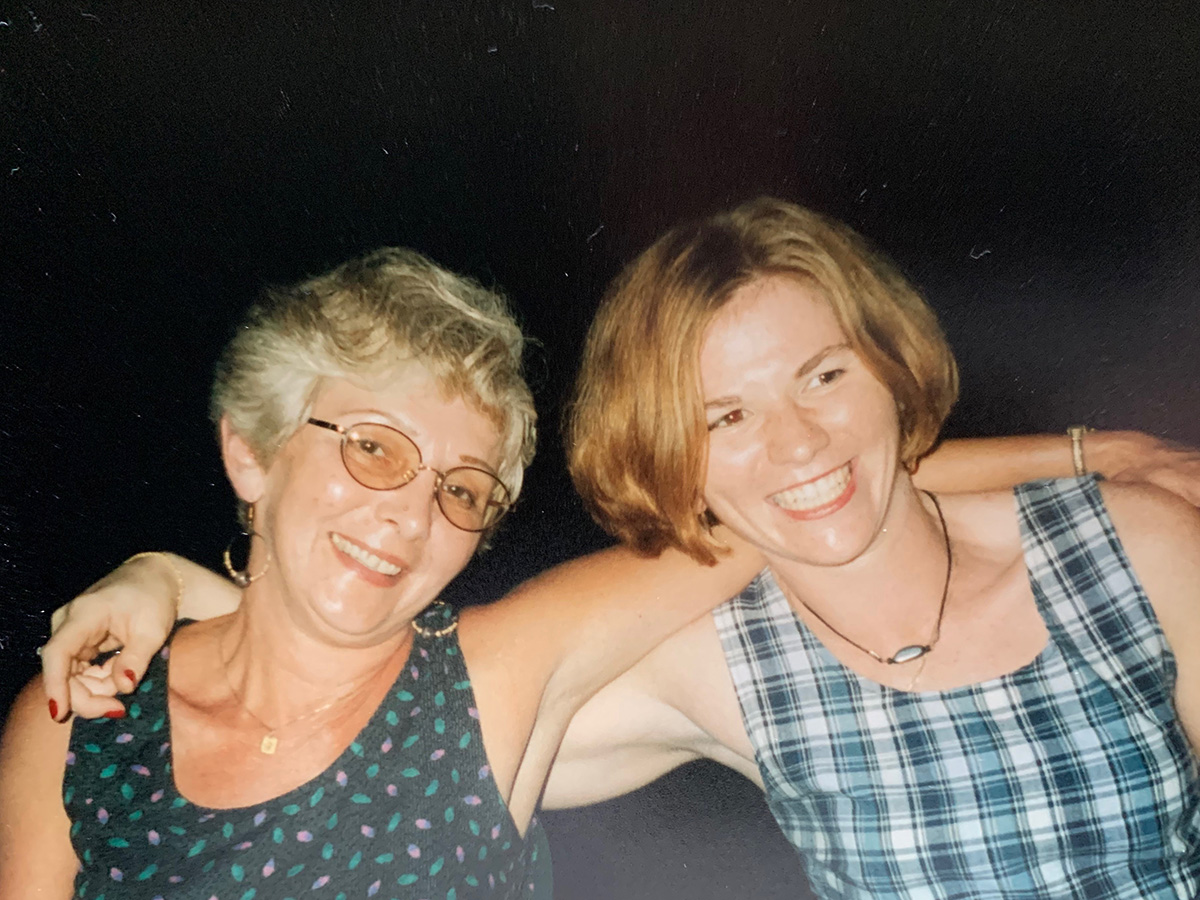
Dawn Nichols, left, and her daughter, Nikki Robar, right. Dawn Nichols was killed in a crosswalk in 2020.Nikki Robar regrets how her mother, Dawn Nichols, died: On the cold road, without her family.
Nichols was run over and killed while walking across Dunbrack Street at Clayton Park Drive in Halifax in a marked crosswalk in February 2020. She was 73.
Nichols had almost reached the sidewalk when a car in the right lane didn’t stop. The 83-year-old driver didn’t see her, even with the RA-5 overhead crosswalk lights flashing.
“Early days we were all just inexplicably angry at everyone and everything,” says Robar. “It just felt like a very dark burden that we all carried.”
caption
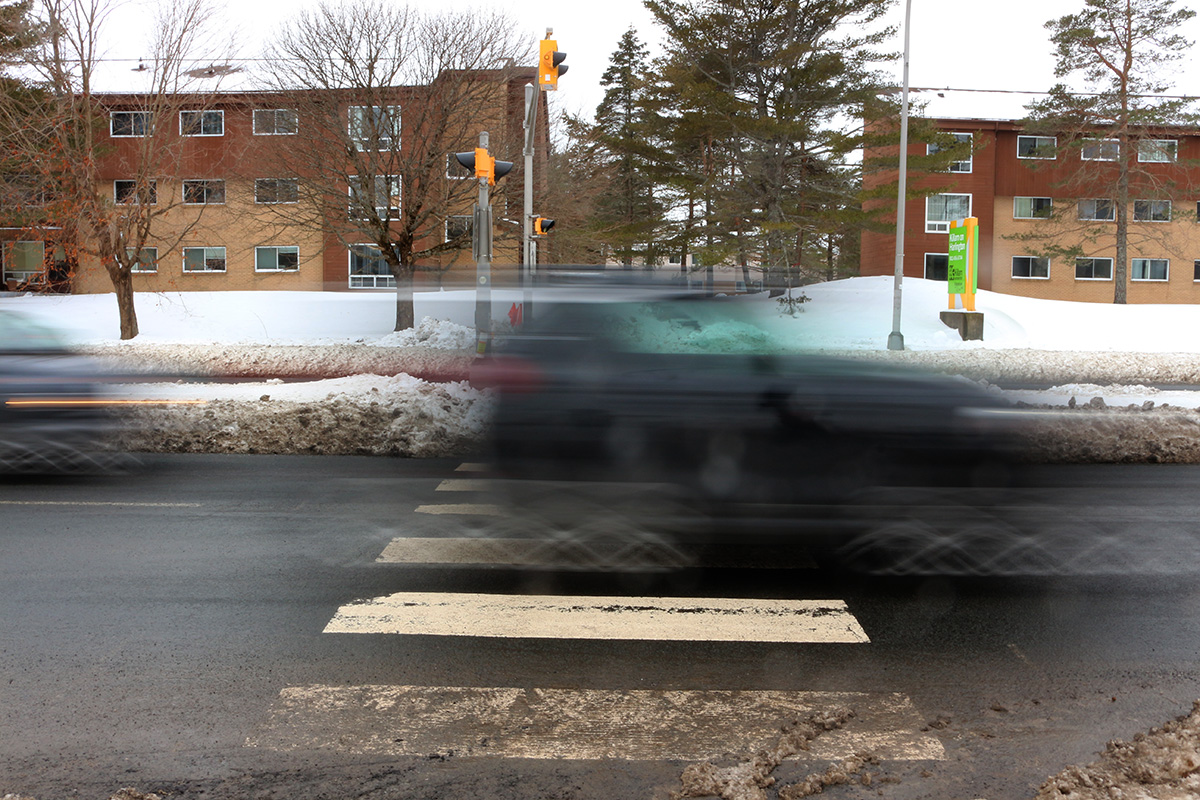
Cars race past the intersection on Dunbrack Street and Clayton Park Drive. The intersection is especially busy in the early afternoon, which is when Dawn lost her life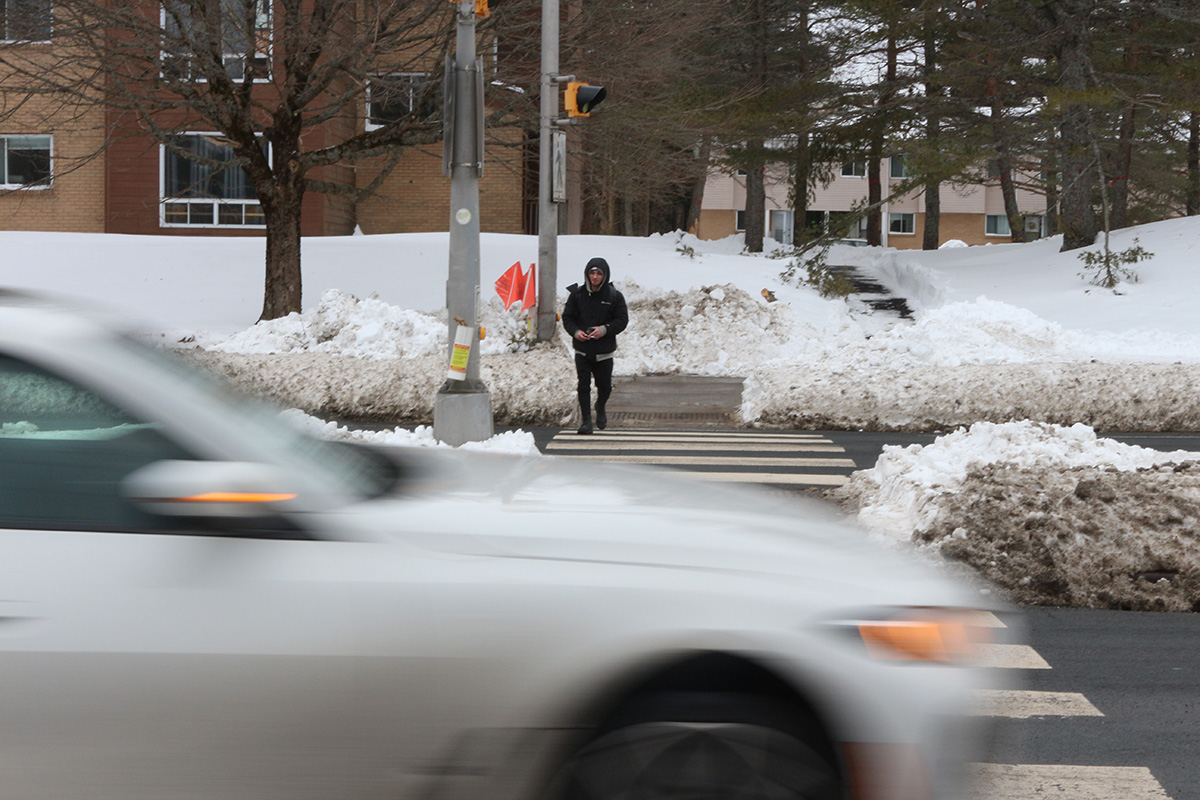
caption
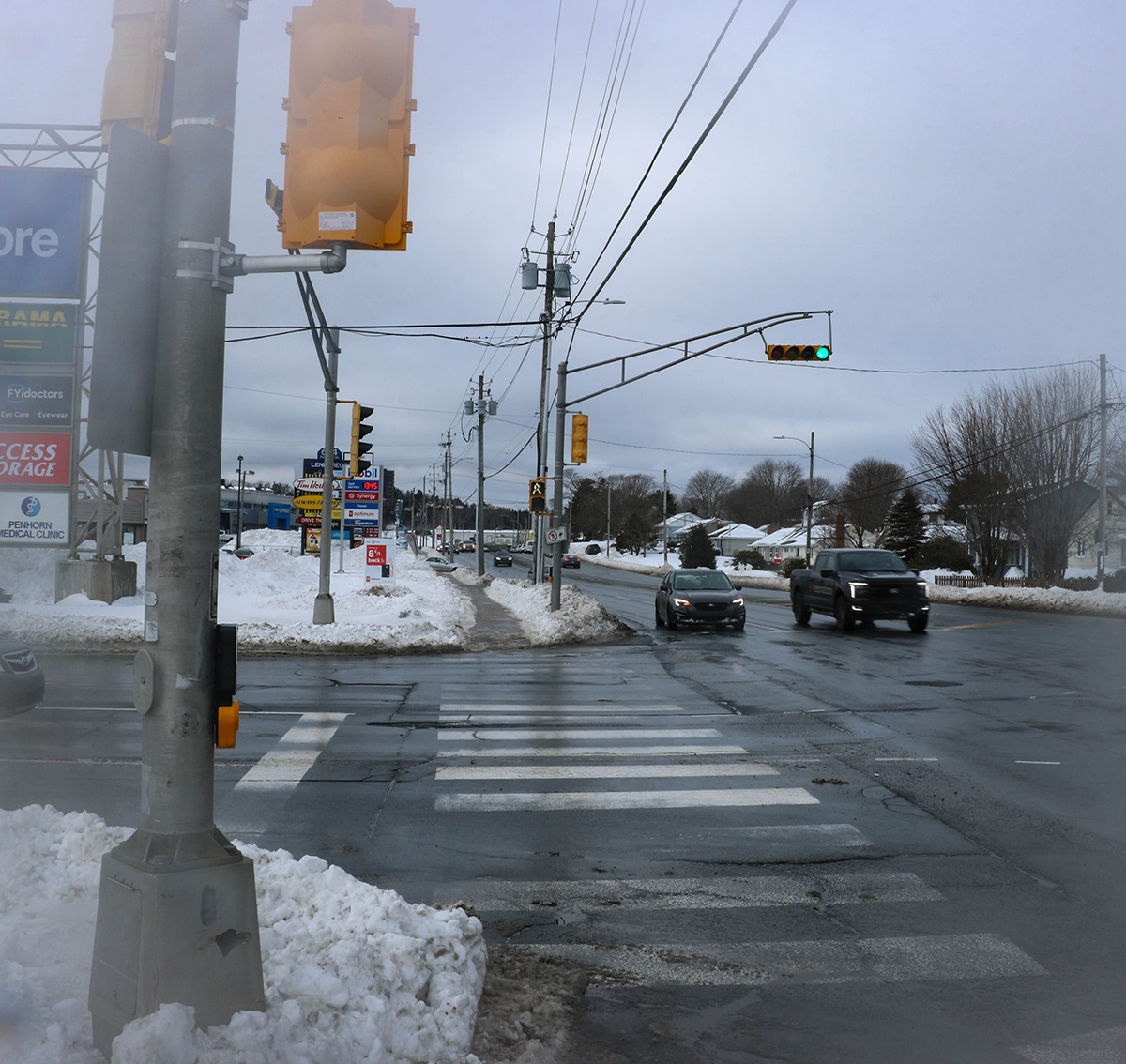
A pedestrian begins crossing the four-lane intersection at Dunbrack Street and Clayton Park DriveA month later, on March 31, Kathleen Warren was struck by a car while crossing Portland Street at Eisner Boulevard in Dartmouth. The traffic lights gave Warren the right of way but she was struck by a motorist turning right on a red light. She died in the hospital a week later from injuries at the age of 68.
caption
Cars wait at a red light at the crosswalk between Portland Street and Eisner Boulevard in Dartmouth. The crash that killed Warren took place at 10:12 a.m. on an overcast day. The street’s speed limit was changed from 60 km/h to 50 km/h in 2022.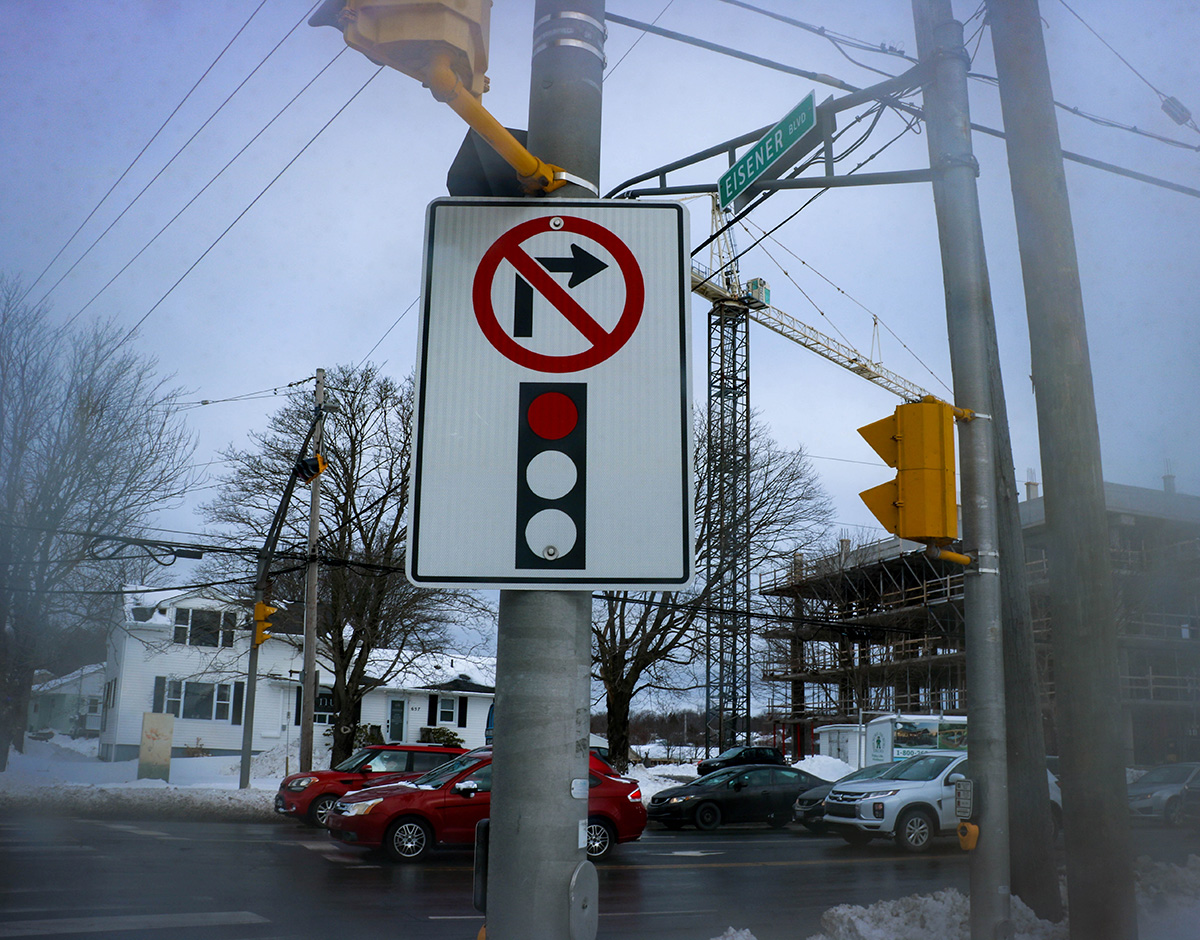
caption
A no right turn sign by Eisener Boulevard in Dartmouth. The sign was added in 2024, four years after Warren was killed.“You have such a responsibility when you get behind the wheel of a thousand-pound machine. It only takes a split second for something bad to happen, said Warren’s daughter, Emma.
“Be cautious, you don’t just take someone’s life; it also has a huge impact on their entire family.”
caption
Emma Warren holds a photograph of her parents. Warren’s mother Kathy was struck and killed by a driver while crossing the road at Portland Street and Eisener Boulevard. Her father passed away from a ‘broken heart’ a few years later.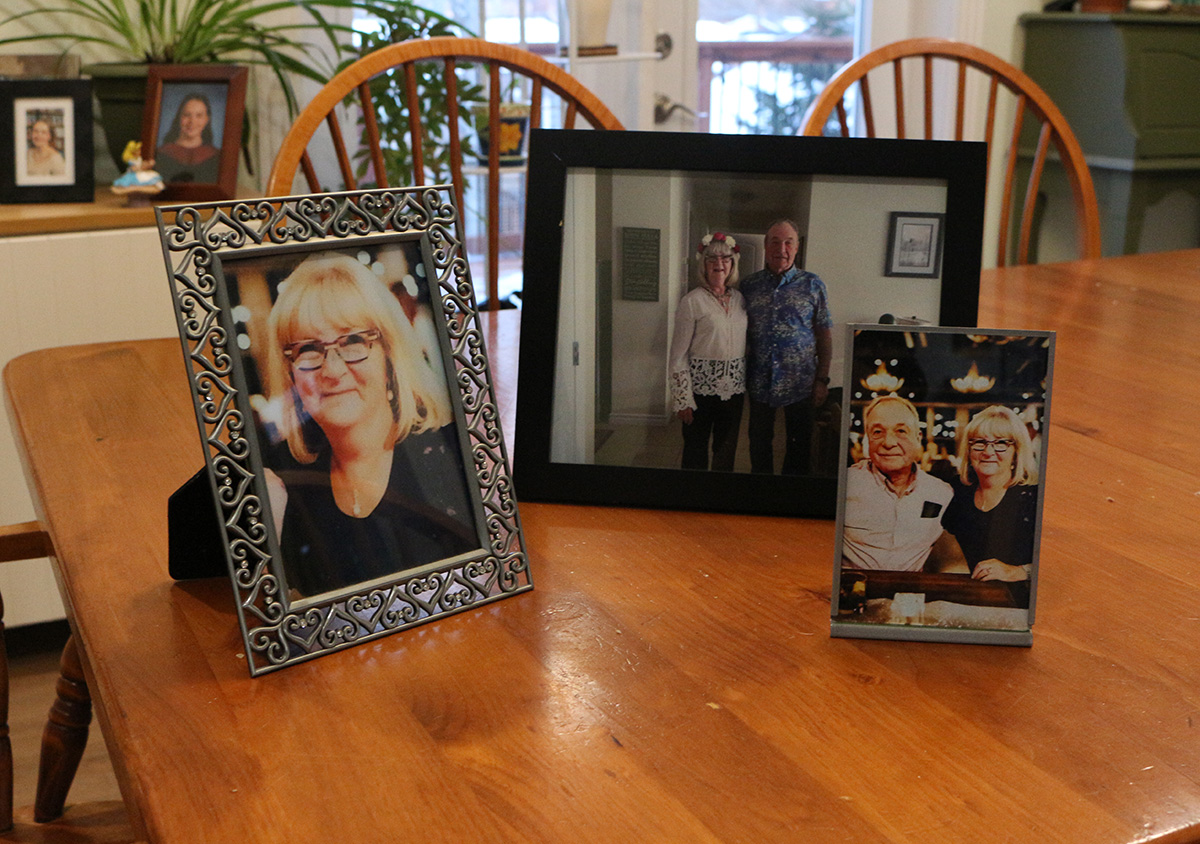
caption
Photos of Kathy Warren with her husband are laid out on her daughter Emma’s kitchen table.Robar, whose mother was killed by an 83-year-old driver, is disappointed that there is no mandatory driving retesting in Nova Scotia.
Primary health care providers are the only people in Nova Scotia who can pre-emptively force a driving retest or take a licence away themselves. The responsibility falls on family members to contact doctors or nurses, often behind the driver’s back.
“It’s tough because there’s really very little motivation for the family members to do much about it,” Robar says. “But that’s the only people who really can.”
She proposes a more sophisticated system for helping seniors get off the roads and accommodating the needs that they still have.
“We’ve got this population of people who’ve been driving here for decades and feel that this is their backyard,” Robar says. But “we’ve got a very changed network of roads and traffic than we had before.”
Hoping to bring more attention to her mother’s case, Robar decided to sue the driver, who was charged with failing to yield to a pedestrian in a crosswalk. But when the man died, so did the lawsuit.
caption
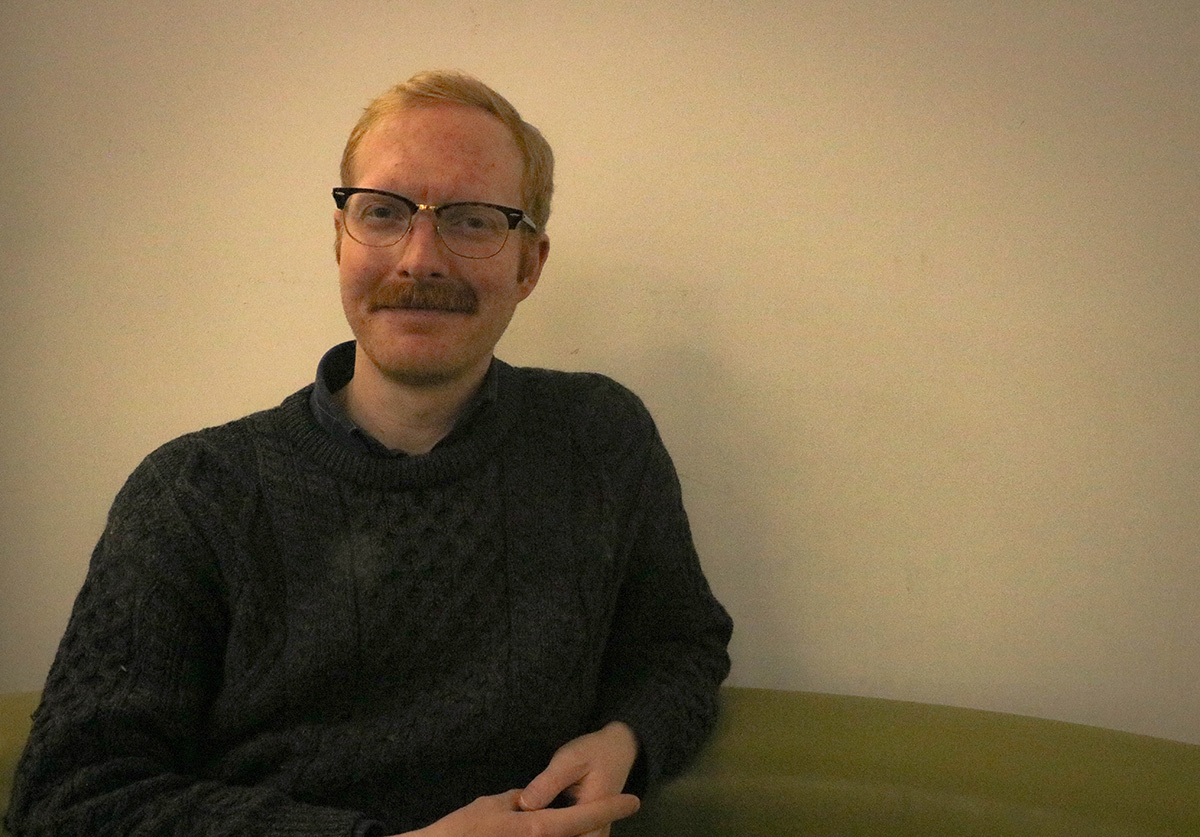
Richard Kent poses for a portrait at the Halifax Central Library on Wednesday Feb. 4, 2026 in Halifax, Nova Scotia. Kent is wearing the same sweater he wore when he was hit by a car in February 2018.While in a crosswalk at North Park Street and Nora Bernard Street in Halifax one night in February 2018, Richard Kent was struck by a car. He, too, sought legal action and found the process difficult to navigate — especially since he suffered a concussion in the collision.
For the first week after the accident, Kent couldn’t work and was never compensated for the lost wages. After finding the driver’s insurance company and getting in touch, the package they sent was “totally unnavigable to a person who hasn’t been to law school,” he says.
Kent couldn’t get compensated for the collision without going to court because that paperwork required a family doctor, which he didn’t have at the time.
“Eventually, I had to lawyer up and sue this f—ing driver. And that sucked. That was as bad as being hit by the car.”
caption
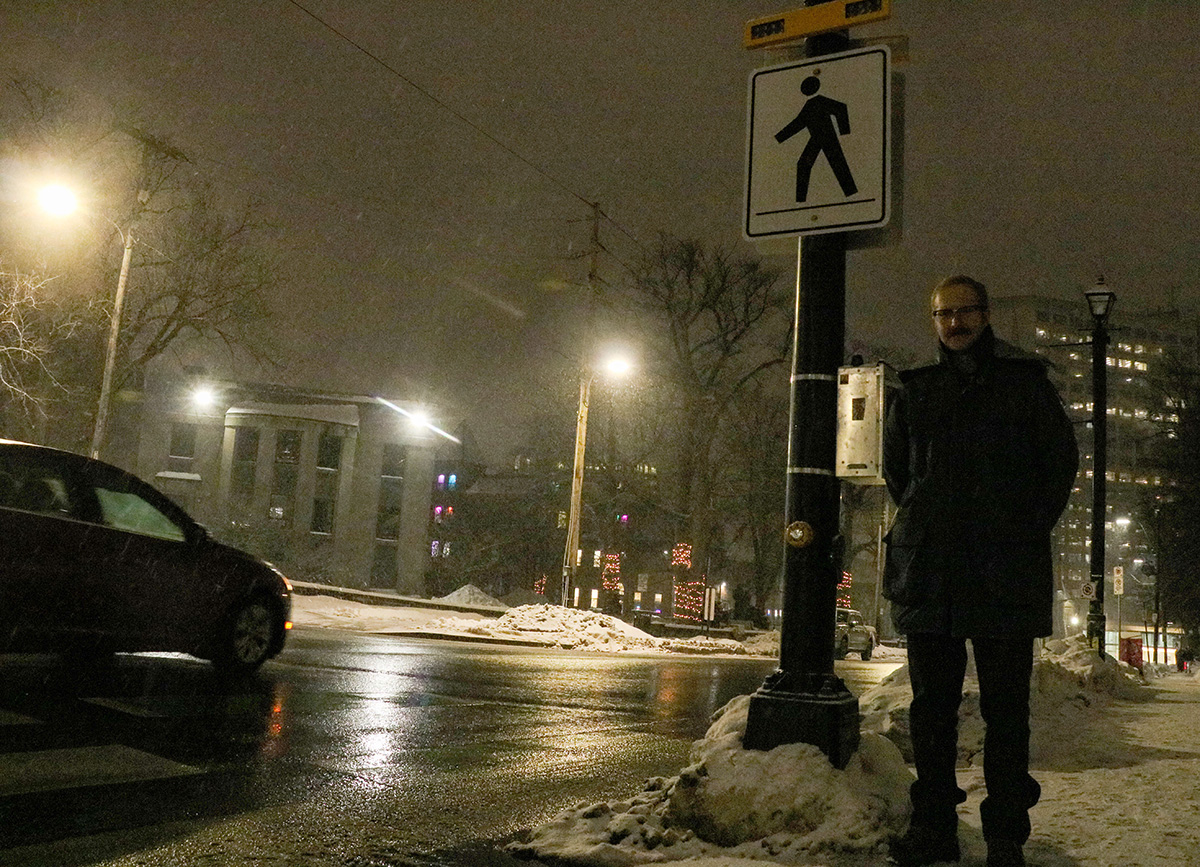
Richard Kent stands by a crosswalk near the Halifax Central Library on Wednesday Feb. 4, 2026 in Halifax, Nova Scotia. Kent is wearing the same jacket he was wearing when he was hit by a car in February 2018.During the lawsuit, Kent learned there were details of the accident that affected the outcome of his court proceeding. Wearing a high-visibility vest would have resulted in 15 per cent more settlement money.
“I wasn’t wearing one, ’cause why the f— would I be wearing a high-vis vest?”
Kent didn’t expect the psychological impact getting hit by a car had on him.
“I remember a week or two after I was hit … an engine revved in a way that was similar to the sound of the car engine, right before I got hit … I still jumped three feet in the air ‘cause it was just really, really scary.”
caption
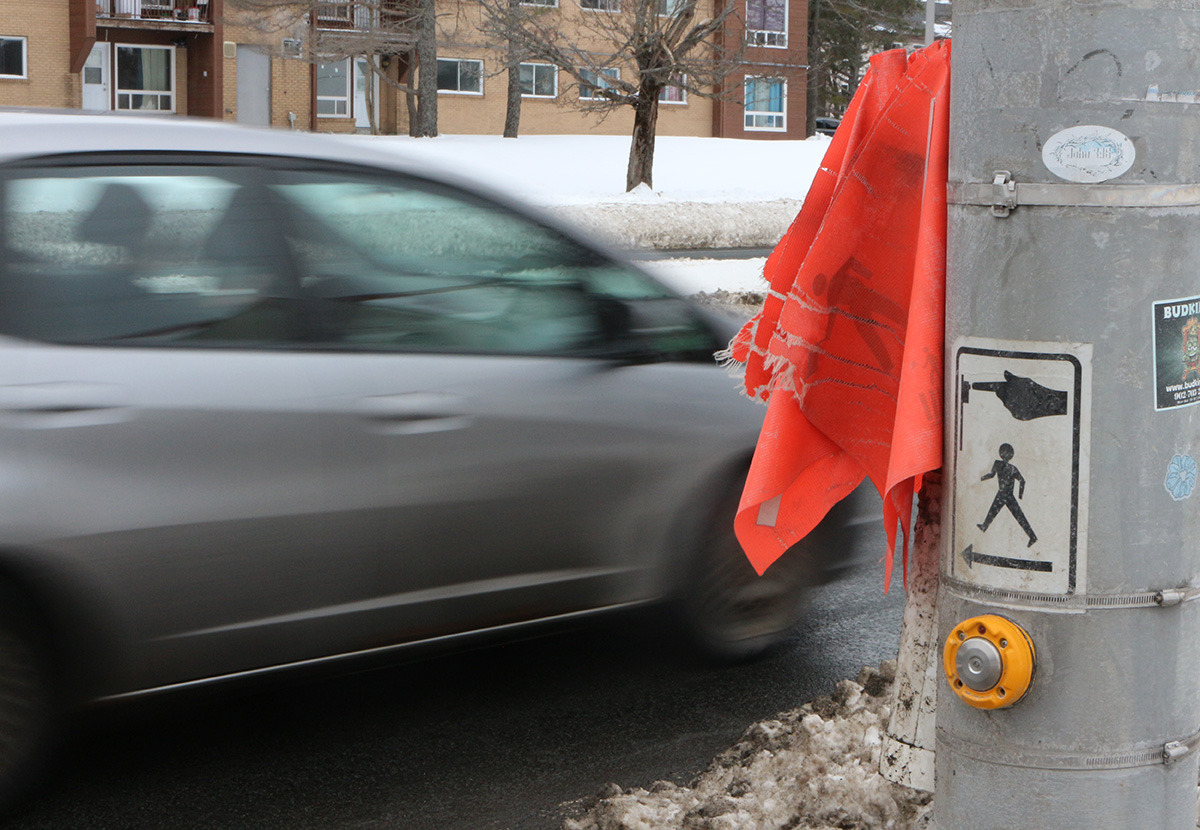
Pedestrian crossing flags are placed near the crosswalk button at either side of Dunbrack Street and Clayton Park DriveNow, when Robar approaches crosswalks, she looks for eye contact with drivers; her trust in them is gone.
If she knows there’ll be many pedestrians in an area, she’ll take an Uber instead of driving herself. It causes her too much anxiety, especially as some pedestrians care about their right of way more than their safety, and step off the sidewalk with entitlement, she says.
“I do feel a lot of empathy for the people that are hitting the pedestrians as well,” Robar says. “Nobody sets out to do it, right? And so, it’s life-altering for a lot of people. Not just the victim.”
About the author
Ellie Enticknap-Smith
Ellie is a fourth-year journalism student at the University of King's College. She enjoys reading, writing, and swimming at the cottage in her...
Callum Watson
Callum is a fourth-year journalism student at the University of King's College, who specializes in sports journalism and sports broadcasting....
