
Pet owners navigate changing vet ownership landscape
Veterinary corporations slowly buy up local clinics, bringing corporate ethos to pet care
caption
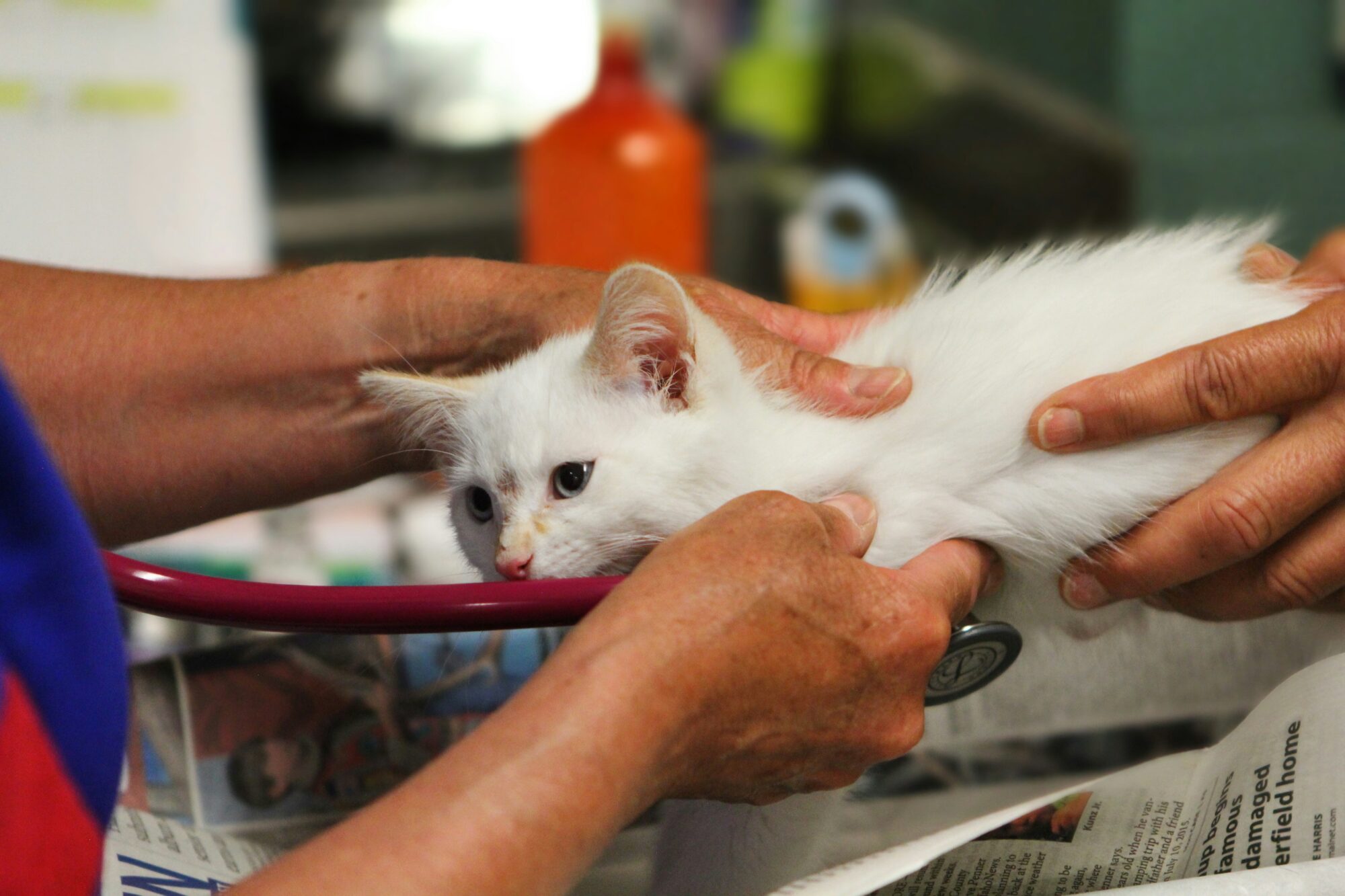
Veterinarians examine a kitten with a stethoscope in this file photo. Some Halifax vet clinics are converting to corporate ownership.In Halifax, when someone’s pet dies, they often take it to a crematorium. For two decades, people would do this at Metro Pet Crematory.
In the fall, locally owned Rebirth Pet Cremations opened up, as well as a corporate-owned crematory called Gateway Pet Memorial.
In January, Metro Pet Crematory’s owner, Edward Rhindress, announced it would be closing. He cited losing business to “a new corporate owned crematory” as the reason for closing.
Corporate takeovers of vet clinics and pet crematoriums has been rising, and is affecting how workers provide care and how pet owners access it.
Veterinarian Karyn Steele, co-owner and medical director of AprilVets Dartmouth Crossing, has been through three different corporate takeovers at other clinics. She opened AprilVets in 2024 with two other veterinarians.
The Signal’s analysis of 34 vet clinics in HRM found that 19 of them were corporate-owned. The largest veterinary corporations in Canada are VetStrategy, VCA Canada, and NVA Canada.
“Things didn’t change drastically right off the bat,” says Steele about the most recent takeover she worked through.
“But over time working there felt like the sort of personal relationship that you would have with your previous boss or owner, slowly went away … It just became increasingly challenging to feel like you were providing a personal service.”
Vet corporations have managers at each location that deal with daily issues. Steele says those making decisions at the corporate level have no personal relationship with the clinics.
Steel says the cost of certain services also changed and there was “no autonomy over how you might practice medicine or charge for certain services.”
When Wendy Smith moved her German shepherd from Petworks Veterinary Hospital, which is owned by VetStrategy, to AprilVets’s Dartmouth Crossing location, she noticed a price decrease. Surgery for a canine removal was $600 less, a scan was $200 less, and neutering was $400 less, she says.
Petworks Veterinary Hospital declined to comment for this article.
Dog owner Steven Angus attributes price increases at Clayton Park Animal Hospital to VetStrategy’s acquisition of the clinic.
He says the clinic used to be honest and up-front about whether they could help with an issue and short follow-up visits for things like resuturing wounds used to be free.
“Now it’s just a money grab, you go in and they charge you for extra things that you don’t need. There’s no personal service anymore. That’s gone.”
When Angus called Clayton Park for a euthanasia appointment, the clinic said they could see him in a week.
“That’s not acceptable. When you have a dog in pain, you’ve got a dog suffering, and it’s time. It’s time,” Angus says.
A vet managed to squeeze Angus in later that day but the damage was done. He switched to locally owned St. Margaret’s Bay Animal Hospital.
Clayton Park Veterinary Hospital did not reply to The Signal’s requests for a comment.
Mark Logue, co-owner of newly opened Rebirth Pet Cremations, says both local and corporate clinics use its services.
“The main issue we had with Gateway was they were going around all the clinics heavily trying to steal their business while we were locally owned and operated trying to get off the ground,” says Logue.
Gateway Pet Memorial Halifax didn’t reply to The Signal’s repeated requests for an interview.
“We know what way this is headed,” Logue says. “Private equity’s going to continue to buy up these vet clinics throughout Canada … the more we can get out to the public that they don’t really have to play by the rules in every respect, that would be a benefit to the community and obviously local owned business as well.”
Steele says corporations tend to buy high-earning veterinary clinics.
“The amount of money that corporate offers to hospitals, not a single vet (or multiple) could probably ever afford and couldn’t compete,” says Steele.
She says she stuck to her basic veterinarian values and ethics when she worked at corporate vet clinics.
“Just because you work at a corporate-owned hospital does not mean you practice medicine any differently. Everyone needs a job and they provide a place for that …”
Some customers don’t see much of a change when a corporation takes over their animal clinic.
Jared Dapena has been a client at Carnegie Animal Hospital for more than 12 years. The clinic was bought by NVA Canada in 2019.
Dapena never noticed a difference in the clinic’s service and is indifferent about using a corporate clinic.
“I like the people that are there and I trust them. I’ve worked with them for so long. My dogs trust them. They obviously know my dog’s history better than anyone else.”
Steele says working at corporate clinics was extremely hard as she was constrained with what she could offer patients.
“Just feeling rushed through appointments knowing that there were several booked back to back … it’s difficult to feel like you’ve done your absolute best when you’re on a time crunch. And there’s often pressure to produce a certain amount of revenue … it’s not easy to work like that.”
What’s most important, Steele says, is that people get the care they want for their pets.
“We all do our best in veterinary medicine. I’m very much a supporter of locally owned businesses, so I feel strongly about that. But that doesn’t mean that I think that anybody who works at a corporate owned vet (clinic) or anywhere else is less of a great service provider.”
About the author
Ellie Enticknap-Smith
Ellie is a fourth-year journalism student at the University of King's College. She enjoys reading, writing, and swimming at the cottage in her...

h
hakajdhe