
The making of ‘Eyes on the Road’
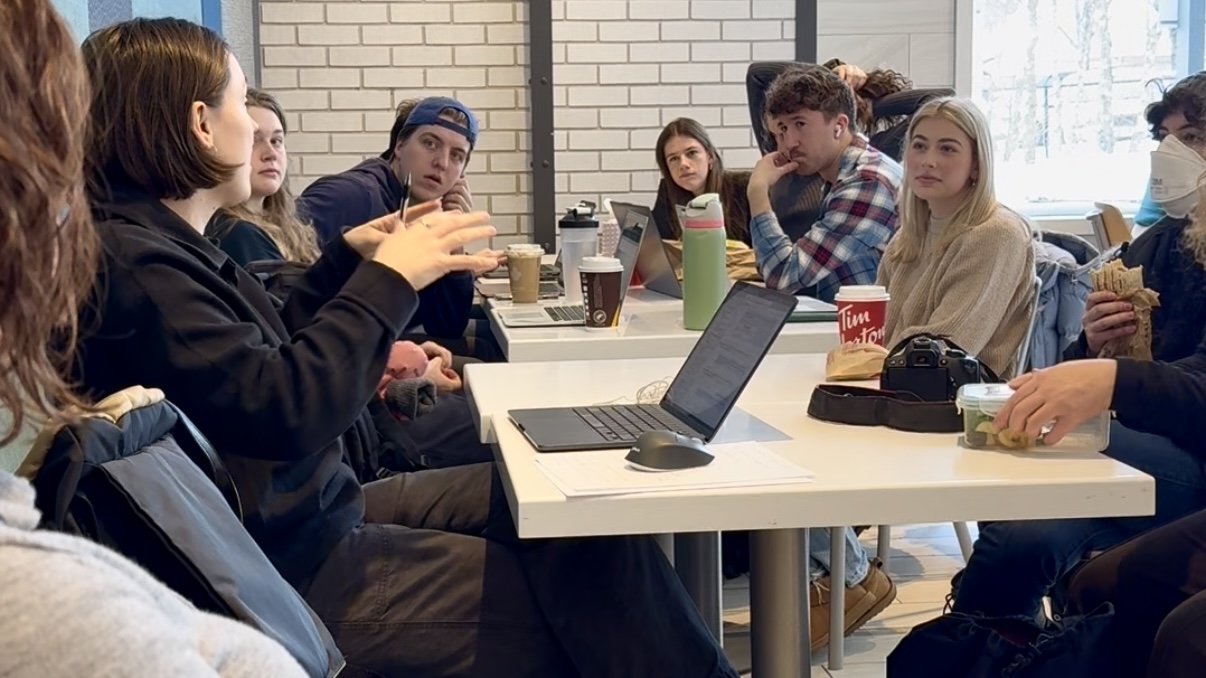
caption
Students in the news workshop attend a morning meeting with instructor Caora McKenna, at left, at the Halifax Shopping Centre food court on Feb. 2.Understanding our reporting on pedestrian fatalities in Halifax
Over the past six weeks, students in the news workshop at the University of King’s College worked together to research, crunch data, report, photograph and share information about the 20 pedestrian fatalities on Halifax streets from 2018-25.
Our class wanted to learn more about what led to these fatal crashes, who the victims were, and how we can make HRM streets safer for all pedestrians and drivers.
The first step was to get the raw data. The datasets in question? Halifax Regional Municipality’s traffic collision data, and expanded collision data provided by HRM of collisions tracked by the Halifax Regional Police and RCMP since 2018.
The data provided information like whether or not a pedestrian was involved in the collision, the road conditions, and the location of the crash. Data editors Emma Breton and Sam Hodd worked to find patterns and irregularities in the data, telling the story of these crashes through data points and mapping.
The next step was to verify the accuracy of the data, and identify if there was any data missing. The research team, Jenna Olsen and Marielle Godfrey, looked up past articles reporting on each incident, and investigated each case to determine any additional details such as whether there were court documents related to convictions for accused drivers.
Through their research they found two cases that were not in the original dataset — Edward Creelman, who was hit by a city bus, and Alexandria Wortman, a Dalhousie student whose death was not tracked as a ‘pedestrian death’ in the city database.
To determine trends, crash hotspots and key numbers, the data team sorted through the updated spreadsheets to create graphs and charts that summarized the findings.
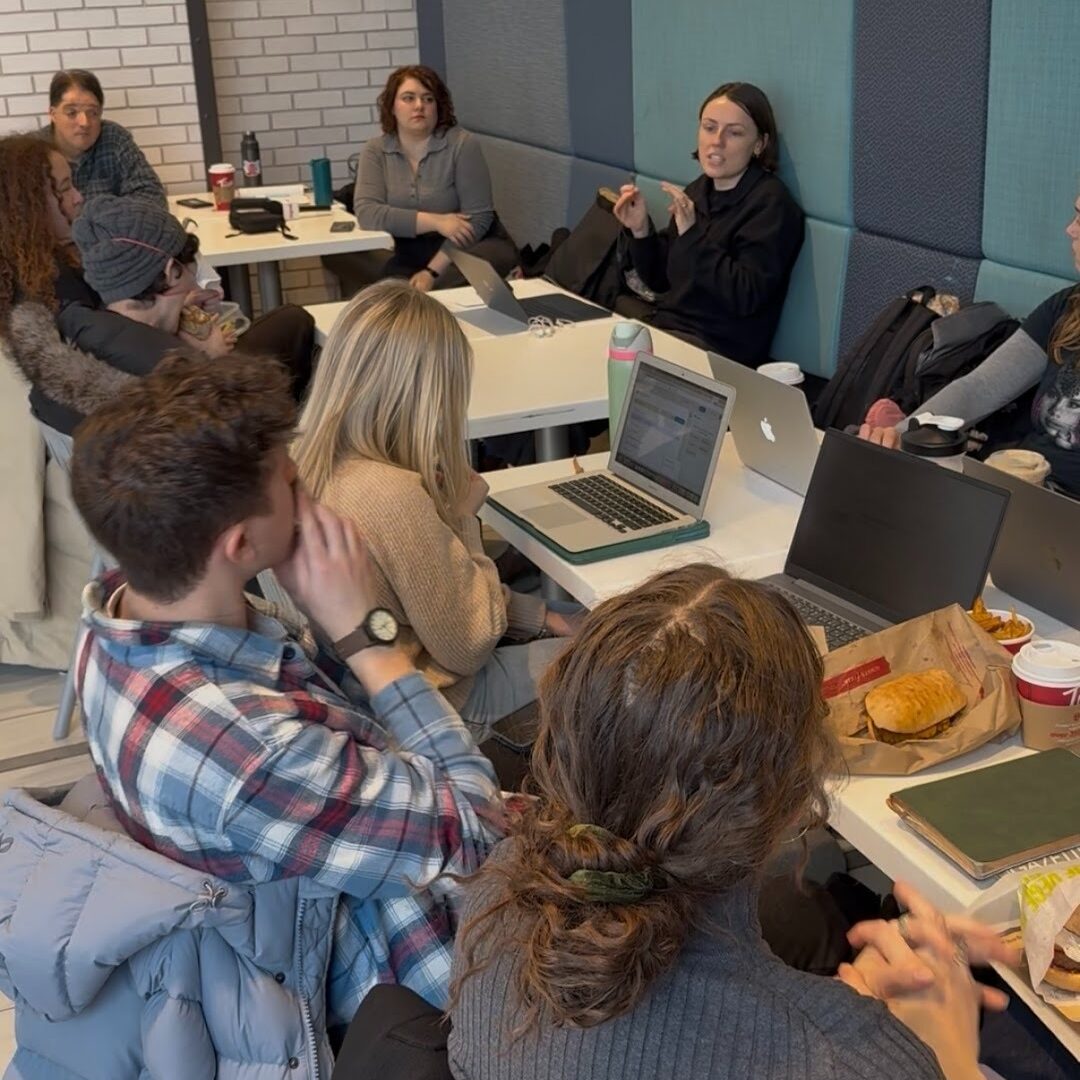
caption
Students in the news workshop attend a morning meeting with instructor Caora McKenna, at left, at the Halifax Shopping Centre food court on Feb. 2.A map was created with dots of all the collisions, showing that most collisions occurred on busy streets such as Quinpool Road in downtown Halifax. Other graphs looked at the most common type of vehicle involved in a collision, the weather at the time of a collision and the amount of bike collisions.
With the verified data, the reporting team, Callum Watson, Ellie Enticknap-Smith, Emily Conohan, and Jake Piper, set out to contact family members of the victims of crashes, and anyone who had been involved in one of the 1,300 non-fatal pedestrian collisions.
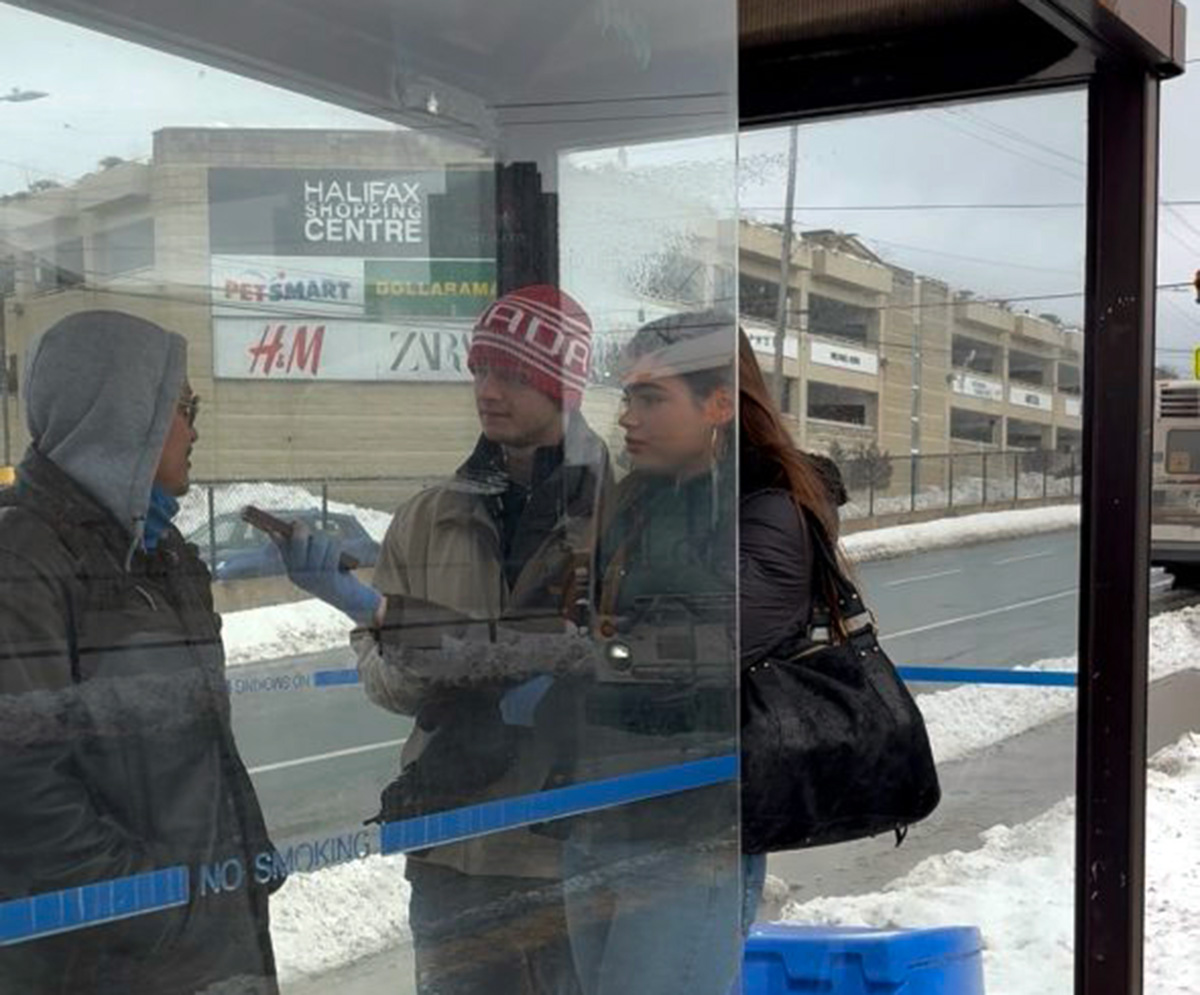
caption
Jake Piper and Emily Conohan, right, conducting streeter style interviews outside the Halifax Shopping Centre on Feb. 2The reporters interviewed multiple sources, including the ex-boyfriend of Alexandria Wortman and the daughter of Dawn Nichols, who was killed by a pickup truck in February 2020. The reporters also sought out more information related to policies and advocacy that has been done to make streets safer for pedestrians, interviewing city councillors Shawn Cleary, Laura White and Sam Austin, and safe streets advocates Martyn Williams and Laurie Batten.
In order to visualize the stories, our photography team, Luke McNabb, Talia Freedhoff and Serra Hamilton, went with the reporters to take pictures of collision survivors and family members of victims. They also went in-person to all 23 crash sites, creating a photo essay of each site at the time of day each fatal collision occurred.
Some of this involved early mornings, including taking a picture at 5:30 a.m. in Bedford at Dairy Farmers Lane, 20 km away from the King’s College campus.
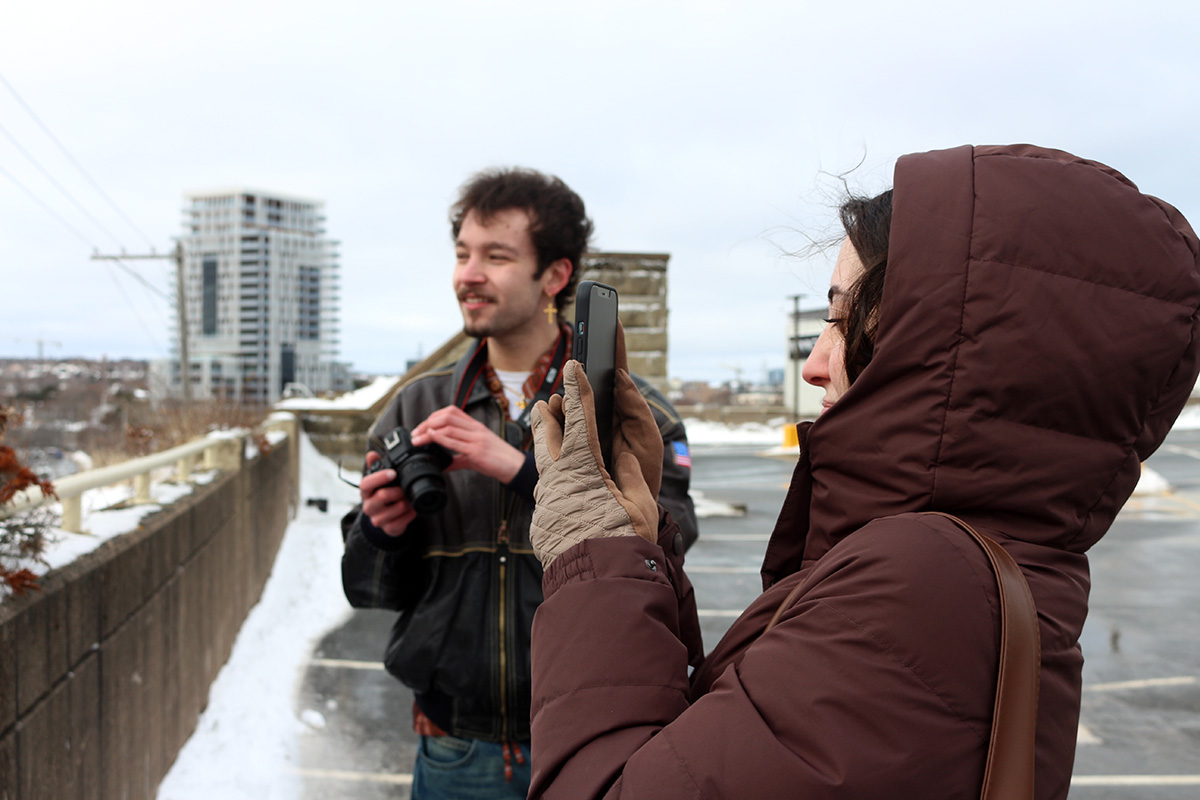
caption
Sarah El-Chaar and Luke McNabb behind the scenes of ‘Eyes on the Road’ on Feb.2 at the Halifax Shopping Centre
caption
Serra Hamilton taking photos of pedestrians crossing the intersection near the Mumford Bus TerminalOnce all this was compiled, the audience team, Barley Burns, Katie Keizer and Sarah El-Chaar, worked to put all of the information onto our Signal website, and created behind-the-scenes videos for our social media.
Staff from University of King’s College were essential to guide students and bring all of the stories together. All the stories were line edited by Paul O’Connell and Mike Dembeck worked with the photographers to hone their photo and editing skills. The project was managed and edited by Caora McKenna.
A lot of work was put into the creation of the research, data, reporting and photography.
Now it’s time for you to read the stories and become informed about the safety of Halifax’s streets.
About the author
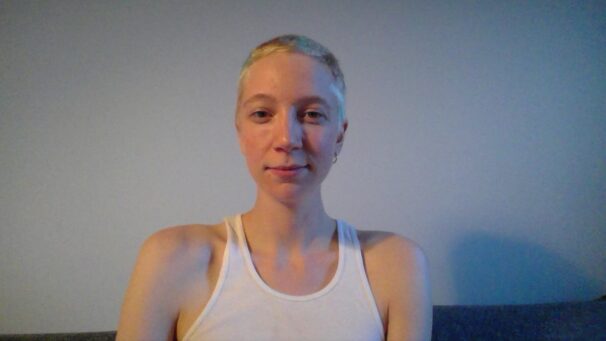
Barley Burns
Barley Burns is a one-year Bachelor of Journalism student at King's College.