
‘This is what democracy looks like:’ Student strikers rally at Dalhousie
Dal, King's students among five Halifax universities that united in protest for divestment and affordable tuition
caption
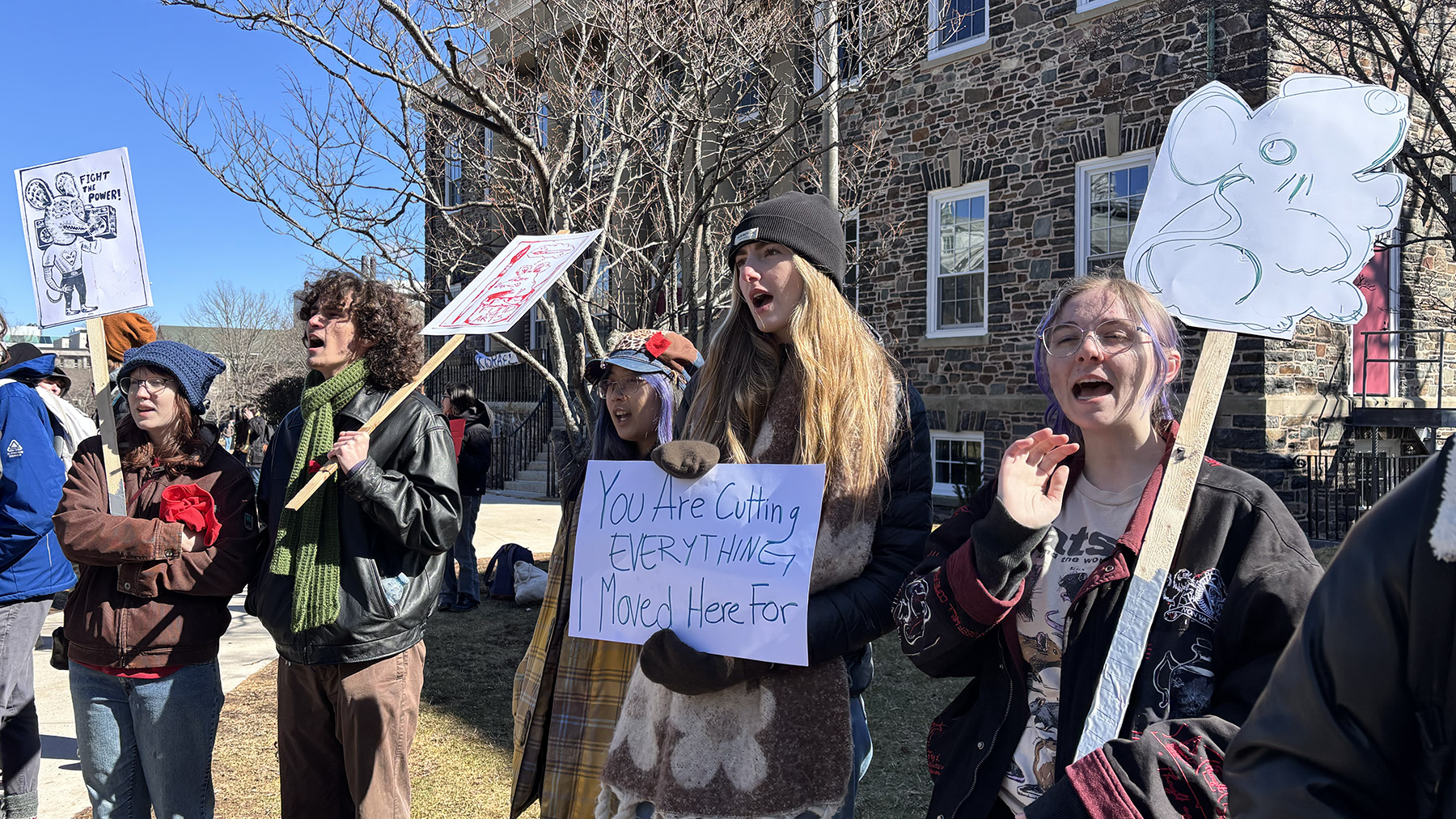
NSCAD students wave protest signs decorated in their student-appointed rat mascot, in the Studley Campus quad in Halifax, on March 18, 2026. Students from several Halifax universities gathered for a rally on the third day of the Nova Scotia Student Strike.From Dalhousie’s Studley Campus, chants from the quad grew louder and louder. March 18, 2026 was day four of the week-long Nova Scotia Student Strike in which Halifax university students joined forces to push for divestment and affordable tuition.
A group of over 300 students and supporters gathered in front of the Henry Hicks building for a rally during the province-wide student strike, billed as the first in Nova Scotia’s history.
Students from Dalhousie, the University of King’s College, Saint Mary’s University, and the Nova Scotia College of Art and Design all took part. While the Mount Saint Vincent University Students’ Union did not pass a strike motion, many MSVU students attended the rally.
“Our education is everything, and people are making sacrifices and struggling to make ends meet out here,” said third-year NSCAD student union commissioner, Dev Wickramasinghe.
The student strikers demanded standardized tuition rates for all students—including international students — and a 20 per cent tuition decrease for all students, as well as divestment of all funds linked with weapons manufacturing, war and crimes against humanity.
Students also demanded universities stop investing in fossil fuels and what they termed the exploitation of resources on Indigenous sovereign land.
caption
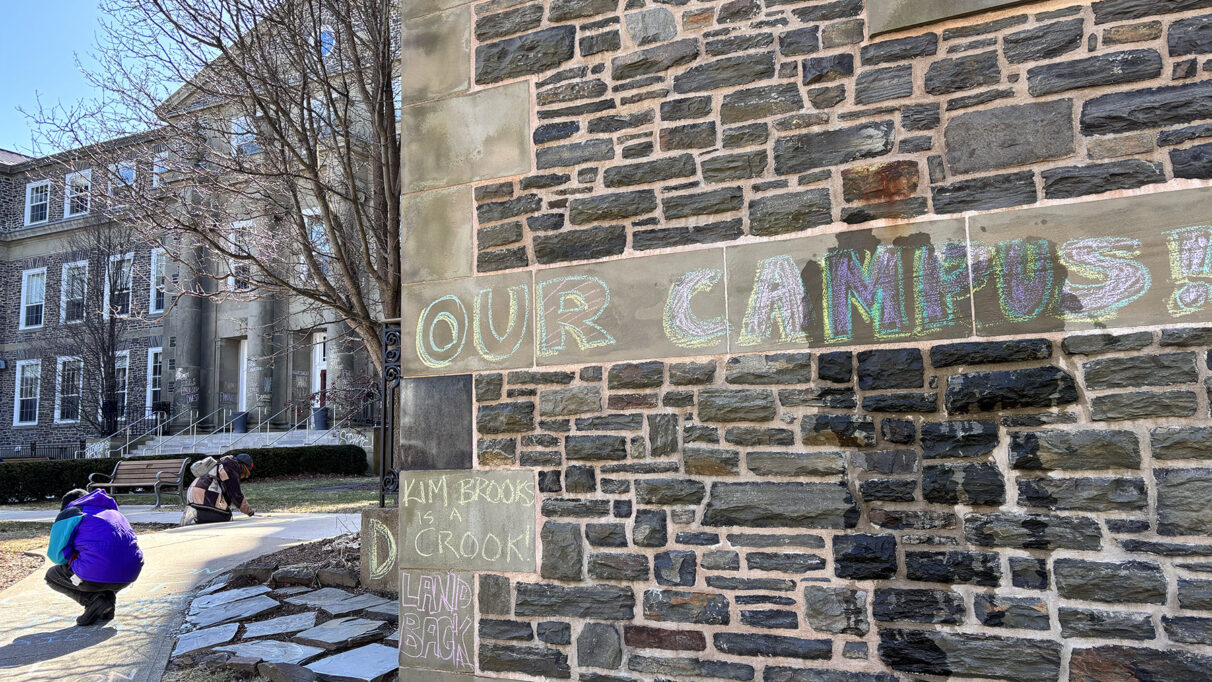
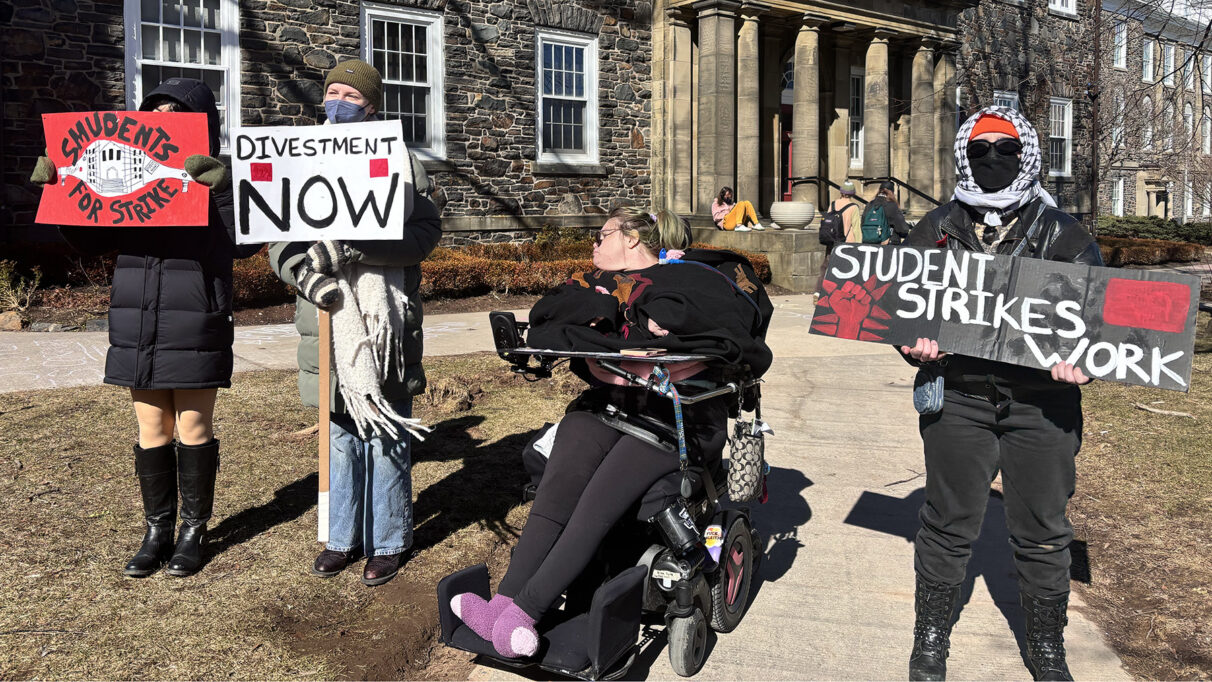
Student strikers write messages in chalk on the walkways and walls of Dalhousie University’s Henry Hicks building in Halifax on March 18, 2026. Students from several Halifax universities gathered in the Studley Campus quad for a rally on the third day of the Nova Scotia Student Strike.Strikers wielded signs that read “Fight the fees,” and “Divestment now.” NSCAD student union president Ziggy Kirch chanted into a megaphone, and the people echoed back. Some of the chants were “This is what democracy looks like!” and “The students united will never be defeated!”
Students from several Halifax schools took to the mic to speak to the crowd. Malcolm Mealey, a Dalhousie student and one of the organizers, called out Dalhousie president Kim Brooks.
“I’m not mad, just disappointed,” Mealey laughed with the crowd before getting serious again.
Mealey said two per cent of Dalhousie’s investments are in entities directly or indirectly tied to Israel. The current war is one of many causes named by student strikers.
caption
Student strikers wave protest signs about divestment on Studley Campus quad in Halifax, Nova Scotia on March 18, 2026. Students from several Halifax universities gathered for a rally on the third day of the Nova Scotia Student Strike.“Them choosing not to divest, is a choice,” Mealey said. Current crises in Haiti, the Democratic Republic of the Congo, and Sudan are also listed in the strike’s list of causes they named while pressuring institutions to divest.
Strike planning began in November, but fuel was added to the fire after Nova Scotia Premier Tim Houston announced a $130 million budget cut to hundreds of grants in the province on Feb. 23. Many Nova Scotians were left in outrage as cuts impacted programs for Mi’kmaw and Black communities, climate change, health, and youth.
Post-secondary education and the arts sector were also hurt by the slash, leaving university students vulnerable as university budgets were put under pressure and scholarships cut.
A sign from a NSCAD student at the rally read: “You are cutting everything I moved here for.”
Wickramasinghe, the MSVU student leader, said the strike was intended to build a foundation for future change.
“This week-long strike is more for the demonstration of student power and student collectivism.”
The rally ended on downtown Robie Street around 4 p.m. with more chanting, and cars honking in solidarity as they drove by.
About the author

Ella Tsang
Ella Tsang is a second-year Bachelor of Journalism student at the University of King's College.

Leave a Reply