
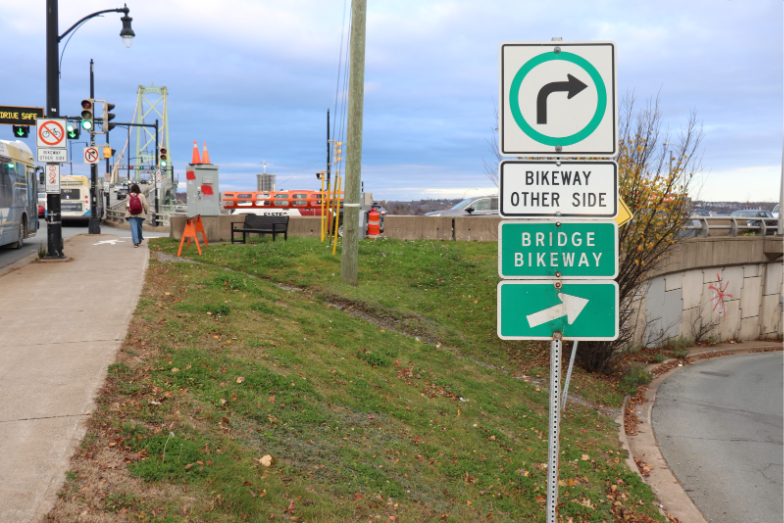
caption
The MacDonald Bridge poses many issues for cyclists.The Angus L. Macdonald Bridge is a major weakness in Halifax’s cycling network, according to the Halifax Cycling Coalition, which is conducting a survey about cycling on the city’s commuter corridor.
“Our intention with the survey that we did is to gather some data from people who either use the bridge or would like to use the bridge,” said David Trueman, chair of the cycling coalition.
The Macdonald Bridge is dangerous for cyclists because of sharp-angled turns, dangerous slip lanes, and ambiguous access to exits, said Trueman.
The survey comes after the Halifax Regional Municipality (HRM) committed to improving the Macdonald Bridge bikeway in September 2014. Over the past twelve years, the plan has undergone changes and pauses, due to cost and project element concerns.
HRM’s Macdonald Bridge Connectors project aimed to improve accessibility for cyclists in the city.
A municipal spokesperson said that “the project includes infrastructure on both sides of the harbour to create safer, more comfortable connections between the bridge bikeway and the surrounding cycling network.”
The delay in efforts has been met with frustration from the Halifax cycling community.
“The original planning for an improved approach to the bridge started in 2014,” said Trueman.
In 2017, council directed staff to develop a flyover ramp.
“And so here we are 12 years later and still no action,” said Trueman.
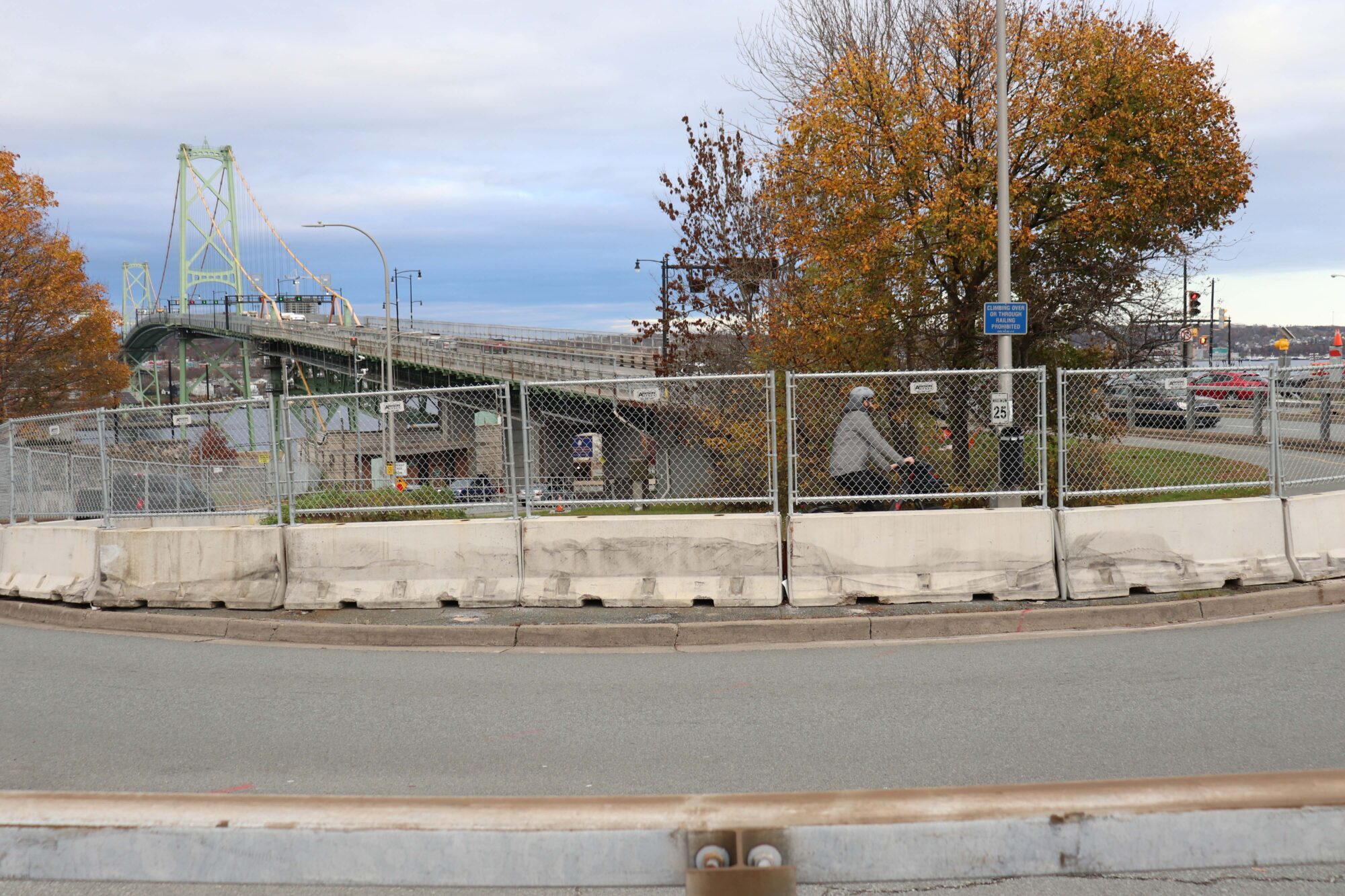
caption
The Halifax Cycling Coalition is collecting information from cyclists about the MacDonald Bridge.The Halifax Cycling Coalition now suggests a phased approach to the project, in hopes of getting things moving.
“We will be asking for a phased approach so we get some improvements even in 2027, recognizing that the bigger improvements might take a little longer,” said Trueman.
As of Nov. 6, the coalition has received 354 responses to their survey, which they have solicited by placing flyers with QR codes on power poles and sharing the survey on social media.
Of those responses, 90 per cent are somewhat or very dissatisfied with the safety of the current approaches. Also, 93 per cent responded that they are very or somewhat dissatisfied with the efficiency of the HRM’s approaches.
The city said they have made efforts to improve biking conditions.
“To date, protected bicycle lanes on Wyse Road (Albro Lake Road to Thistle Street) and changes at the Nantucket, Wyse and Bridgehead intersection to improve access on the Dartmouth side have been completed,” said municipal spokesperson Jake Fulton in an email.
The group plans to present their survey findings to the municipality at the transportation committee on Nov. 26.
About the author

Hannah MacFarlane
Hannah MacFarlane is a masters student at University of King's College.
Leave a Reply