
Playing in Canada’s cinema sandbox is art on a tight budget

caption
Canada’s filmmakers, past and present.How Canadian filmmakers navigate a state-funded industry – and why they do it
On a Friday night, The Economy Shoe Shop is a popular night spot for university students across the city.
On a recent Tuesday afternoon, the empty basement bar became the set of filmmaker Taylor Olson’s new feature, The Apology Tour.
Olson said that Canadian filmmakers usually have a lot less money than their U.S. counterparts, “so it’s a style of filmmaking that’s based on micro-budget sort of filmmaking . . . and that’s sort of where a lot of Canadian filmmakers start.”
Extras waited patiently on their cues as Olson ricocheted around the room. It was an early morning on set, followed by nine hours of shooting, reshooting and reshooting again. But the crew — a not-so ragtag group of local producers, makeup artists, actors and camera operators — kept spirits high.
caption
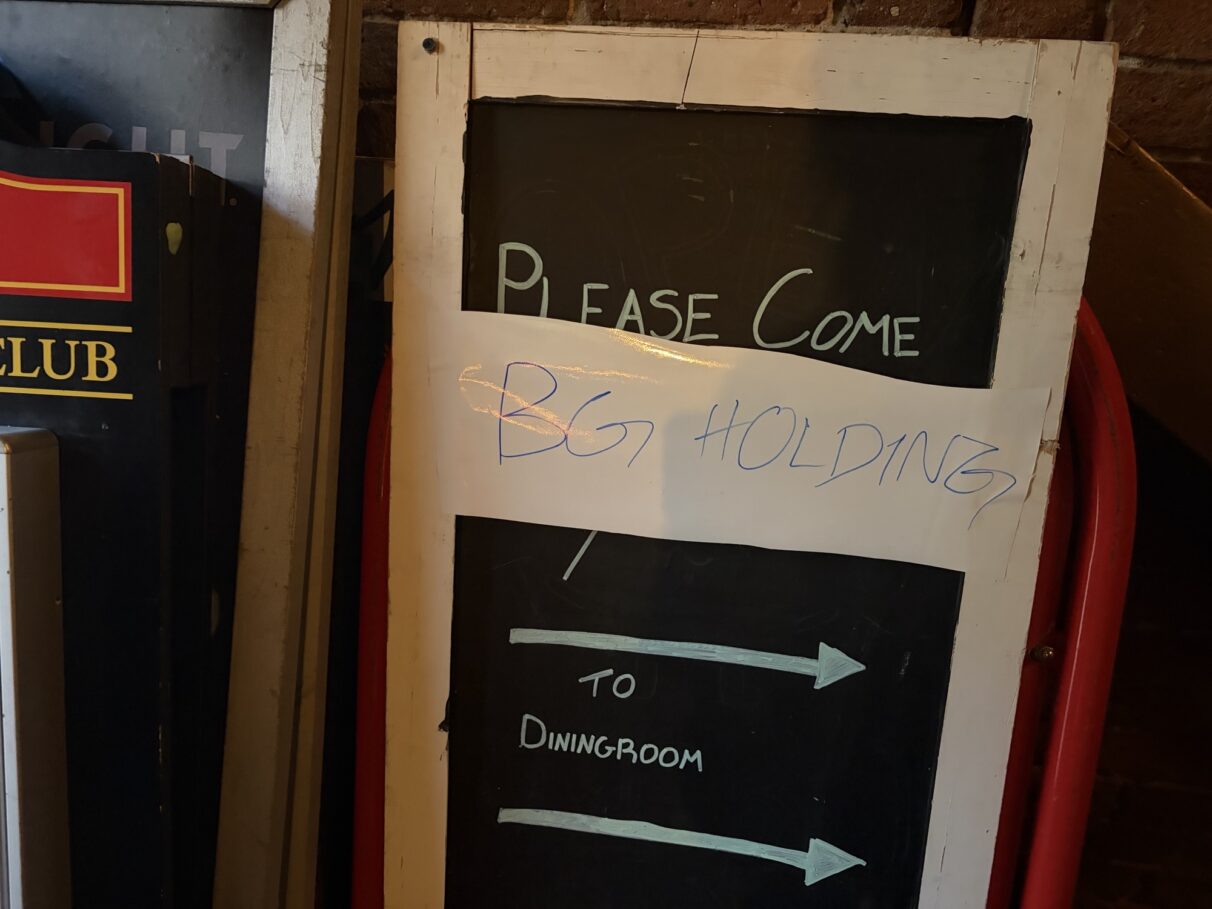
A bulletin board sports directions for background actors on the set of Taylor Olson’s new film The Apology Tour at the Economy Shoe Shop.American cinema has always been a major player in Canadian theatres across the country. Hollywood produces nearly six times more movies than Canada per year, supported by a studio system and star system completely different from the Canadian market.
The Canadian film industry is built on state funding and independent filmmakers. Of 967 feature films released in Canada in 2025, only 14.6 per cent of them were Canadian.
While many Canadian talents have sought the big budgets and studios of Hollywood, Canadian cinema is still relatively insignificant on a global scale.
Why is Canada’s industry the way it is? What makes a film “Canadian”? And in light of the challenges, why make Canadian films?

Telefilm Canada, a Crown corporation that supports Canada’s film industry, finances about 130 films annually. Industry critics say Telefilm is risk averse, preferring to finance and promote filmmakers whose movies are familiar and easier to promote and profit at box office.
Newfoundland filmmaker and documentarian Jamie Miller agrees that the industry can be overly cautious.
Miller said Canadian filmmakers pull from “few and the same” resources to finance their films.
“It feels like the same sorts of films and filmmakers get supported repeatedly,” said Miller.
caption
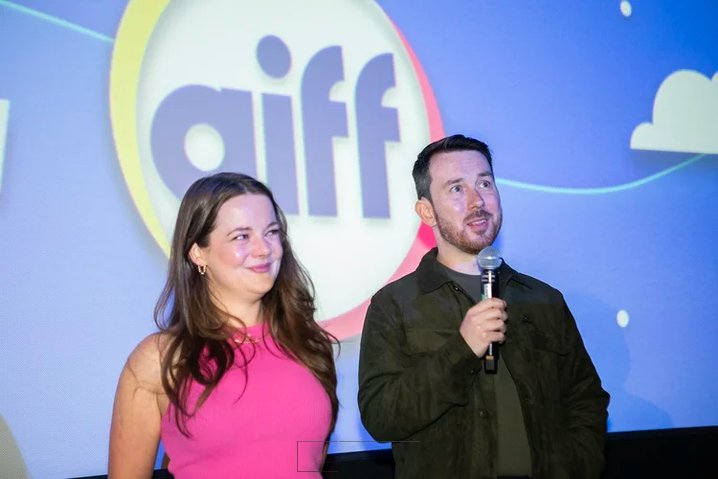
Co-directors Jamie Miller (left) and Mike Feehan at the Atlantic International Film Festival premiere of their new documentary Captain Newfoundland on Sept. 17.Miller graduated from York University’s film production program in 2012 and has been creating short films, docs and music videos since. Captain Newfoundland, her first feature-length documentary, premiered at the Atlantic International Film Festival in 2026.
She believes a career in filmmaking depends on resiliency and persistence.
“If you have the stamina to last through the lack of funding, the mental strain, the ego shit you have to face, if you can persist through that, then you can get to the work that you find interesting,” she said.
“It’s hard to break into the system.”
Many Canadian films struggle with promotion and distribution. With most Telefilm funding coming through grants to support production, some films only get screened in festival circuits, without attracting distributors. This means it can be difficult for Canadians to access Canadian films.
According to a 2025 report from the Network of Independent Canadian Exhibitors (NICE), 35 Canadian films were distributed exclusively this year by independent cinemas, which made up 16 per cent of the total box office — but 60 per cent of the revenue for Canadian films in box office.
NICE founder Sonya Yokota William said promotion can be a barrier for Canadian films. According to Yokota William, in over 50 per cent of the Canadian film booking decisions in 2025, the cinemas hadn’t even heard of the films.
“Because Canadian films just don’t have the prep and the marketing budgets that major studio films or larger titles would have . . . it’s important to have a long lead time, a lot of awareness and a lot of communication with cinemas,” she said.

caption
More competition would help independent filmmakers in Canada, says Sonya Yokota William, founder and director of the Network of Independent Canadian Exhibitors (NICE).Yokota William said there’s no silver bullet to fix the industry’s marketing problems, but small wins are possible and trailers can increase visibility.
A real barrier for independent cinemas, according to Yokota William, is market pressure from major circuits like Cineplex and Landmark. Cineplex controls 74 per cent of total box office in Canada. She said more fairness and competition in the market would help Canadian film.
“We’re not like other countries where there’s a really competitive independent cinema sector. Independent cinema has been pretty squashed, I would say,” said Yakota William.
Miller said the people who do well find the right balance of selling themselves, being good at business, and also tapping into their own creative instincts.
“I think you have to have the right combination of those things,” she said. “And that doesn’t mean we’re necessarily getting the most unique, interesting voices if it’s hard to break in and hard to keep going.”
Erin Burke is the national director of English feature films for Telefilm. She said claims that Telefilm is risk-averse are outdated.
“Every single film is a risk,” said Burke. “Every filmmaker is taking a risk when they make a film. It’s a creative risk for them. It’s a financial risk for them because films are very hard to make in this country.”
Telefilm receives around $158.3 million in funding from the Canadian government yearly for their various funding programs. Films in the big budget program ($3.5 million and over) need to have a distributor attached from application, whereas films in the low budget program (under $3.5 million) do not need a distributor. These films are often entered in festivals to attract a distributor.
Burke said the answer to Canadian film’s visibility problem is the “million-dollar question.”

caption
Filmmaking is always a risk, says Erin Burke at Telefilm Canada.“We’re not able to get ourselves on screens very easily in Canada because we are so closely tied to the U.S. market,” she said. “It becomes challenging to fight for screen time in our theatres for Canadian films.”
Burke said longer showtimes in theatres can help build word of mouth about new Canadian releases.
Cineplex CEO Ellis Jacob said in a February 2026 interview that Canadian films slump at box office due to their quality. Burke disagrees.
“Not every Canadian film is going to appeal to every Canadian audience member,” she said.
In the 1940s, Canada was in crisis. U.S. goods were being imported and bought by Canadians at a much higher rate than goods exported. Films, in particular, were a valuable import for the U.S. — revenue from Canadian box offices averaged around $17 million yearly, nearly $230 million in today’s dollars.
The Canadian government began considering the same million dollar question: how could they get Canadians to spend more money on Canadian cinema?
The Canadian Cooperation Project was thus born — beginning in 1948, this series of tax incentives aimed to get American studios to film in Canada, promote Canada and increase tourism between countries.
“This is often seen as one of the most shameful incidents in Canadian film history,” Dalhousie film professor David Nicol told The Signal. “It is kind of embarrassing because the alternative was to create a flourishing Canadian film industry.”
Short, educational documentaries about Canadian-US trade relations were the first to be made, followed by promotional documentaries highlighting Canada’s natural beauty. American newsreels — the only newsreels cycling in Canada, as CBC wouldn’t begin broadcasting on television until 1952 — began to include more Canadian news.
American screenwriters were directed by the MPAA to include ‘positive’ references to Canada, which, in practice, were “weird and glitchy,” said Nicol.
“Hollywood really either struggled with that or couldn’t be bothered.”
The project was quietly terminated in 1958 by the Canadian government. In an entry in the Canadian Film Encyclopedia, film historian Peter Morris refers to the Canadian Cooperation Project as “a blatant — and thoroughly successful — attempt to prevent the growth of the Canadian film industry and ensure that the Canadian market remained completely subservient to American interests.”
Nicol said this early failure caused the Canadian feature film industry to struggle until the ‘60s.
“If you have nothing, it’s really hard to get going,” he said.
But what keeps today’s filmmakers going in an industry that has always been coloured by its American counterparts?
According to Olson, film can challenge our perspectives, and make us all feel a little less alone.
caption
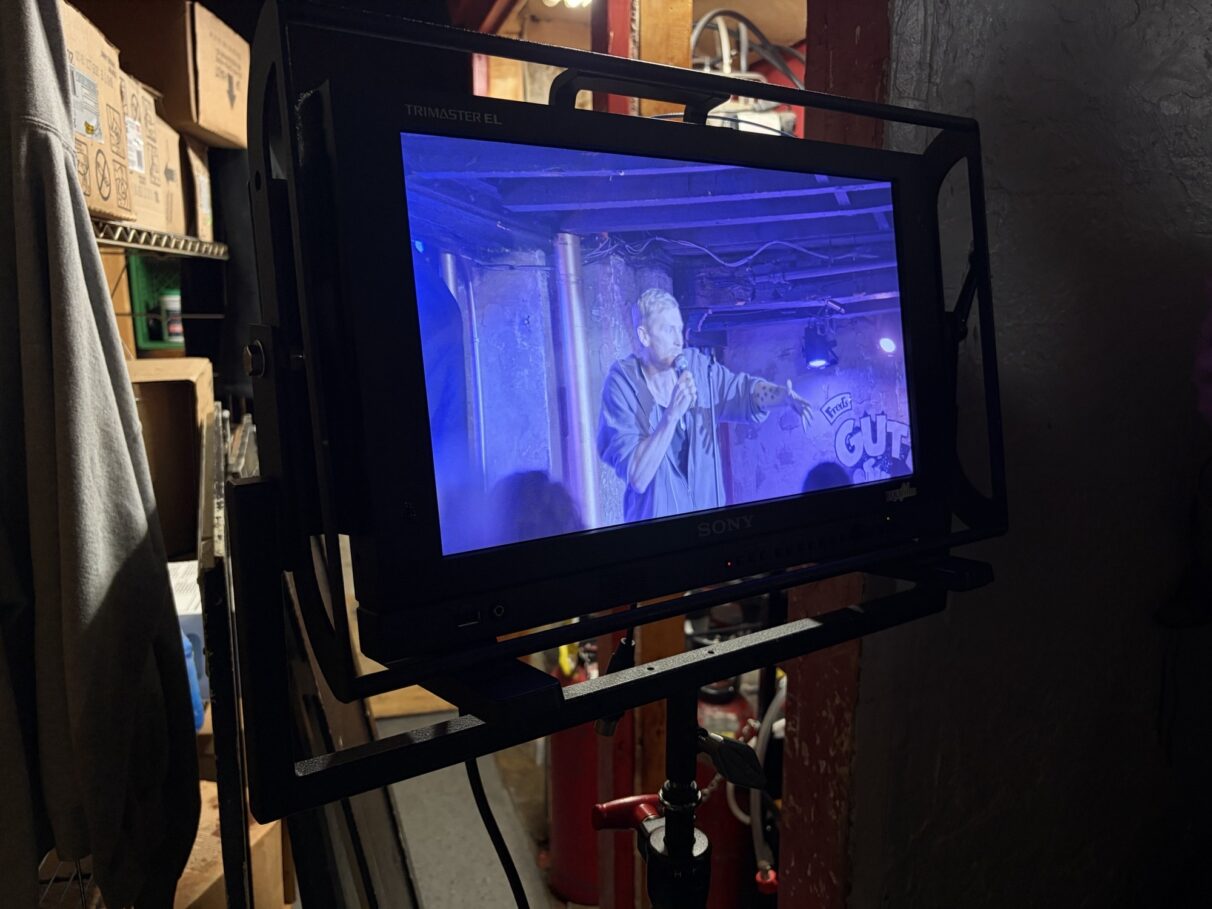
Olson performs in take 16 of a scene from his new movie The Apology Tour.“Taking in the world, absorbing it, seeing it through your own specific lens, and then sharing that with people, and saying, ‘Does this relate to you?’ ” he said.
“These are questions I have about my experience in the world, what it’s like to live in this place, or to go through this sort of thing.”
Olson agrees that the state-funded industry can be frustrating, but is grateful to have it.
“We can make small movies in Canada that are for the public, and that can have small cultural impacts, and are stories in our own backyard, that can have a cultural impact,” said Olson. “So, I mean, that’s pretty amazing. (So is) being in Nova Scotia, getting to create your own work.”
Even with comparatively low budgets and smaller audiences, “you can still create impact. So, I think that’s what’s worth it.”
Miller feels the lack of resources in Canadian filmmaking has its advantages, offering a unique opportunity to work from an outsider perspective. “The authentic stuff that’s really cool is a little bit like punk rock. It’s a little bit weird,” said Miller.
Both filmmakers believe more visibility and risk are what the industry needs to thrive.

caption
Taylor Olson directs extras on set of his new movie, The Apology Tour.“I think Canadian filmmakers are people who would want to take more risks, and tell more audacious stories, but, you have to so often sort of fit stories into what will be funded.” said Olson.
“Government funding is something we’re so privileged to have. But there’s a lot of limitations with that too,” said Miller. “And I think it keeps creating a lot of safe work that is familiar.”
About the author

Sally Skinner
Sarah "Sally" Skinner is fourth year journalism student at the University of King’s College.
Leave a Reply