
Question & answer
Street drug xylazine can be laced with other drugs, warns N.S. Health
Understanding the province’s newest drug alert during National Addictions Awareness Week
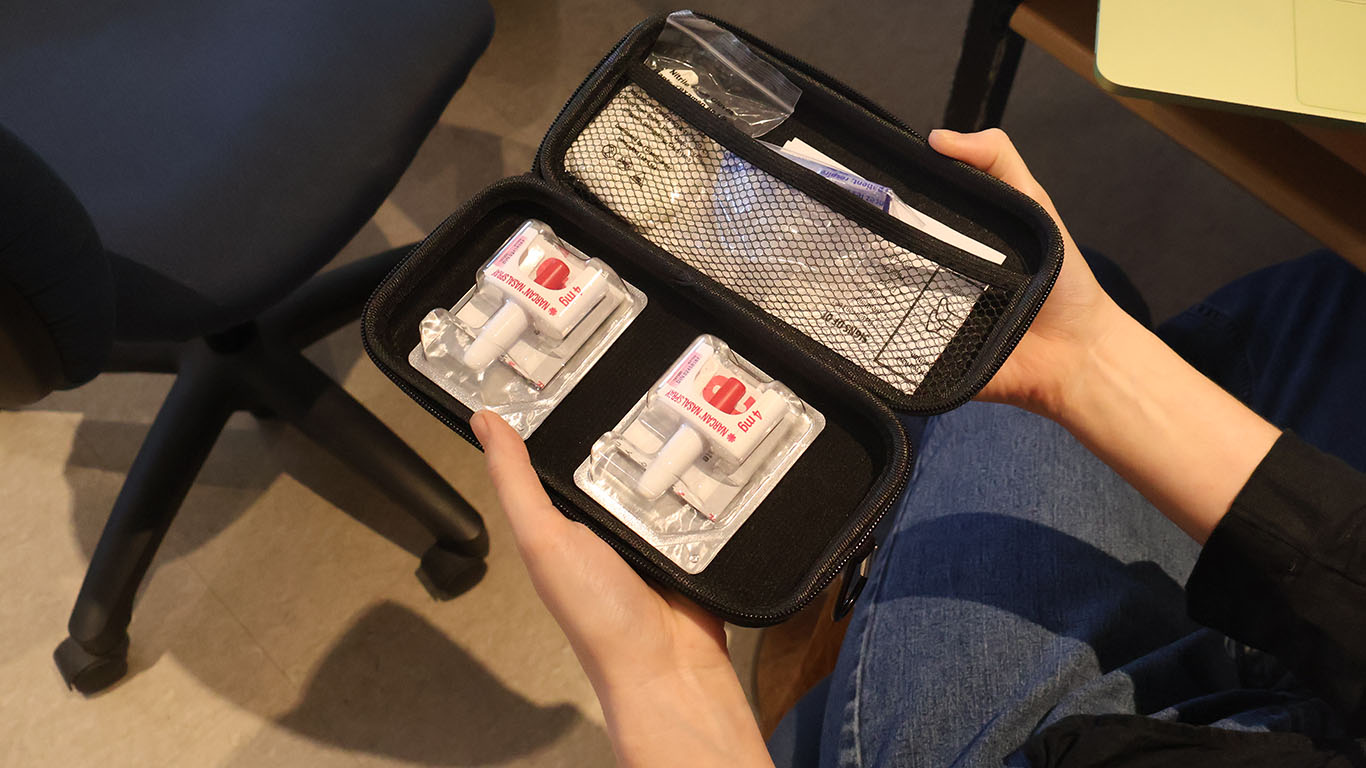
caption
N.S. Health has given out 98,843 naloxone kits in the past nine years. They're designed to reverse potential opioid overdoses.Nova Scotia Health released a drug alert in early November for the substance xylazine, saying that doses of the drug laced with fentanyl, caffeine, and other synthetic drugs have been identified.
The drug, according to the health authority, acts as a tranquilizer for large animals. Health Canada’s drug analysis lab has confirmed that xylazine was found in Halifax County’s drug supply. It is also known on the street as tranq.
Nov. 15-21 is National Addictions Awareness Week in Canada, and The Signal sat down with Sara Wuite, a harm reduction consultant with Nova Scotia Health, to learn more about the new drug on our streets.
What is xylazine?
Wuite: Xylazine is primarily a veterinary tranquilizer. It’s not used in humans. It’s a non-opioid tranquilizer, but often, it’s “cut” with other opioids (like fentanyl). Lots of people will use fentanyl intentionally. That will be what they seek. So again, they can use it in a number of ways. Some people inject it, some people snort it.
When did N.S. Health first learn about xylazine?
Wuite: It was first detected in the province in 2020. At that time, it contributed to five deaths. Since then, (N.S. Health) has three alerts that name it specifically.
One of the challenges in Nova Scotia is that our community-based drug testing is limited to drug testing strips that are available at our harm reduction organizations across the province. Other than that, we don’t have a good way of detecting when there is xylazine. Our information comes from the medical examiner’s service.
Has the frequency of drug alerts increased in the past few years?
Wuite: The short answer is yes. (The frequency) is kind of up and down.
We launched in 2021. Between 2021 and 2025, (there were) between 12 to 16 alerts a year. And then last year, we saw a marked increase (to) 28.
So far, we’re 20 for this year.
How is N.S. Health trying to address this issue?
Wuite: We fund a number of community-based organizations to provide harm reduction services. One of those services is supervised consumption sites.
Our harm reduction messaging helps organizations who work with people who use drugs with information to help them use drugs a bit more safely to help keep themselves safe.
Can you explain the Take Home Naloxone Program? Can you give an estimate on how many kits have been given out?
Wuite: Even though naloxone doesn’t act on xylazine, it’s still important to administer naloxone if you have it, and you are with someone who you think is experiencing any kind of toxicity.
Always give it; you won’t hurt somebody. In Nova Scotia, we have the Take Home Naloxone program, where you can get a kit, (with everything) and the training you need to give somebody else naloxone. They’ve given out 98,843 as of Nov. 10.
Can you share some general harm reduction tips?
Wuite: We know our drug supply is quite toxic, (so) expect the unexpected. And with any drug, start low, go slow. You don’t know what’s in there. Start with a low dose and increase very slowly, taking lots of breaks in between.
About the author
Hannah MacFarlane
Hannah MacFarlane is a masters student at University of King's College.
Leave a Reply