
Behind the scenes of new Dinosaur Exploration 2 exhibit in Halifax
The Museum of Natural History’s dinosaurs are ready for the show
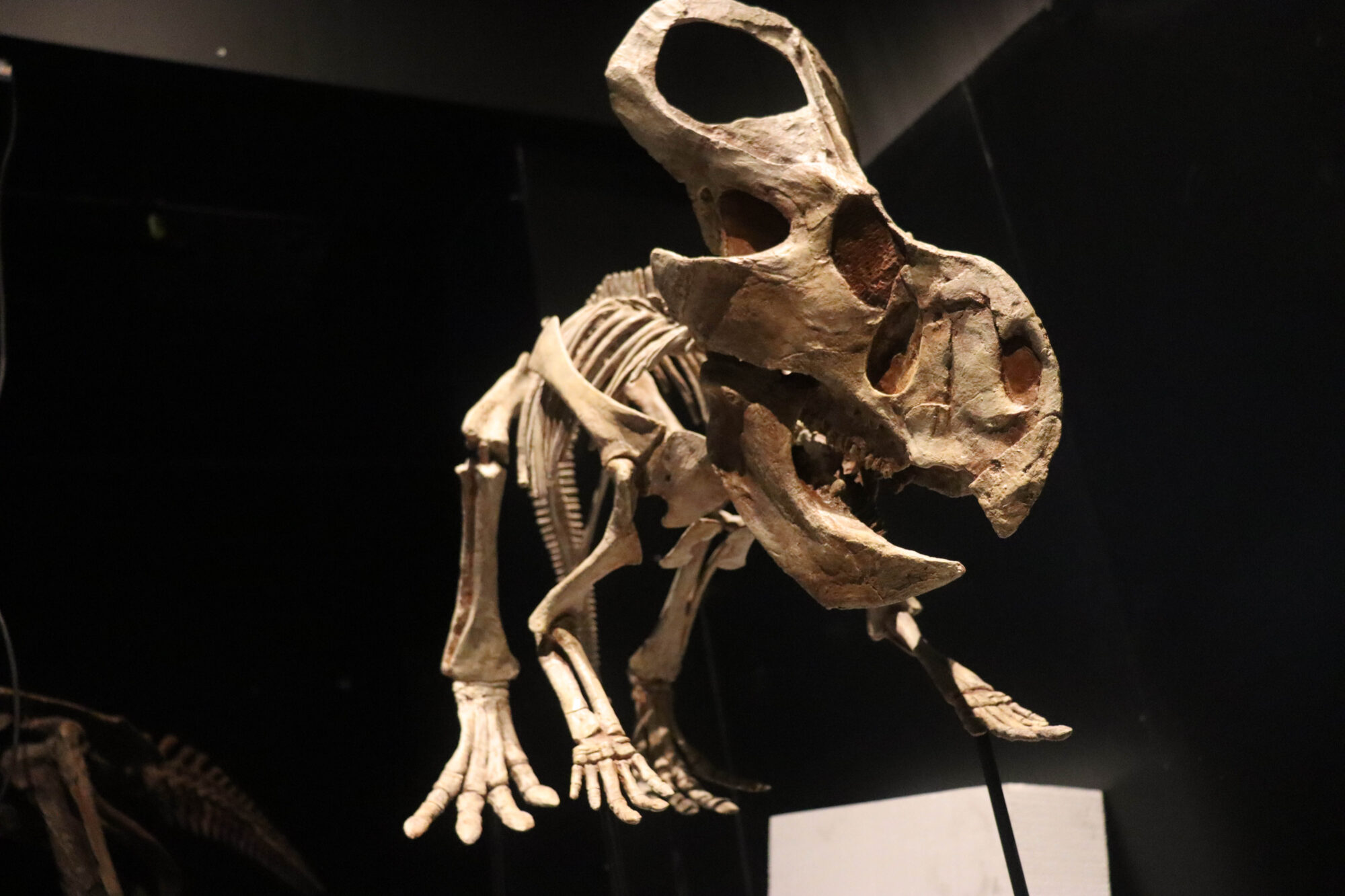
caption
A cast of a protoceratops skeleton at the Museum of Natural History in Halifax, part of a new exhibit opening on Saturday. It lived in Asia and is a small, herbivorous dinosaur.Setting up a dinosaur exhibit is a team effort.
Nova Scotia’s Museum of Natural History’s new exhibit, Dinosaur Exploration 2, which is now open, required expert crews from both Ontario and Nova Scotia.
“It’s better to think of it more like how a concert gets set up,” Gray says. “They send their crew, they set up the dinosaurs, then we do the other parts in the lighting and everything to make it into the experience.”
It’s Jeff Gray’s fifth dinosaur exhibit as manager of the museum. He’s responsible for picking and co-ordinating temporary exhibits, such as this one.
“The first dinosaur exhibit I would have brought to the museum was like 15 years ago. So some of the kids that saw those exhibits are now adults themselves and could end up even being parents themselves.”
The Ontario company providing the dinosaur figures is Research Casting International (RCI).
Mike Thom, head of moulding and casting, has worked with RCI for 27 years. His team makes production moulds from fossil or 3D prints that become dinosaur skeletons.
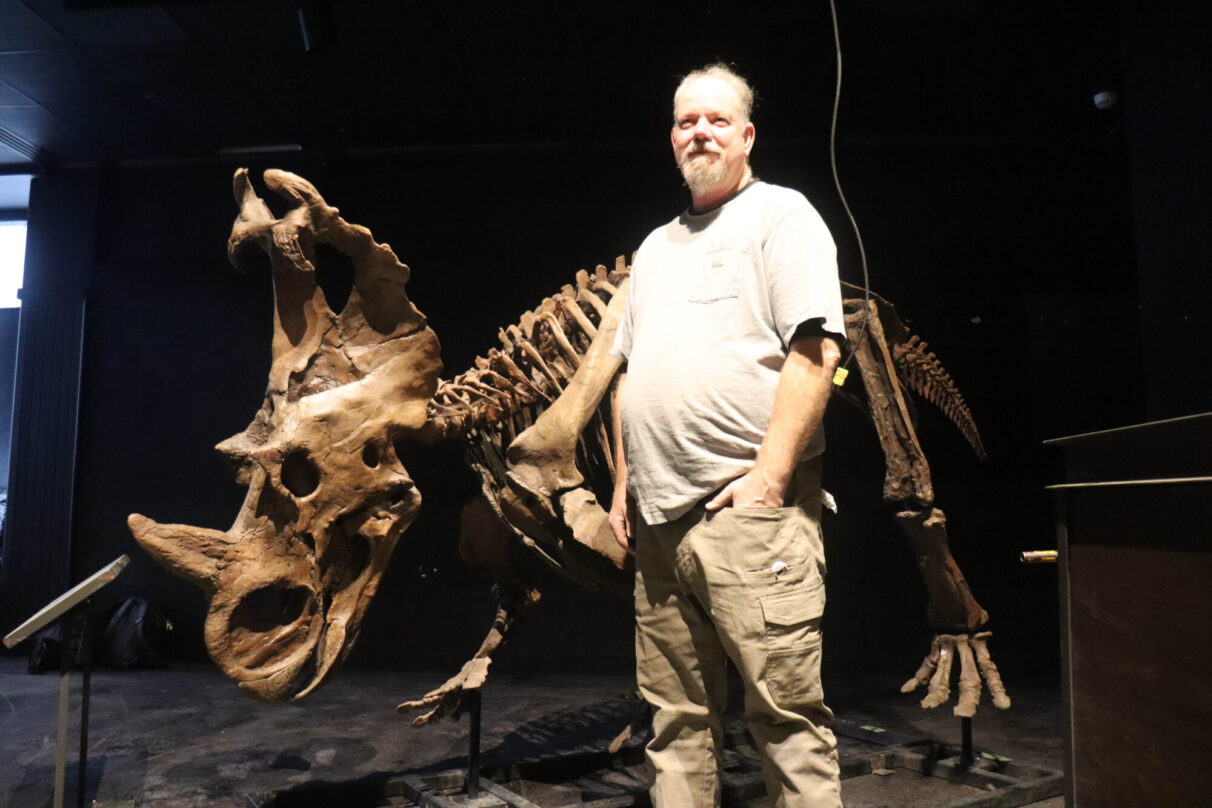
caption
Mike Thom from Research Casting International stands in front of a centrosaurus cast at the Museum of Natural History in Halifax. This dinosaur took 240 man-hours to mould, cast, mount and paint.“Since there’s only so many individual fossils, by either scanning or actually taking a physical mould, it allows museums around the world to still be able to appreciate the specimens and have them in-house,” Thom says.
There are no 100 per cent complete dinosaur fossils in the world.
“Sometimes they’ll scan the right-hand side of a right femur if the left femur’s missing because they can digitally mirror it, print it, then I can make a mould,” says Thom. “Within vertebrae, sometimes what you can do is you can duplicate and then just increase or decrease size.”
RCI’s sculptors and artists work with 3D printers to ensure the dinosaur bone casts are as accurate as possible.
“I remember when I first started — and it’s going to sound cheesy — but they say, ‘the bones will tell you,’ ” Thom says. “Because they do articulate a certain way, so you can’t make something that won’t fit.”
Thom has a background in construction but other team members, such as Andie Boddam, have a background in fine arts.
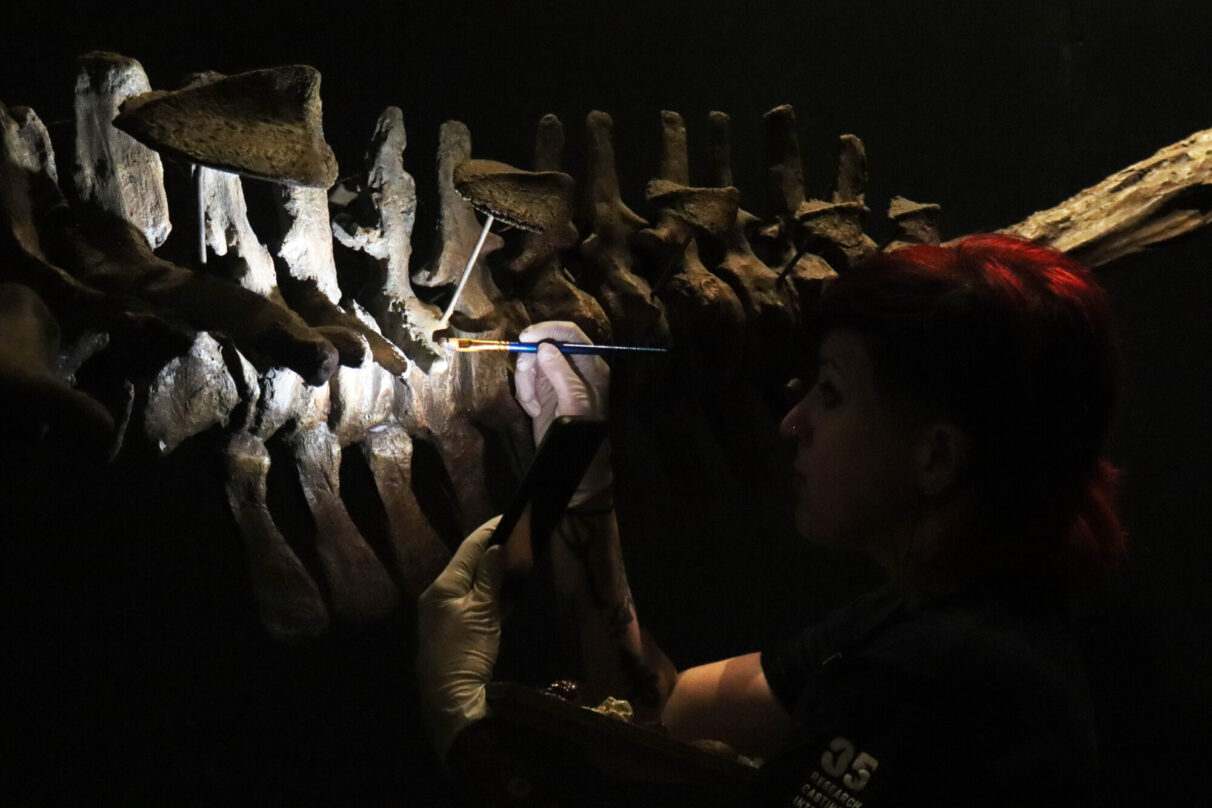
caption
Andie Boddam touches up the cast of a nigersaurus at the Museum of Natural History in Halifax. The dinosaur was a herbivore and lived in Africa.Boddam is a cast mount technician and examines the dinosaur casts for minor damages from the moving process. She uses acrylic paint and a small brush for utmost perfection.
“If I do my job correctly, you don’t know I’ve done my job at all,” Boddam says.
She went to art school for illustration. “I think although it’s (a cast mount technician) not what I originally had aspired to do, who can say that this isn’t the coolest thing? Like dinosaurs are pretty freaking cool.”
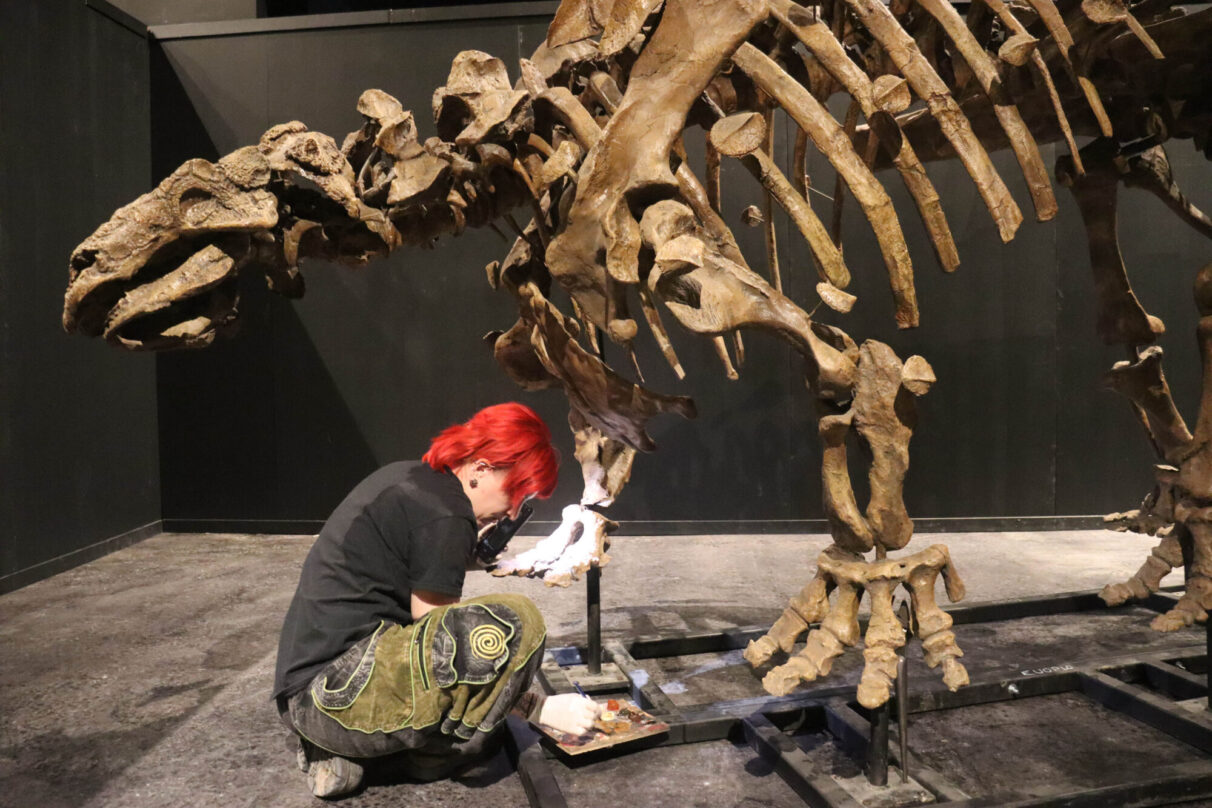
caption
Andie Boddam touches up the foot of a nigersaurus skeleton at the Museum of Natural History in Halifax.The exhibit includes a Nova Scotian dinosaur section including a coelophysis and a couple of other new pieces.
“We tell Nova Scotian stories,” Gray said.
“I think if you’re looking at world culture or other world topics it’s good to understand where you’re from and how you fit into the larger world. So back to dinosaurs, it’s not solely a world of T-rexes, there are other dinosaurs out there. Here’s what lived here, so you can understand where you’re from and what was important to your area.”
The exhibit will run from Feb. 7 to Sept. 7.
About the author

Ellie Enticknap-Smith
Ellie is a fourth-year journalism student at the University of King's College. She enjoys reading, writing, and swimming at the cottage in her...
