
Cyclist blasts transportation committee over safety
Biking numbers rise in HRM, but roads are still unsafe, say cycling advocates
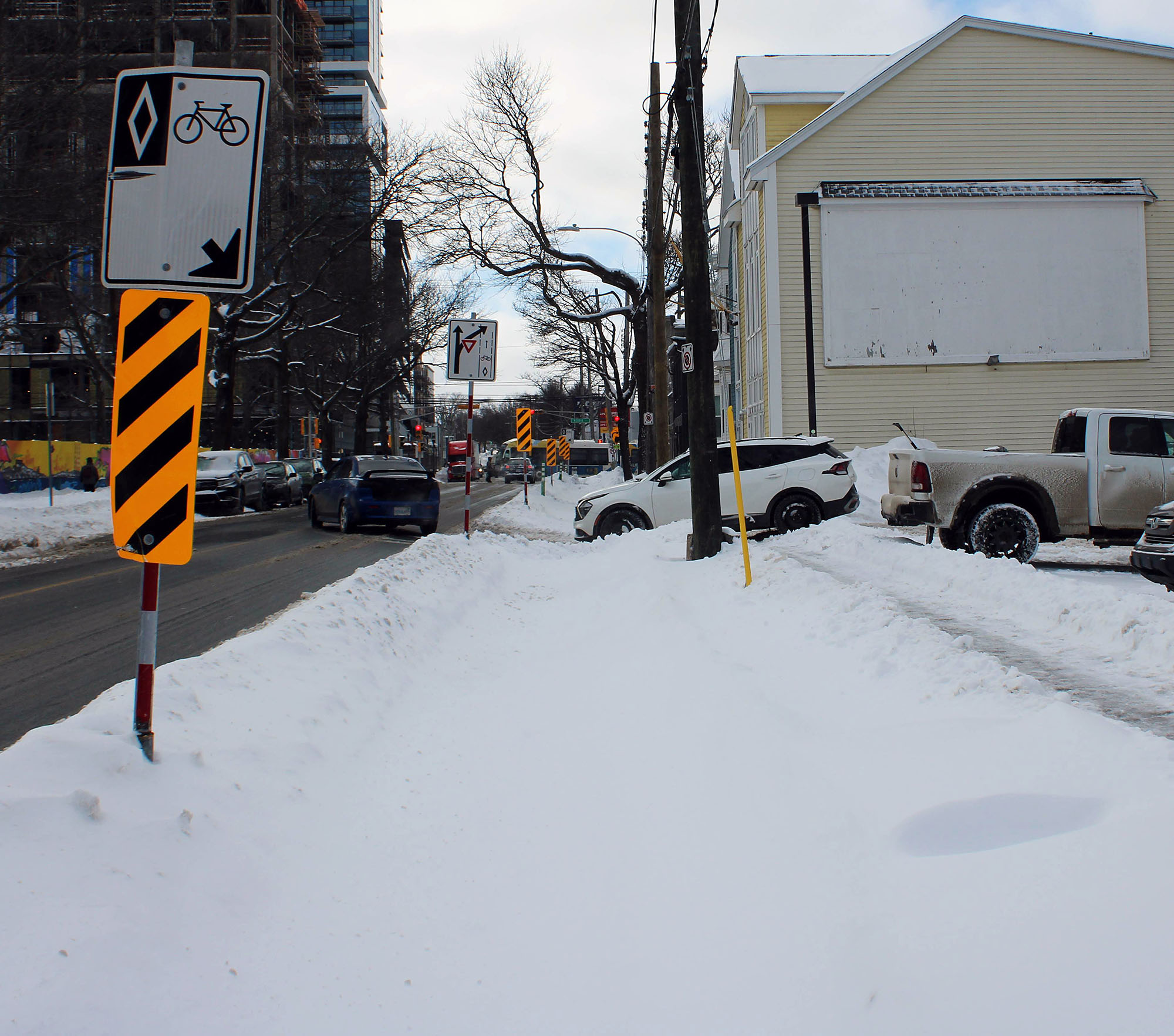
caption
A bike lane is completely covered in snow on Almon Street in Halifax on Jan. 27.With Halifax Regional Municipality reporting a 131 per cent increase in the number of cyclists in the city, some biking activists are questioning their safety on the roads.
Along with the increase in cyclists is an increase in micromobility collisions, or collisions that involve an individual operating a bicycle, e-bike, electric scooter or other lightweight vehicle.
In 2021, there were 62 micromobility collisions and in 2024, there were 89 micromobility collisions, according to HRM’s 2025 Road Safety Annual Report.
“How many bodies do you want to collect?” cyclist Peter Zimmer asked at the HRM transportation committee meeting on Jan. 22.
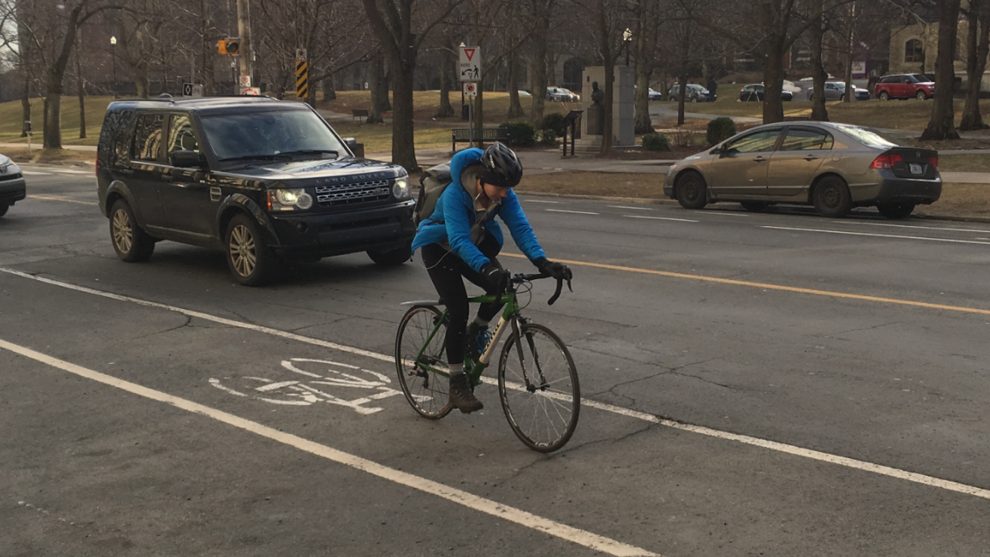
caption
Collisions involving bikes and scooters in Halifax rose between 2021 and 2024.Johanna Dean was a 30-year-old elementary school teacher who was cycling in Dartmouth when she was hit by a car and died on May 21, 2014. Dean was brought up as an example of how dangerous the roads are for cyclists in the committee meeting.
It has now been over ten years since Dean died, but micromobility collisions have been increasing since 2020, according to HRM’s 2025 Road Safety Annual Report.
“In an ideal world, there would not be a delay in communication” between drivers and cyclists, Mark Nener, HRM’s supervisor of active transportation planning, said at the meeting. Drivers are expected to understand what traffic signals mean and respect those signals, Nener said.
But if you talk with local cyclists, that is not happening. Drivers often don’t know how to act around cyclists on the road, said Hannah Marais, a cyclist and employee at Cyclesmith, a bicycle store on Agricola Street.
For example, drivers don’t know how to handle a cyclist taking up space in a lane, Marais said.
She said drivers should treat cyclists like another vehicle.

caption
Hannah Marais, a cyclist and employee at Cyclesmith, is an advocate for driver education surrounding cyclists.The best way to bike around Halifax is with confidence, Marais said. But this confidence doesn’t just appear, she said, it comes from experience as a cyclist.
A 2020 poll by the Canadian Automobile Association said that 31 per cent of Canadians say they would cycle more if cycling infrastructure was better.
The HRM has tried to address cyclists’ concerns about safety by developing protected bike lanes that are meant only for cyclists.
These lanes are able to protect cyclists from drivers, and Marais said that these lanes are effective. Protected bike lanes are limited to smaller streets such as Morris Street, but are nonexistent on bigger streets such as Spring Garden Road.
For some cyclists, riding without protected bike lanes is not a problem.
“I feel quite comfortable cycling in traffic, but we know that’s absolutely not the case, particularly for beginners,” said Nathan Tuck, director of Halifax-based Blue Route and Cycling Advocacy.
Tuck called for more resources, more signs and better communication between drivers and cyclists.
“It’s easy to fall into the trap of trying to assign blame,” Tuck said.
Addie Burkam, who sits on HRM’s transportation committee, stressed the importance of more road signs and better driver education, specifically at the Almon and Agricola street intersection in Halifax, where she reported seeing drivers shout at cyclists who were following the instructions of the flashing advanced green that indicated they had the right- of-way.
Burkam asked if HRM had plans to add signage to educate drivers about the intersection’s advanced green light for cyclists during the committee meeting. Nener said there are no plans to add signage.
About the author

Samara Levitan
Samara is a second-year journalism student at King's College in Halifax, Nova Scotia. Her work has appeared in publications such as The Watch...
