
Down the chute: How Halifax’s commercial organic waste increases landfill methane
Apartment building waste is collected with commercial trash and disposed in landfills, organics and all
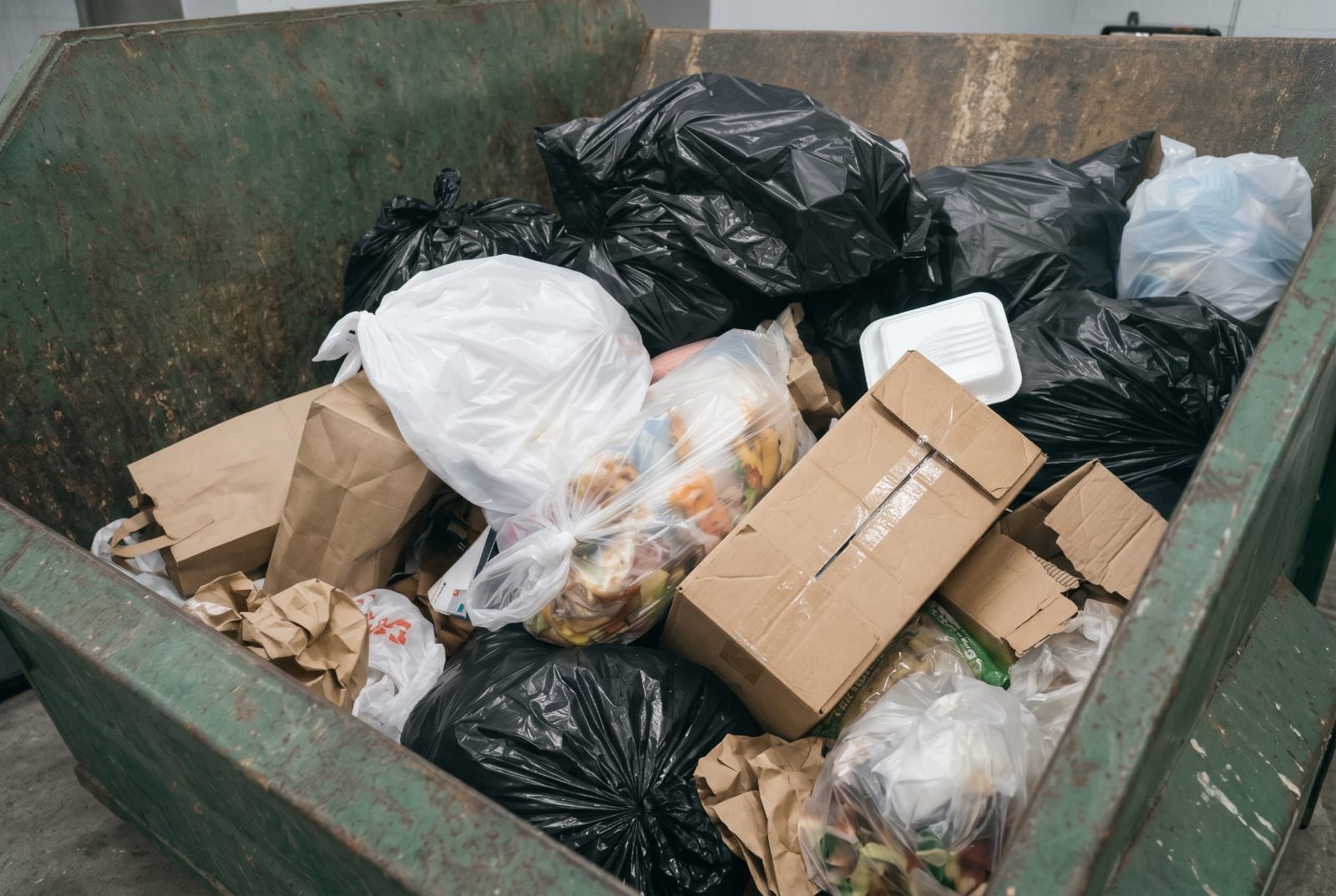
caption
Clear plastic bags filled with food scraps sit mixed with cardboard, paper and black garbage bags inside a basement chute, of an apartment building near Quinpool Road in Halifax.In the waste room of a high-rise apartment building near Quinpool Road in Halifax, two green carts sit mostly empty. Next to the compost bins, small bags of food scraps are visible, tucked inside larger garbage bags that land in a dumpster at the bottom of the building’s garbage chute.
Organic waste disposed of improperly inside garbage bags, from Halifax apartment buildings, restaurants and stores, is left to rot in landfills, where it eventually releases methane into the atmosphere, contributing to global warming.
“Nobody ever explained to me how to sort organic or food waste properly when I moved here last year,” said Nirmal Patel, a resident of the building on Quinpool.
“I often see people throwing food residue in their garbage bags.”
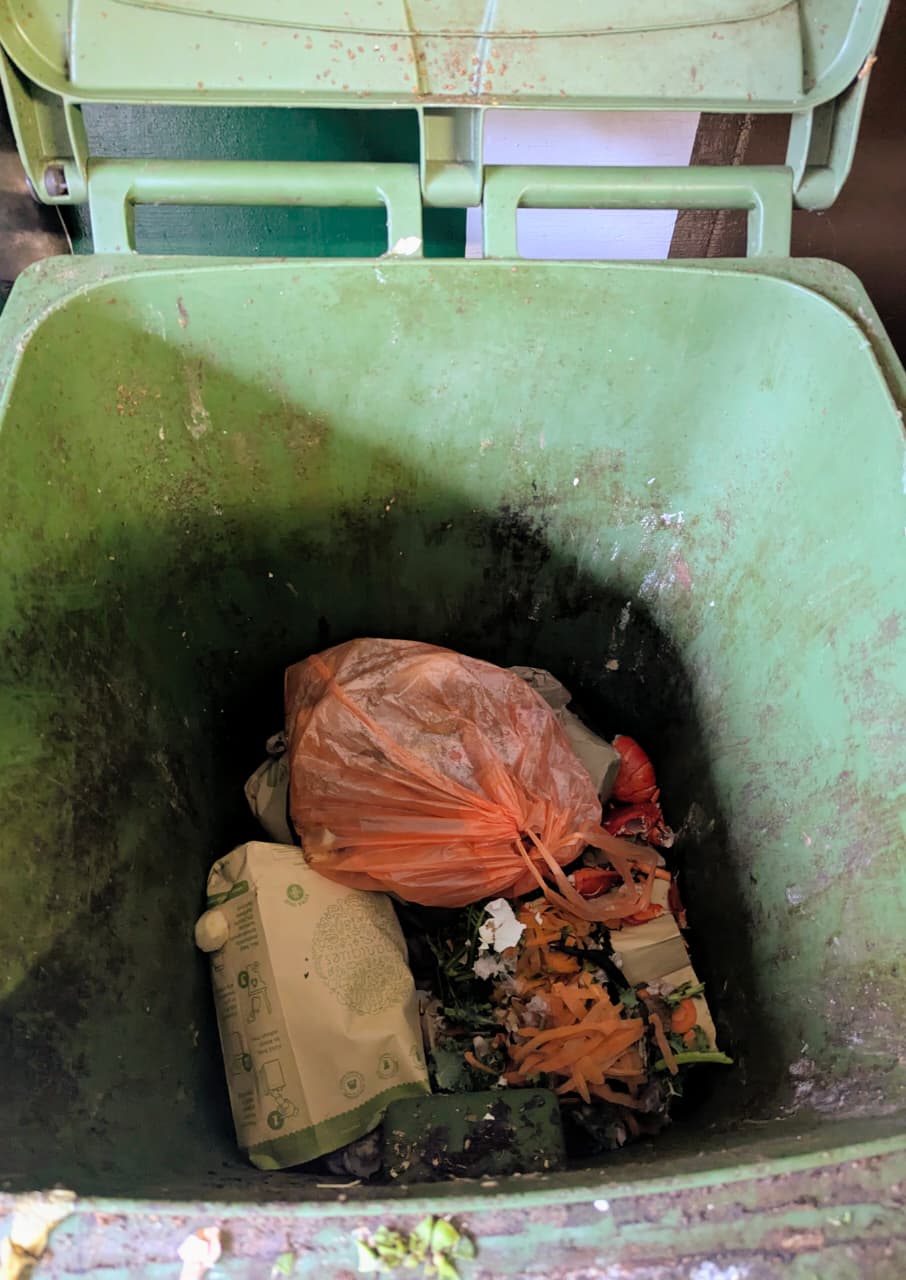
caption
A green organics cart at an apartment building near Quinpool Road holds only a few food scraps and a plastic bag, which is not allowed in green carts, in October 2026.Tim Allen, a commercial waste collector with Regroup, said organics hidden in garbage bags are not removed before they are landfilled.
“We are not going to sort it,” he said. “Would you?”
Food waste and soiled paper have been banned from Nova Scotia landfills since the late 1990s. However, garbage classed as commercial falls outside the auditing process that the municipality uses to track the amount of organic waste in its own landfills.
“Garbage from commercial properties, including apartments over six units, is taken to landfills outside of the Halifax Regional Municipality,” municipality spokesperson Jake Fulton told The Signal in an email statement.
The municipality aims to keep compostables at or below 10 per cent of residential garbage that’s taken to the city’s only municipal landfill, at Otter Lake. But “only material that is disposed at the Otter Lake site is audited for the 10 per cent target,” according to Fulton, not individual pickup sites.
Capreit, one of Canada’s largest apartment owners, told The Signal in an emailed statement that it gives residents sorting guidance, and that waste management in apartment communities “is a shared responsibility.”
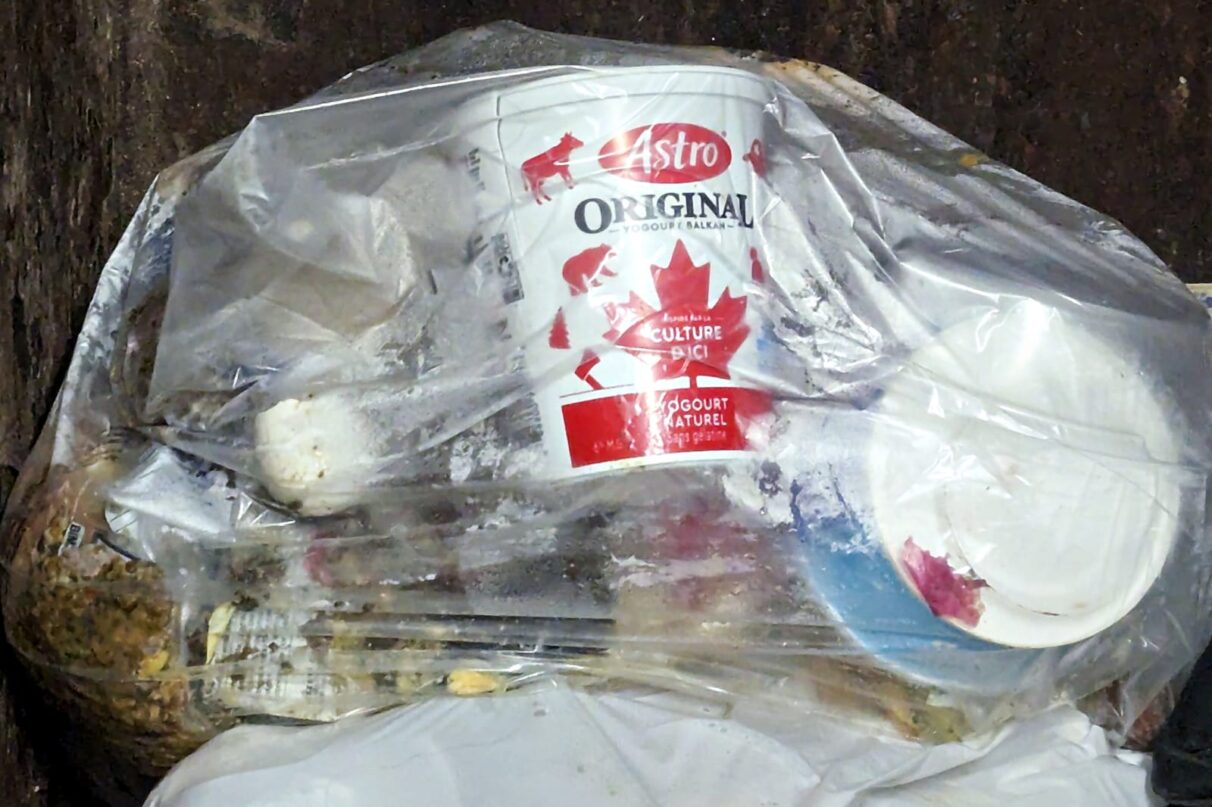
caption
Food scraps and a yogurt container are tied together in a clear garbage bag in the garbage bin of a high-rise near Quinpool Road in Halifax earlier this month. Organics are supposed to go in a green cart.The climate cost of hidden organic waste
Gordon Price, at Dalhousie University’s Faculty of Agriculture who studies waste management, said the problem goes beyond just food. Paper, wood products, clothing, diapers and pet waste all break down in a landfill, releasing methane.
Once buried, compacted waste is starved of oxygen, so organics break down into methane instead of carbon dioxide, he said. A ton of landfilled food waste can produce between 1,400 and 5,900 kilograms of carbon dioxide equivalent, he said.
That’s roughly equivalent to driving a passenger vehicle for four months to a year. When composted, that amount sinks to between 100 and 1,000 kilograms.
Municipal solid waste diversion programs were built for households, Price said, while restaurants, malls, supermarkets and apartment buildings often have to rely on private haulers.
Their easiest option, in that case, he said, is one bin: “You get a big metal box, just throw everything in it.
“If you live on the fifth floor and then you have to carry your bag of organics down to the basement and then you have to put it in the bin, you know the compliance level probably is not going to be particularly high,” he said.
According to HRM, over the last six months inspectors completed 677 inspections of commercial properties and issued only 10 tickets for improper disposal of compost.
Provincial data shows that from 2024-25, Halifax disposed of 101,303 tonnes of industrial, commercial, and institutional garbage. Green carts at the curb collected 35,061 tonnes of organics that year.
A landfill outside of Halifax, Cogmagun in West Hants, also receives the city’s garbage. Shirley Pineo, chair of the landfill’s community liaison committee, said the location receives four to six large trucks from Halifax a day.
“It is a concern if there is a lot of compost in our garbage that we are taking in,” Pineo said. The landfill doesn’t currently measure the amount of organics that are disposed improperly.
The municipality said landfill gas is managed through collection wells and flares that burn off methane.
GFL Environmental, which manages the West Hants landfill in Cogmagun, also has a landfill gas management system. But federal regulators say methane still escapes through landfill cover, the active disposal area and leaks in the systems.
About the author

Faisal Karim
Faisal is a journalist from Bangladesh and a Master of Journalism student at the University of King's College.
Leave a Reply