
Indian Act amendment would reshape status eligibility
Proposed change would eliminate 'second generation cutoff' for First Nations status
caption
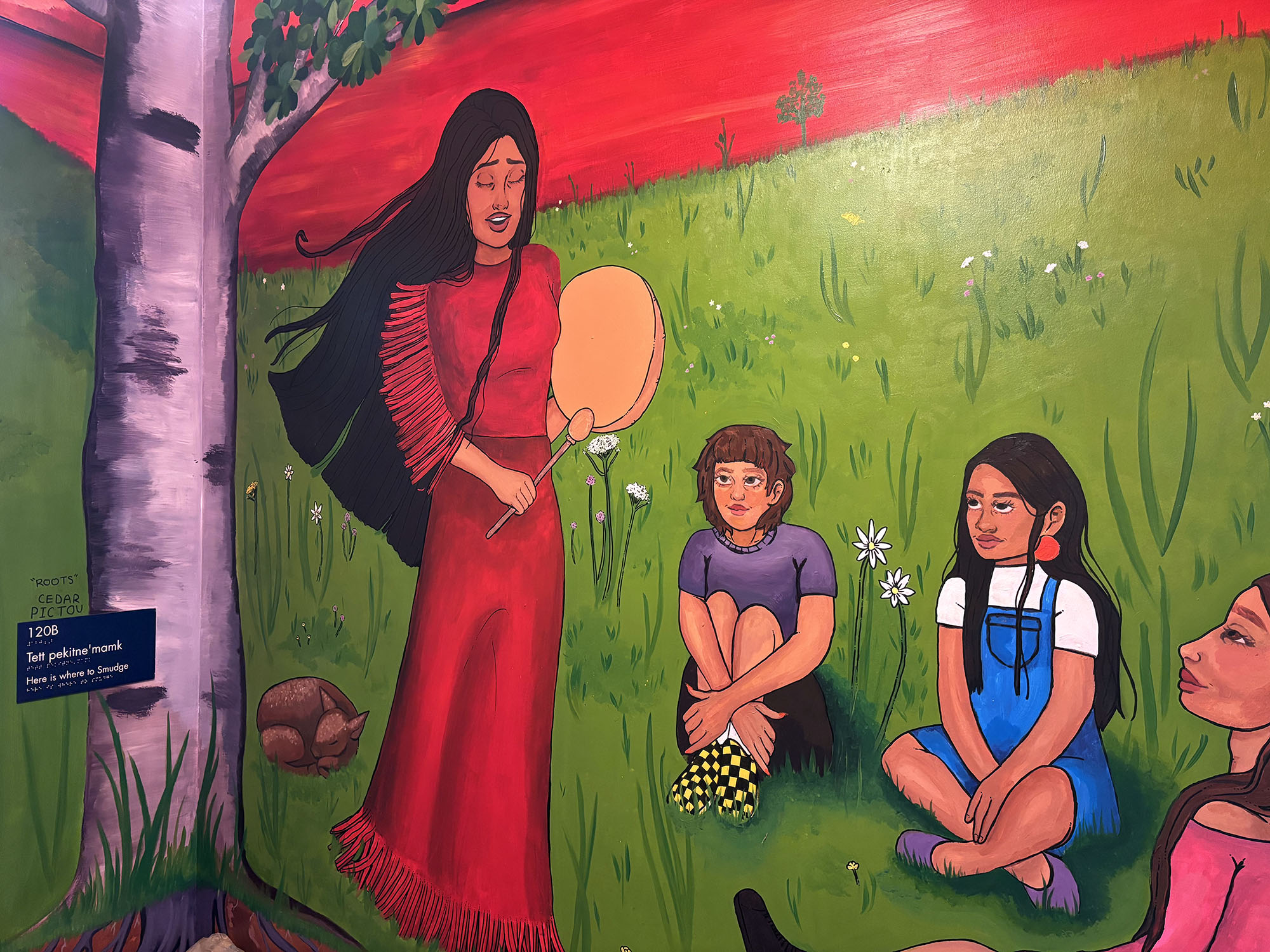
A mural inside the Mawio’mio’kuom (Indigenous Student Centre) at the University of King’s College in Halifax captures a Mi’kmaw woman teaching youth while holding a hand drum. The artwork reflects Mi’kmaq culture and traditions.Mi’kmaw families in Halifax are feeling the impacts of the Indian Act’s second-generation cutoff, a rule preventing First Nations status from being passed down after two generations when only one parent is legally registered.
But a change to the law proposed by Mi’kmaw Sen. Paul Prosper would eliminate that cutoff entirely and replace it with a “one-parent rule,” meaning anyone with at least one status parent would be eligible for registration.
Inside the Mawio’mio’kuom (Indigenous Student Centre) at the University of King’s College in Halifax, bright murals and woven artwork line the walls where Indigenous students are welcome to gather.
Sitting at a table inside the space, Emily Pictou-Roberts, Indigenous student co-ordinator, says the policy has shaped how many young Mi’kmaq people think about their futures.
Pictou-Roberts, who grew up in the Millbrook First Nation community in Nova Scotia and has been a registered status band member since birth, says the rule affects how her generation thinks about relationships and family planning.
“The second-generation cutoff has really limited my generation in terms of who they’re able to love and create a family with,” she told The Signal on March 3 in the Indigenous Student Centre.
“We’ve been very cognizant of who we marry and have children with,” she said. “(We want to) ensure that our children will have a future in the community, be supported by community, and participate at a level where they don’t feel their identity is questioned.”
The second-generation cutoff was introduced in 1985. Under the current legal system, if two successive generations have children with non-status partners, the grandchildren are no longer eligible for First Nations status.
Prosper, the former chief of the Paqtnkek Mi’kmaw nation, said the provision has long been criticized as discriminatory and rooted in assimilation policies.
“As long as you have one status parent, you’re a status person,” Prosper said in an interview with The Signal on Feb. 25. “It could go on in perpetuity that way.”
Bill S-2, which Prosper wishes to amend, is also tied to a longer history of discrimination under the Indian Act.
For decades, Canada enforced a policy known as enfranchisement, which stripped First Nations people of their legal status and treaty rights. In many cases, individuals were forced to give up status in exchange for voting rights, property ownership or access to education. When one person was enfranchised the entire family could lose status.
caption
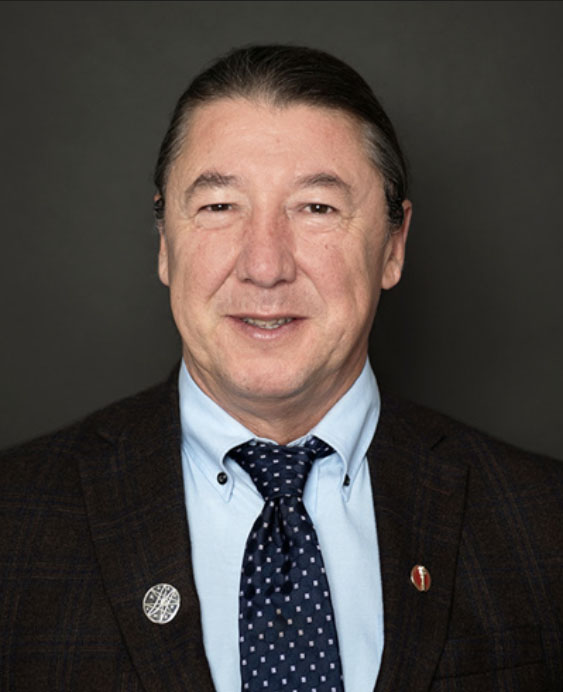
Sen. Paul Prosper has proposed an amendment to the law that would change the rules surrounding First Nations status.“We have the government determining who people can fall in love with and choose to have children with,” Prosper added. “That is a matter that’s rightfully within the domain of Indigenous people.”
The cutoff also affects the long-term size of registered populations in Mi’kmaq communities across Nova Scotia.
Under the Indian Act, people registered under Section 6(2), who have one non-status parent, can obtain status but cannot pass that status on to their children unless the other parent is also entitled.
According to the Indian Register, as of Dec. 31, 2024, the Atlantic region has 21,652 individuals registered under Section 6(2) out of a total registered population of 71,760. That means 30.17 per cent of Atlantic region First Nations people cannot pass status to their children unless the other parent also holds status.
In Millbrook First Nation, the percentage is even higher. Data from Dec. 31, 2024 shows 42.36 per cent of the community’s registered members face the same limitation, significantly above the Atlantic regional average.
Clayton Coppaway of the Confederacy of Mainland Mi’kmaq said changes to registration rules have a broader impact that those on individuals. He said they affect how communities plan and deliver services.
“When there are changes to the registration or to the membership, it can put, in some cases, strains on those services,” he said in an interview with The Signal on Feb. 25. “Larger membership does not automatically come with increased funding.”
Coppaway, who is registered under Section 6(1), said his sons are registered under Section 6(2).
“Unless they are marrying and having children with other status community members, they’re not passing that status on,” he said.
Pictou-Roberts said the conversation around status and identity can be complicated for Mi’kmaq people navigating federal policies that determine legal recognition.
“It really is a double-edged sword, you either become part of a system or you lack an identity,” she said. “Status isn’t something we take lightly, but it helps solidify our legitimacy as a community. It’s sad that we need policies like this, but federal protection is important in these trying times.”
The amended Bill S-2 has passed unanimously in the Senate and now sits before the House of Commons ahead of a court-ordered deadline in April 2026.
If passed, the legislation would receive royal assent and take effect one year later, allowing time for federal consultation and administrative preparation. At that point, individuals affected by the second-generation cutoff could apply to have their status restored under the new one-parent rule.


Leave a Reply