
N.S. has more high school vapers, says cancer society
'It starts off as social, and then it becomes dependency,' says Canadian Cancer Society spokesperson
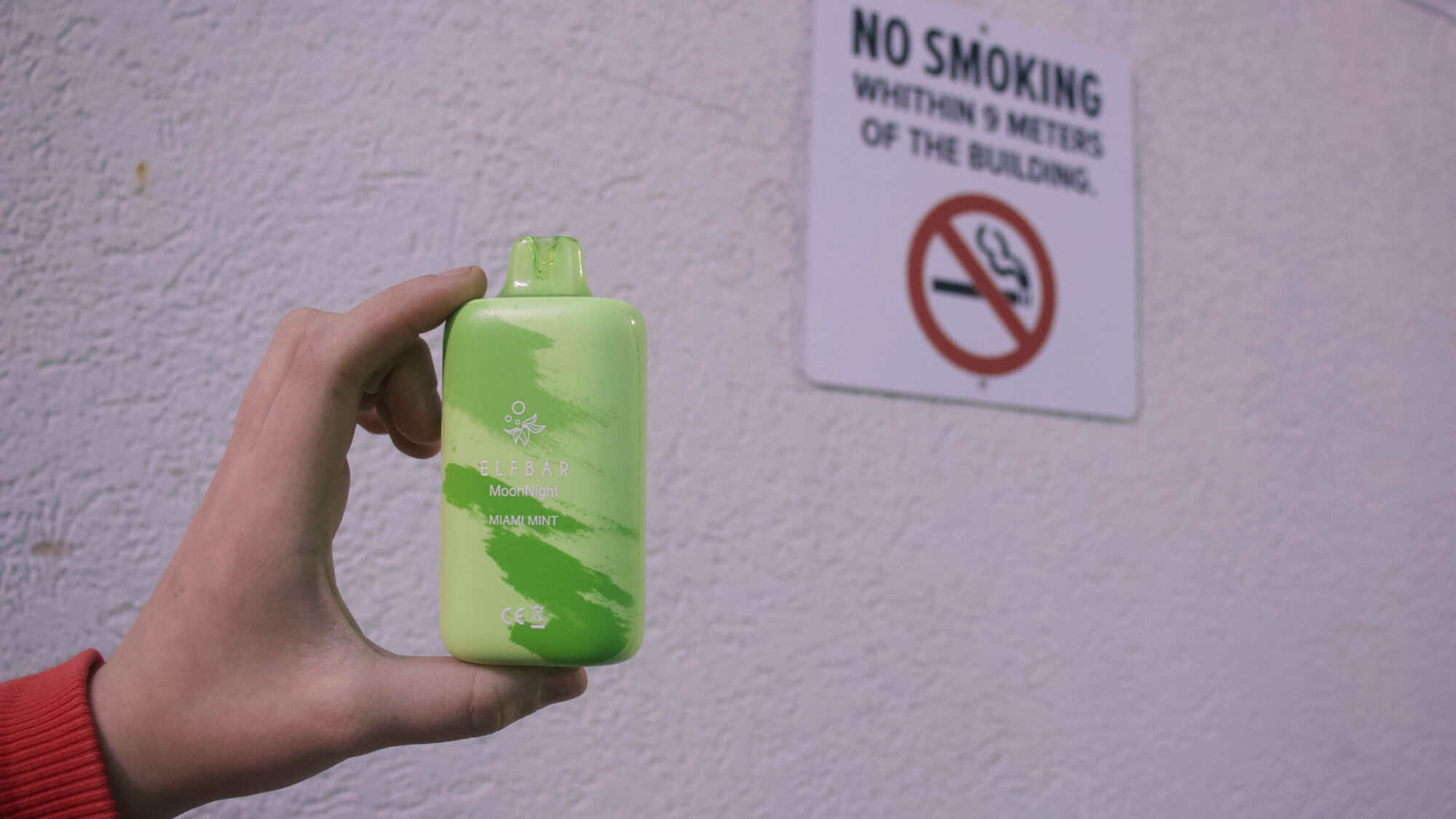
caption
A “miami mint” disposable Elfbar vape. With 70,000 puffs, it has the same amount of nicotine as around 2,300 cigarettes.When she was 13, Faith Doncaster was offered a vape in her middle-school’s bathroom. “Just try it, just try it once,” she remembers her friends saying.
She tried it, liked the sweet, fruity flavour and continued to hit her friends’ vapes when offered. Eventually, she bought her own from a friend who had bought a new one. In the beginning, it was the flavour that kept her coming back for more. Today, it’s the nicotine.
“Now, it’s addiction,” said Doncaster, now 18.
According to a study on student tobacco use from Health Canada, 27 per cent of Grade 12 students in Canada vape. Heather Mulligan from the Canadian Cancer Society says even more Nova Scotian students are vaping. Related stories
“Here in Nova Scotia, one in three of the high school students in Grades 10 to 12 currently (vape) and then more than half, 55 per cent, have tried it at least once,” said Mulligan.
One of the reasons teenagers are starting to vape involves the sweet flavoured vape juice pods that can be found on online retailers. Nova Scotia banned the sale of flavoured vapes in 2020, but various online sellers are still accessible to underage students, and many don’t check for government-issued identification.
“There is illegal product, flavoured product making its way into Nova Scotia and then being sold in schools and among youth,” said Mulligan, “So, there has to be a conversation around how do we actually address that issue as well.”
She also says that ease of access is a problem, and governments can alleviate that issue during in-person sales by raising the legal age of purchase from 19 to 21 in Nova Scotia — and Canada-wide.
“By increasing it to 21, it really helps crack down on unintended or illegal sales to minors,” said Mulligan. “It also will help with that social sourcing among young people who aren’t supposed to have these products in the first place.”
This social sourcing is also what got Nova Scotian Ian White into vaping when he was in middle school. His friends had older brothers who were able to easily supply them with vapes through Nova Scotian retailers.
He started to vape when he was in eighth grade, with vapes that had zero nicotine. At that time, he said the point was doing tricks with the smoke clouds. Slowly, nicotine was introduced, first at 3 mg per mL of vape juice, then 6 mg and finally jumping up to 50 mg.
Now, the highest amount of nicotine that Canadians can buy per vape is 20 mg.
“I wish I could go back in time and not do it,” said White, who is 21.
As a fourth-year at Acadia this year, White has cut back to 10 mg nicotine unflavoured vapes in an effort to ease into quitting.
“I know that it’s really not good for me and I have attempted to quit before,” said White. “I lasted three days I think and on day two I started to notice effects. I was starving and I just wanted to keep eating.”
There are no long-term studies on the effects of vaping, but experts compare the health risks to smoking cigarettes. According to Health Canada, nicotine can also have short-term increases on blood pressure and heart rates.
Back in high school, it was a social activity.
Both Doncaster and White recall vaping with other students in high school bathrooms, witnessing transactions for vapes and trading flavours back and forth.
Doncaster has also attempted to quit. She said it’s harder when friends around her continue to vape, and continue to offer her their vapes.
Their experiences align with the Canadian Cancer Society’s research: “It starts off as social, and then it becomes dependency,” said Mulligan.
About the author
Emma Breton
Emma Breton is a fourth-year Bachelor of Journalism (Honours) student. She enjoys reporting on the arts, public policy and local affairs.