New program to house people living with disabilities in community
HomeShare to seek hosts as part of plan to close all institutional facilities by 2028
caption
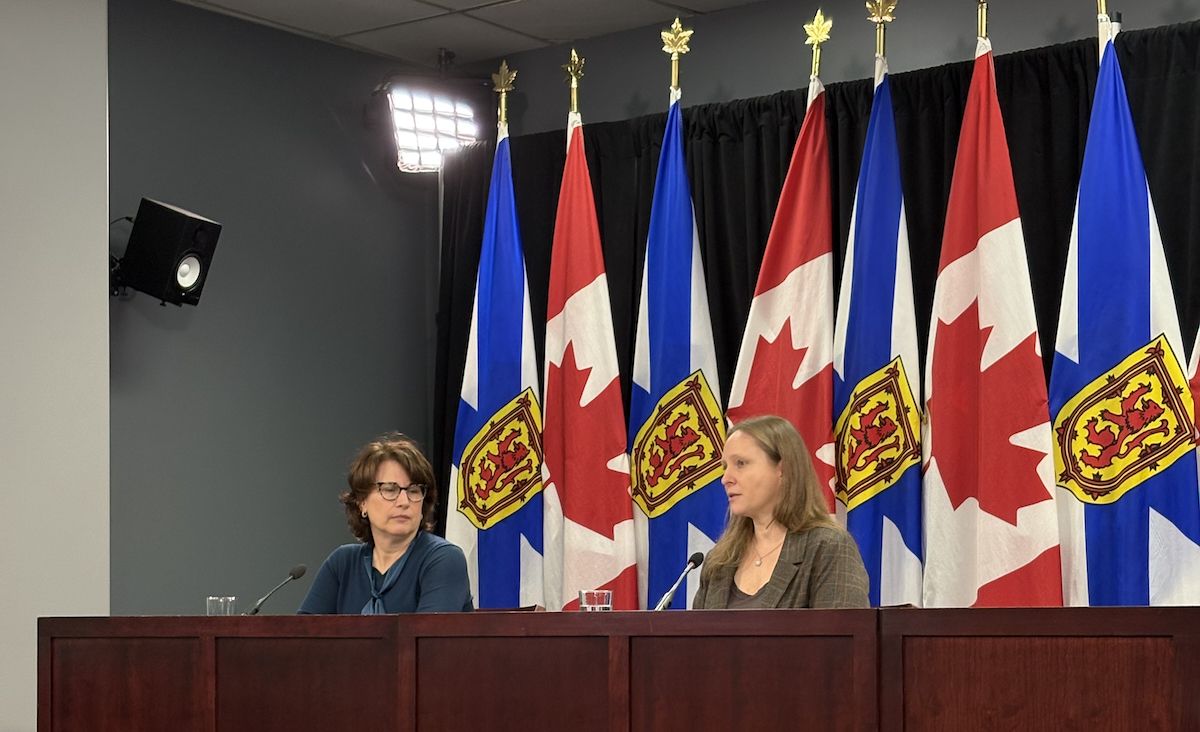
Maria Medioli, executive director of the Department of Opportunities and Social Development’s disability support program and Lora Church, executive director of Nova Scotia Community Living Organizations, announce the new Nova Scotia HomeShare initiative on Tuesday in Halifax.Nova Scotians living with disabilities in institutions have a new option for housing: living with someone in their community.
HomeShare, a new program announced by the province on Tuesday, is designed to satisfy a court decision that ordered the provincial government to develop community-based supports and services.
As part of the Nova Scotia Human Rights Remedy, the province has committed to closing all institutional facilities and finding community-living options for people by March 31, 2028. Nova Scotia is one of the last provinces to rely on institutional facilities to house people living with disabilities. HomeShare is being offered as an option for people leaving institutions.
“For those that it works for, it works very well, and it’s a great arrangement, but we aren’t expecting to place everybody who is in an institution in a HomeShare,” said Maria Medioli, the executive director of the Department of Opportunities and Social Development’s disability support program.
Participants in the HomeShare program will live in the home of a provider, who will receive a room-and-board payment from the participants’ disability funding. Providers will also receive between $26,000 and $98,600 annually from the disability support program for providing disability related services, including care.
“We do think that just about anybody can live in HomeShare, we just have to have appropriate supports in place,” said Lora Church, the executive director of Nova Scotia Community Living Organizations.
Church said that there is evidence of people with complex needs being well supported in HomeShare programs in British Columbia, where the program has run for 20 years.
“We’ve been placing people in care in institutions or other facilities, and that robs people of that basic right to choose,” said Jane Gillis, the president of Inclusion Nova Scotia, a disability advocacy group.
She said that community supports like HomeShare are one of many solutions that can help provide care to people living with disabilities.
“It helps people live where they want to and helps them foster meaningful relationships in their community.”
The participant and provider will be matched by the program and local co-ordinating organizations.
Providers are required to give participants a private bedroom, but are not required to provide private washrooms, living spaces or entrances. Family members of participants can qualify as providers, except parents, and the home cannot be the participant’s parents’ home.
“I think the program to be successful needs ongoing accountability and monitoring to ensure safeguards,” said Gillis.
The formal safeguards will be maintained by 10 local co-ordinating organizations in Nova Scotia, and will include screening and monitoring home providers, annual private participant check-ins, quarterly in-person check-ins and monthly virtual check-ins. The local co-ordinating organizations have not been identified.
Medioli said that there are no home provider or participant applications yet. The program aims to reach a target of 500 HomeShare providers based on an assessment of community need, although no further information was provided on how this was assessed.