
Nova Scotia Power rate calculations under fire from expert
Rates for residential customers could increase by eight per cent over next two years
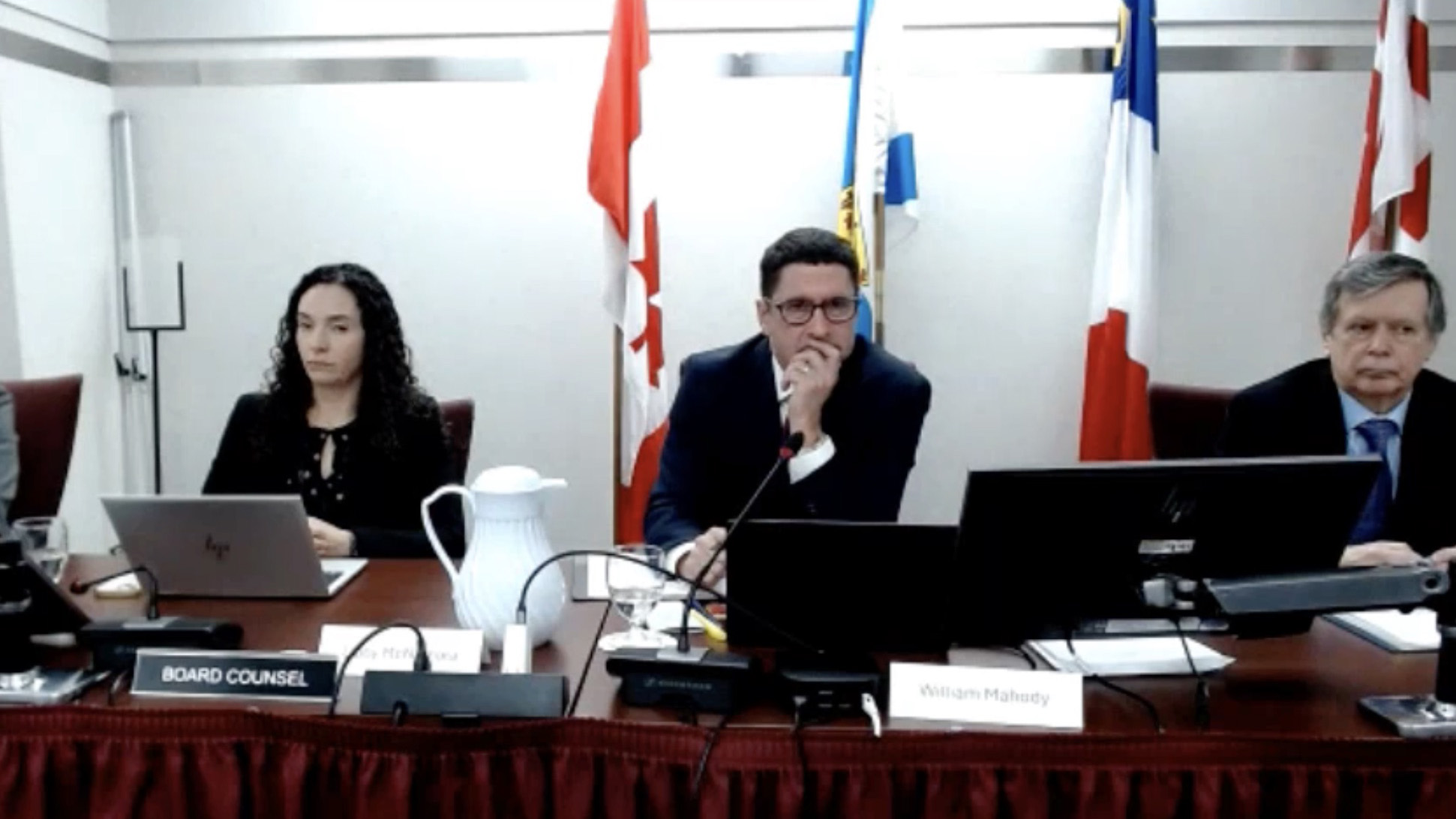
caption
The board counsel for the Nova Scotia Energy Board sits during the first day of the utility's hearing on Jan. 7 in Halifax. The hearing lasted 5 days.Nova Scotia Power will review its cost-of-service calculation methods this year, and it might have a big impact on Nova Scotia residents’ power bills.
The utility is currently pushing for an overall rate increase of four per cent for 2026-27. To achieve this, residents would see an increase of eight per cent over that time frame, while some businesses and industrial customers could see a decrease in rates, up to 11.6 per cent lower by January 2027.
But some experts say that doesn’t have to be the case.
The utility determines how this rate change is distributed across the different customer classes by calculating the cost of service of each class. Then, rates are adjusted in proportion to that cost for each class in order to reach the utility’s proposed revenue for the year. Related stories
With the current cost of service calculation method, the rate for residential users is rising by double the overall increase, at eight per cent over the next two years.
The utility uses the minimum system study within the cost of service study to determine the cost of the distribution system. This method is “used in the cost of service study for the classification of poles & fixtures and overhead & underground lines between customer-related and demand-related,” according to the utility’s application.
“Most distribution costs are driven by a combination of building out the system to reach customers and maintaining sufficient capacity to meet peak demands,” the report from Elenchus, the utility’s consultants on cost of service.
Before submitting its application to the board, executives at Nova Scotia Power said they consulted with stakeholders, customer representatives and experts for over a year. One of those experts included Caroline Palmer from Synapse, an energy economics consultancy firm.
She provided expert testimony on the last day of the utility’s five-day hearing in front of the Nova Scotia Energy Board.
She said the utility’s current method is inaccurately passing more distribution costs on to residential customers.
“Nova Scotia Power’s use of the minimum size method for classifying substantial portions of its distribution system in its (cost-of-service study) does not reflect cost-causation principles and inflates cost allocations to residential customers,” said Palmer in her report to the board.
Her recommendation includes changing the method entirely, but as a second option, she suggests using the minimum size method with a peak-load carrying capacity adjustment, which would balance out the demand costs in response to minimum energy usage.
At the request of the board, the utility calculated the rate increases with a new adjustment of 1.5 kilowatts per customer. This means 1.5 kilowatts would be subtracted from the amount of the customer’s energy demand, since its system is made to withstand a minimum of 1.5 kilowatts per customer.
This is the capacity adjustment used in Minnesota and South Dakota, according to Palmer. Nova Scotia Power would have to determine the accurate number for its specific grid, but an estimation — such as 1.5 kilowatts — can be used for now.
With these calculations, the increase for residential customers would be seven per cent over two years, instead of eight.
While this would be an improvement from the current system, Palmer says this still isn’t the best way to determine demand.
She urged the utility to consider a switch of methodology for next time — and encouraged the board to consider the results of other method calculations during this rate change hearing.
The minimum system is used in Saskatchewan, Quebec and Newfoundland and Labrador. Ontario and New Brunswick’s distribution calculations use an analysis of minimum system alongside other methods, according to Elenchus. Ontario Power Generation currently uses a load carrying capacity adjustment of 0.4 kilowatts per customer.
Palmer, on the other hand, recommended a complete switch to the basic customer method. It would limit “customer-related costs to those directly tied to the number of customers, such as metering and billing,” according to her report.
According to Palmer’s calculations, with this methodology, the rate increase for residents would be six per cent over the next two years, instead of eight per cent — or seven per cent with the capacity adjustment. In that case, small industrial customers would receive a rate increase of 6.1 per cent instead of the current 1.4 per cent.
Nova Scotia Power is expected to file a hearing order to review its cost of service methodology with the board later this year. This will include discussions on load carrying capacity adjustments and the possibility of an overall change of methods.
The board will hear closing statements from affected parties on Jan. 30 before voting on the proposed rate change.
About the author

Emma Breton
Emma Breton is a fourth-year Bachelor of Journalism (Honours) student. She enjoys reporting on the arts, public policy and local affairs.

Leave a Reply