
SMU students strike over provincial funding cuts
Province-wide student walkout highlighted education, affordability issues
caption
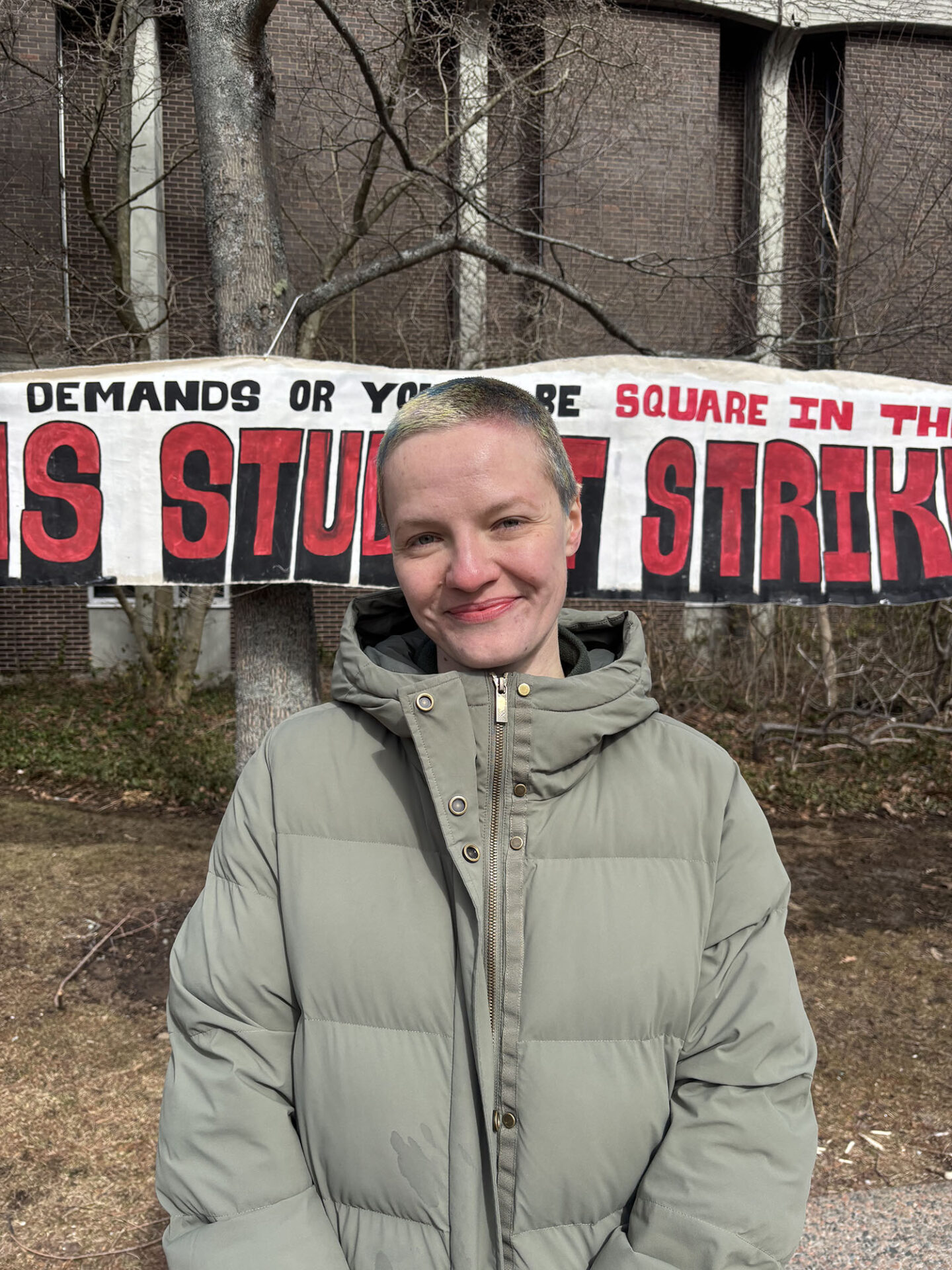
Elizabeth Ganton, a Saint Mary’s University student strike organizer, attends a rally at the university quad in Halifax on March 19.Students at Saint Mary’s University walked out of class March 15 to 21, joining a province-wide students’ strike protesting provincial government funding cuts they say are driving up tuition and limiting access to education.
Outside the SMU campus in Halifax, groups of students gathered, holding bright handmade signs and chanting in unison as part of the rally on March 19.
Nova Scotia Premier Tim Houston’s announcement in February of $304 million in cuts to grants for organizations and universities, including a one-time loss of $11 million to SMU, prompted the student action.
Joanna Ghiz, a Nova Scotia student strike organizer, said the timing of the cuts intensified an already planned movement.
“The provincial budget cuts came at an incredibly insane time,” Ghiz said. “The provincial student strike was already planned for over the past year.”
The province-wide movement is calling for more affordable tuition and for universities to divest from industries tied to war, fossil fuels and resource extraction on Indigenous land.
Elizabeth Ganton, a SMU student strike organizer involved in outreach and social media, says the movement began in 2025 over concerns about rising tuition and declining government support.
“Universities used to be about 70 per cent government funded, and now it’s closer to 30 per cent,” Ganton told The Signal at the SMU campus on March 13.
Ganton said that shift has contributed to rising tuition costs for students.
Ganton said student awareness of the strike was initially uneven.
“A lot of people did not know about it at all, but when we explain the demands, they’re generally in support,” Ganton said, adding that it is the first province-wide student strike in Nova Scotia history.
“The call for affordable tuition and divestment has been the core two demands of the provincial student strike,” Ghiz said.
“It’s not just us, it’s Ontario, it’s New Brunswick, and it’s going to keep happening. Important programs are going to keep getting cut and the students are mobilizing.”
caption
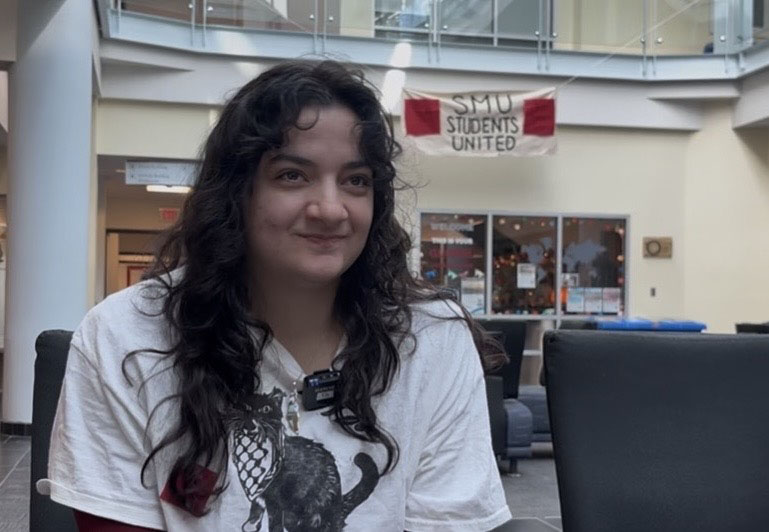
Joanna Ghiz, a Nova Scotia student strike organizer, speaks during an interview at SMU with The Signal on March 18.While Houston has pulled back from some budget cuts, no changes have been made to grants that students rely on for post-secondary affordability.
SMU student Ciaran MacDonald said the cuts could have long-term impacts on the province’s future.
“Students are the young people who are going to be the direction of Nova Scotia and be the future of what this province becomes,” he told The Signal on March 18 at the SMU campus. “Through (Houston’s) actions and the cuts that he’s mandating, he’s pricing out students.”
Other students say the financial strain is already being felt.
SMU student Victoria Levack said she has seen first hand how financial pressures affect students’ ability to stay in school.
“You would not believe the number of students who were in homeless encampments because they had to choose between getting an education and keeping a roof over their head,” Levack said.
caption
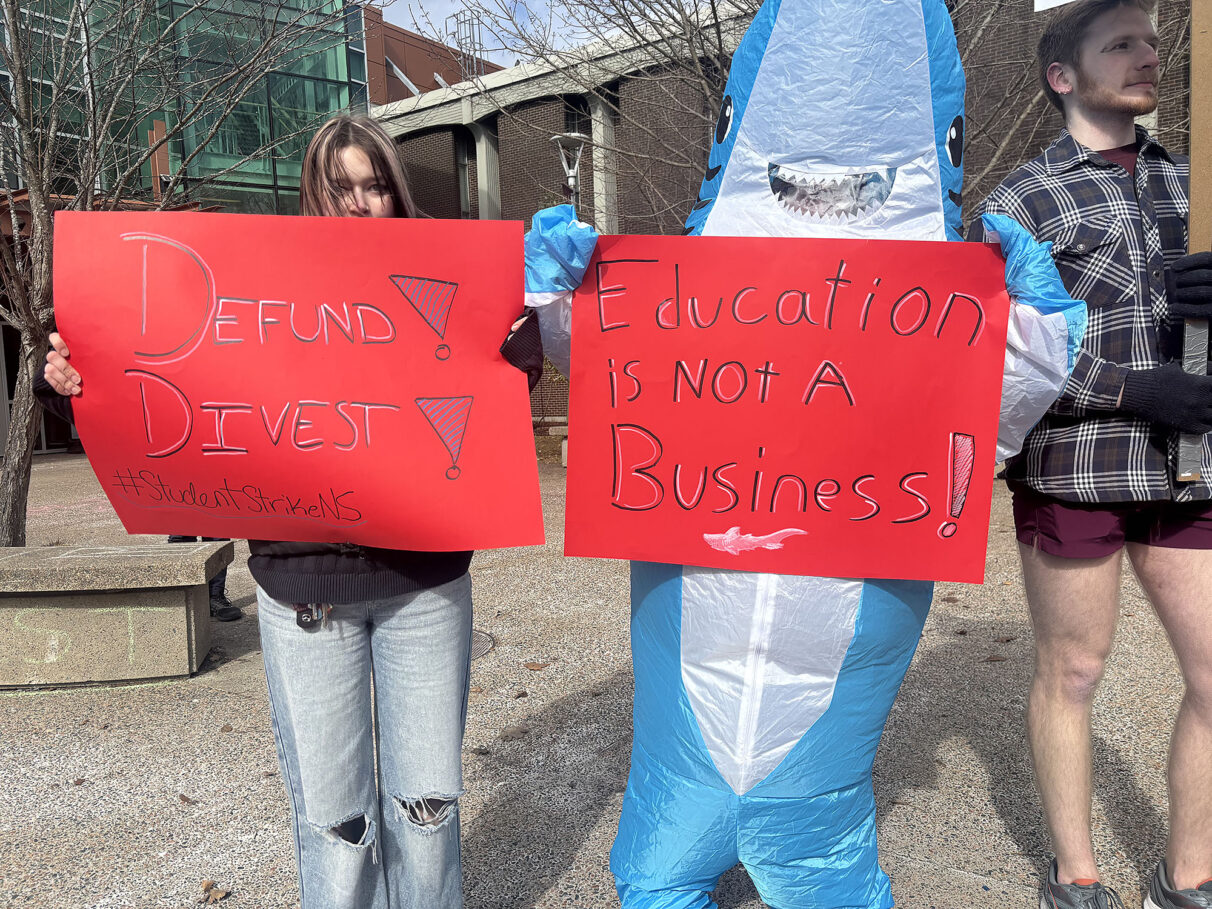
Two Saint Mary’s University students hold signs at the SMU student strike rally on March 19 in Halifax.Both students and faculty are feeling the effects.
SMU Faculty Union president Cathy Conrad said universities rely heavily on provincial funding to operate, and when that funding declines, students often bear the cost.
“The bigger picture of our funding comes from student tuition,” Conrad said in an online interview with The Signal.
“As the provincial operating grant goes down, we have to make up for that somewhere, and unfortunately, it primarily comes from students.”
Conrad said reduced funding can also lead to fewer course options and larger class sizes.
“Students’ choices and opportunities would diminish, class sizes would increase,” she said.
The week-long student strike concluded March 21, as organizers and students await a response from the provincial government and consider next steps.
“Change never occurs without action,” MacDonald said. “People and governments don’t listen to good thoughts, they listen to strong actions.”


Leave a Reply