
Explainer
The myth of compostable plastic
Why your compost bin liners are clogging up the system
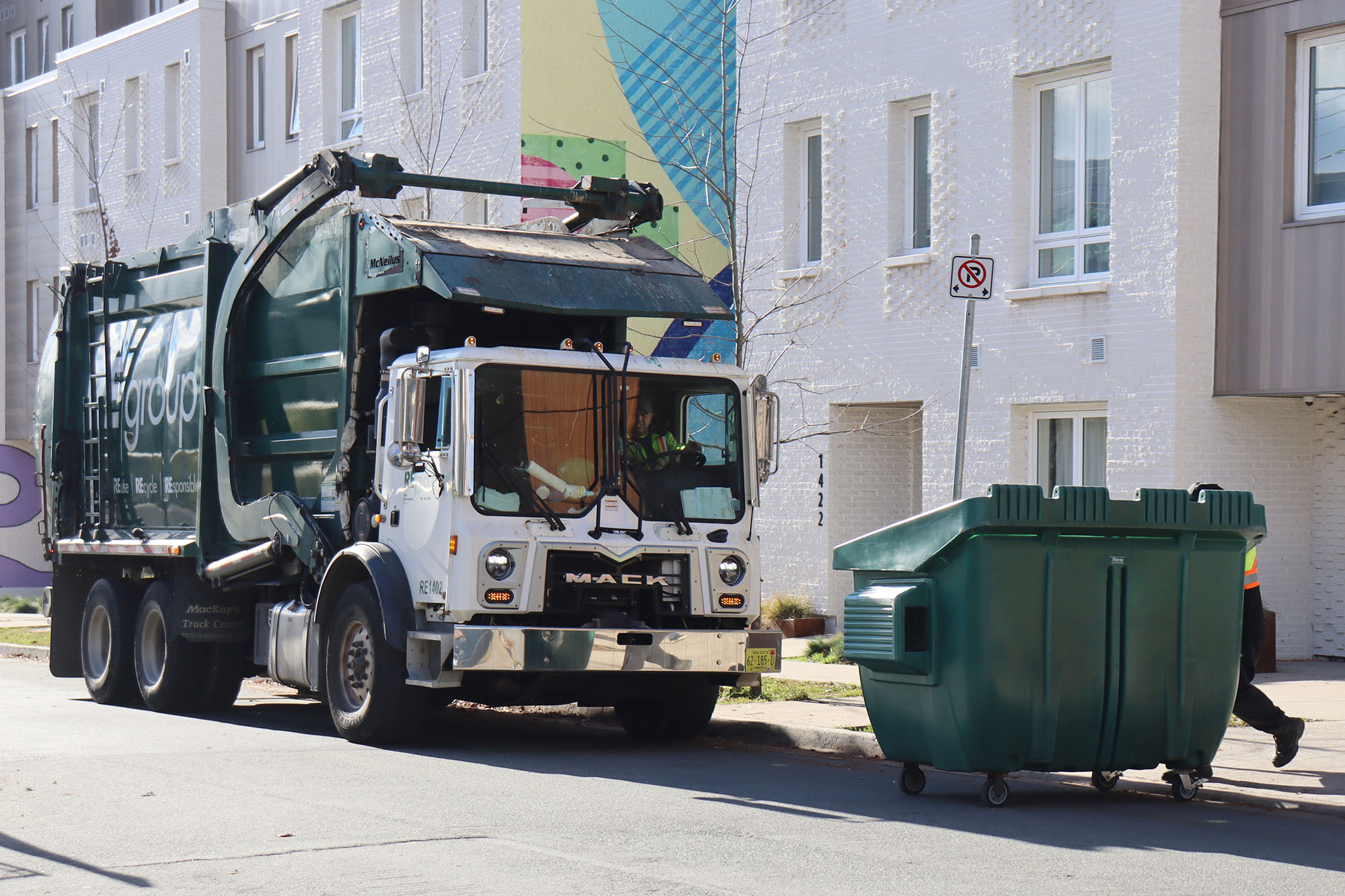
caption
Trucks in Halifax take residential compost to a composting facility in Goodwood.You may have seen plastic bin liners marketed as compostable in the grocery store or received a coffee to go in a biodegradable cup.
But many of the materials marketed as compostable or biodegradable are actually not accepted in Halifax green bins.
How have they made it into our composting system, and what should be done about it?
How composting works
Composting, according to Dalhousie University agriculture professor Gordon Price, replicates and accelerates the biological processes that break down organic matter.
“Micro-organisms . . . consume different types of carbon, which is what that organic material is,” Price said. Composting systems create a controlled environment which increases “the number of organisms that are capable of breaking things down or decomposing things.”
Composting helps reduce the amount of greenhouse gas released by trash into the environment.
When organics are disposed of outside a composting system, they produce methane. When processed through our current composting systems, they release carbon dioxide, which is considered less harmful than methane and is not included in greenhouse gas emission calculations.
These processes operate smoothly when the compost contains organic matter, like a banana peel, leaves and grass clippings, or the leftovers you forgot in the back of the fridge. But when plastic ends up at a composting facility, it can complicate the system.
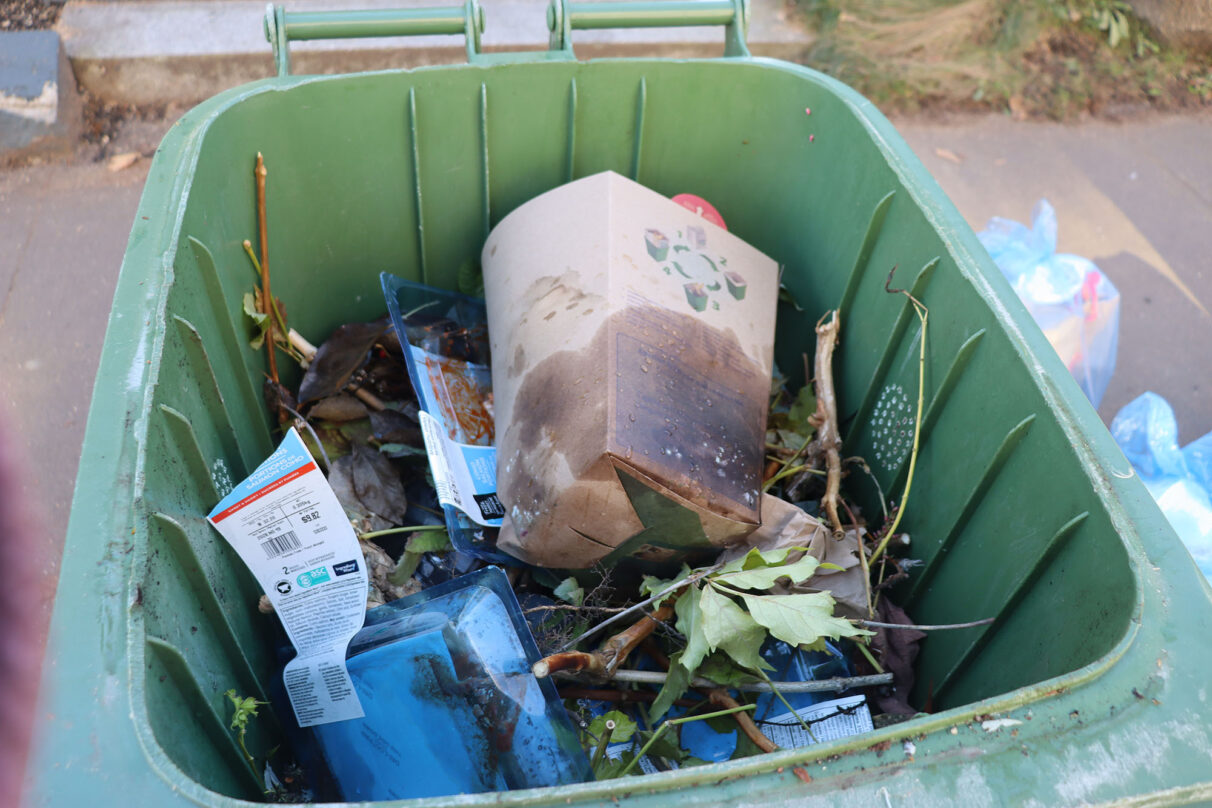
caption
Compost bins may be rejected if they contain plastic.Plastic breakdown
After compost bins have been picked up from your house and arrive at the facility south of Halifax in Goodwood, compost goes through a grinder. Some plastic might get trapped, and Price said they can get “rolled into the rollers and to the gears and then start to create mechanical issues.”
If plastic makes it through, it will go through a filtering process, during which most of the plastic is sifted out and sent to landfill.
This is where most grocery store biodegradable plastic bags and compostable coffee cups exit the system, which, as Price points out, requires an additional “energy and cost to move it to the composting facility, truck it there, handle it, process it, shred it, ultimately to screen it out just so that we take that material and then truck it away again, but this time to the landfill.”
Any plastic fibres that have broken down and made it through the filters end up in an oxygen-rich tunnel with organic matter to break down into compost that’s used for agriculture or in gardens.
Some plastics break down enough to make it through the entire composting life cycle, but as Price said, “It doesn’t mean that these materials are clean of plastics. It just means that they’re smaller particles that are now kind of merged into the rest” of the compost.
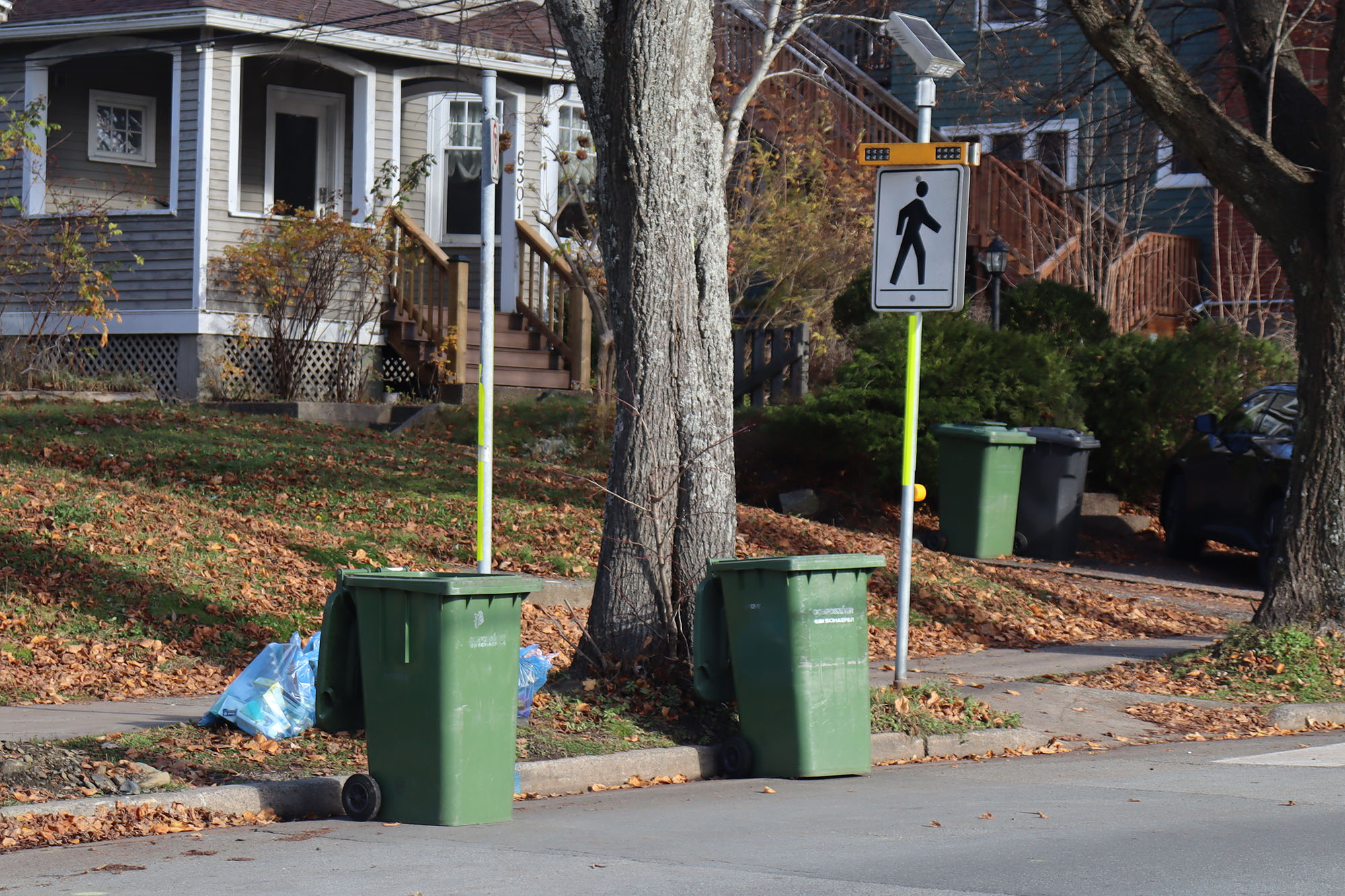
caption
Compost pickup schedules are available on the Halifax Recycles app.The solution
Kirk Symonds, a municipality manager of solid waste resources, says instead of a compostable plastic bag, use a paper bag for food waste. And if you’re wondering if an item can be composted, simply choose to recycle it instead.
“If we can put something in recycling, that would be preferred because that’s going to get turned into another product,” Symonds said. “With compost, once that goes to our facility, then it gets turned into a compost and then it’s used as a soil amendment, but that’s the last time to recycle.”
Symonds also said it’s important to be aware of your habits. “Don’t waste so much food. That is a great tip for people, particularly with the holidays coming up. If you do have food waste, make sure it goes in the green bin.”
About the author

Kendall Nestor
Kendall is a King's Bachelor of Journalism student. She is passionate about politics and pop culture.
Leave a Reply