
AI art is poor quality, ‘tells no story,’ say graphic designers
How artificial intelligence is creating headaches for professional artists
caption
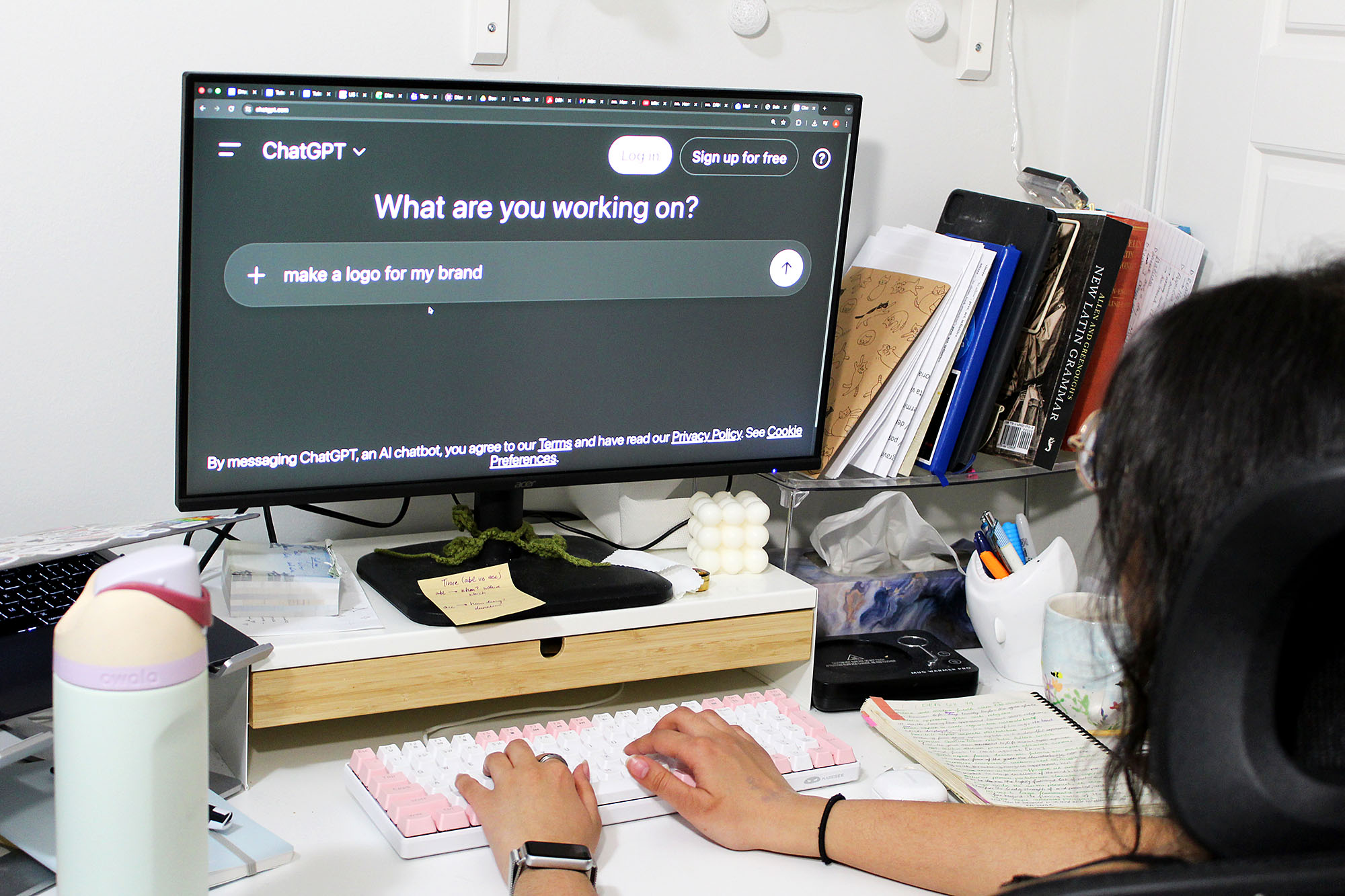
A woman asks an AI program to design a logo.After spending years studying and improving their skills, graphic designers are nervous about the use of generative AI in creative fields.
With the increase in popularity of artificial intelligence programs like Chat GPT, some businesses in Halifax are choosing to use the technology instead of paying for human labour.
But designers are concerned about more than just losing their jobs.
The Signal spoke with six different graphic designers in Halifax, ranging from students to experienced professionals, about their thoughts on AI being used to create promotional materials in Halifax. They all agreed that there is a clear quality difference in designs made by AI and ones made by humans.
“Most posters I’ve seen that have used generative AI have the same art style, the same look to it, it tells no story,” said Olivia Lê, a fourth-year design student at NSCAD University in Halifax.
“I do hope in the future people realize the value of not using generative AI for your final product.”
The Signal analyzed the promotional material of 10 different Halifax businesses for AI generated content. First, 20 different AI image detectors were tested for accuracy by submitting one AI-generated image and one real image.
The Signal took the five most accurate detectors (TruthScan, AI Image Checker, isgen.ai, Hive Moderation, Winston AI) and ran the promotional material of 10 different businesses around Halifax through their programs.
Six of those ten businesses had one piece of promotional material that the AI detector flagged as having at least a 60 per cent probability of being AI generated. The highest was determined to have a 97.6 per cent probability of being AI generated.
The other four businesses had promotional material that had a less than 10 per cent probability of being AI generated, with the lowest one having a probability of 1.4 per cent.
Artificial intelligence is growing in popularity. According to a 2025 poll by Abacus Data, 45 per cent of the 1,915 Canadians surveyed use AI on a regular basis.
April Baird, owner of Lines on Paper Print & Design in Halifax, says AI is mainly affecting the public due to a lack of understanding about the negative impacts of AI usage.
Aadil Kurji, an assistant professor at Durham University in England who specializes in the ethics surrounding artificial intelligence, said that some of those impacts are environmental as well as social.
“In order for these big (AI) models to be trained, there’s thousands of hours of computer cycles,” said Kurji in a phone interview.
“That represents a bigger carbon footprint and use of resources … Also, to keep the machines cool, the data centres use water cooling or air conditioning, which needs fresh water.”
Kurji said that people whose work could now be replaced, like graphic designers, may not be able to continue in their chosen careers.
“We have to contemplate what it means for this technology to displace people,” he said. “What do governments and society owe people who were productive members of society until this technology came in?”
When it comes to businesses’ promotional content, Baird said that AI shouldn’t be used at all.
“How do you trust a business that uses AI?” she said in a phone interview. “What other things are they cutting out on?”
caption
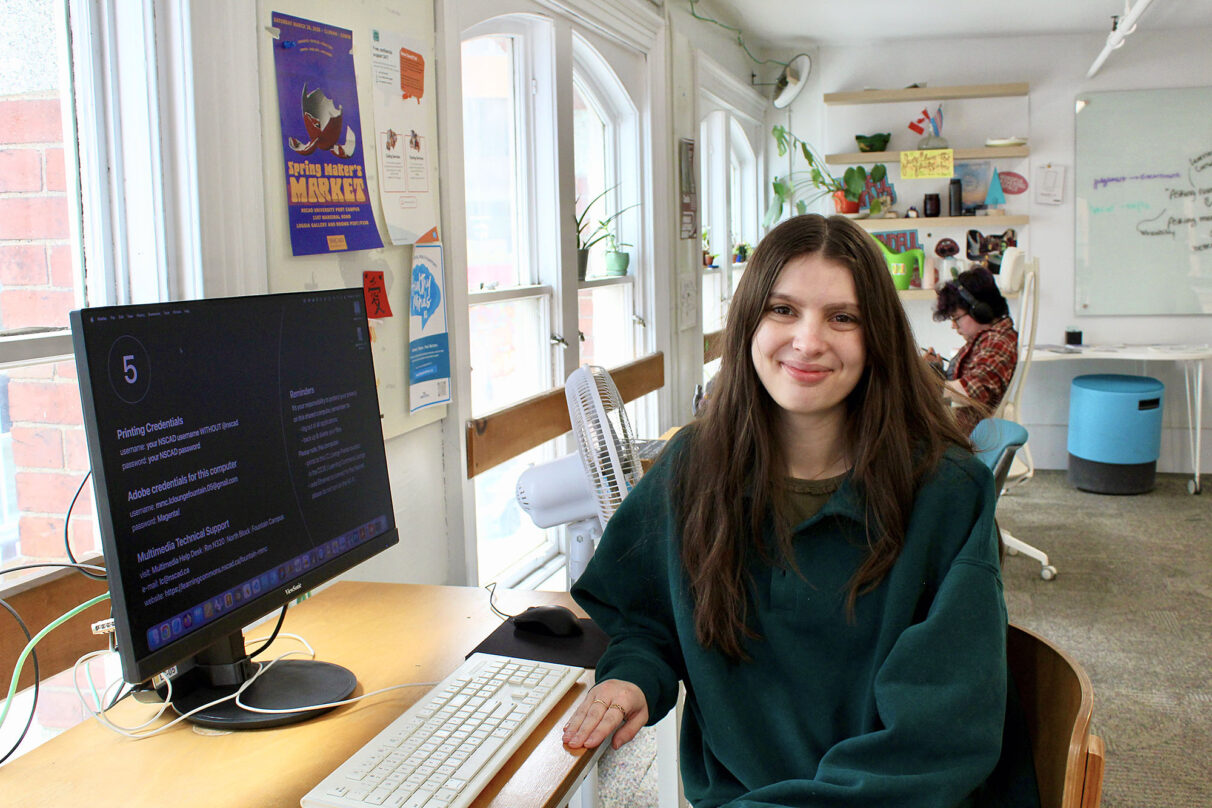
Rosemary Peddle, a fourth-year interdisciplinary design student at NSCAD in Halifax, is worried about the future of her field.Rosemary Peddle is in her last year of interdisciplinary design studies at Nova Scotia College of Art and Design (NSCAD). When she started her education, Peddle didn’t even know what Chat GPT was. Now, she says classmates are worried about their future careers because of AI.
“There’s a lot of fear around it,” she told The Signal. “In the last three years (AI) has changed so much, so in another three years it’s going to be a totally different thing again.”
Lê said she also notices the fear and lack of trust around AI around NSCAD students. She said that AI cannot do “human-centred designs,” meaning designs that focus on human experiences and needs.
“Our challenge is coming out of university and trying to convince people like, ‘Hey, we do actual work,’ ” said Lê. “It’s work that matters and that AI can’t do.”
One example of this is a project that Lê participated in for Northwood Care, where students designed cue cards for patients with dementia. On one side of the cards there would be a drawing of daily activities and the other was customized for each person’s needs.
“You can’t really predict something as sensitive as that,” she said. “Designing for that requires talking to people. No matter how good your prompting might be, it would not be as effective.”
Peddle uses AI in her daily life to support her reading and writing since she has dyslexia. She doesn’t use AI for the creative side of design because she wants the creative aspects of her projects to come from her.
“Creativity is a muscle in your brain that you have to use,” she said. “It’s definitely worrisome people being able to pop things into AI and … come up with (an image).”
caption
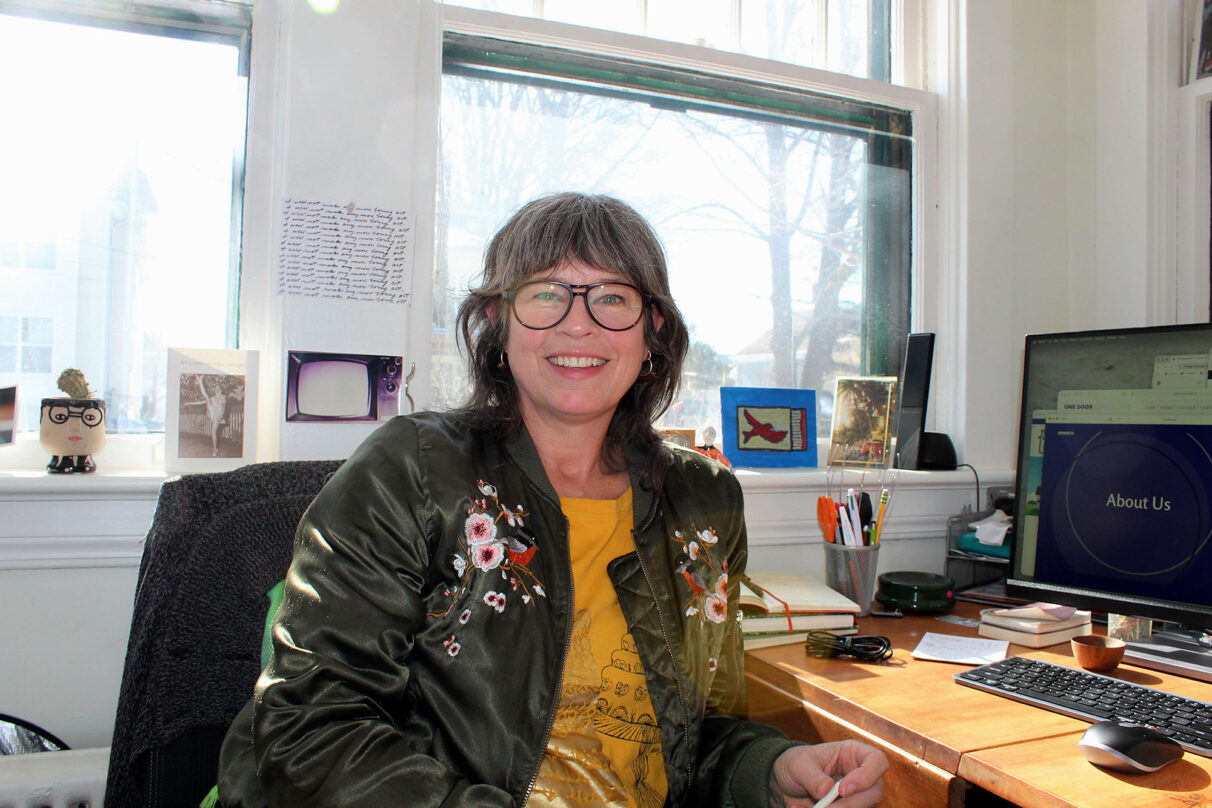
Kate Macintosh of Halifax has been working as a freelance graphic designer for over 20 years.Kate Macintosh has been in the graphic design business for over 20 years and throughout her career has seen many changes in technology.
“When digital photography, for example, came into popularity, a lot of the smaller jobs were taken over by people who could just do them themselves,” she told The Signal. “So that’s something I imagine is the case (with AI).”
AI researcher Maya Ackerman says that AI can be used to help people reach their potential, but people need to be careful about its use.
“When the intention is to replace human labour, it’s a really grim application of AI,” said Ackerman.
“Instead of having AI that becomes the artist or the musician, it’s much better to have AI that helps humans discover the creativity within themselves.”
About the author

Mariana Luz
Mari is a second year journalism student at the University of King's College. They're a writer for the Dalhousie Gazette and host a weekly radio...
