
Mi’kmaw conservationist uses Etuaptmumk to care for ecosystems
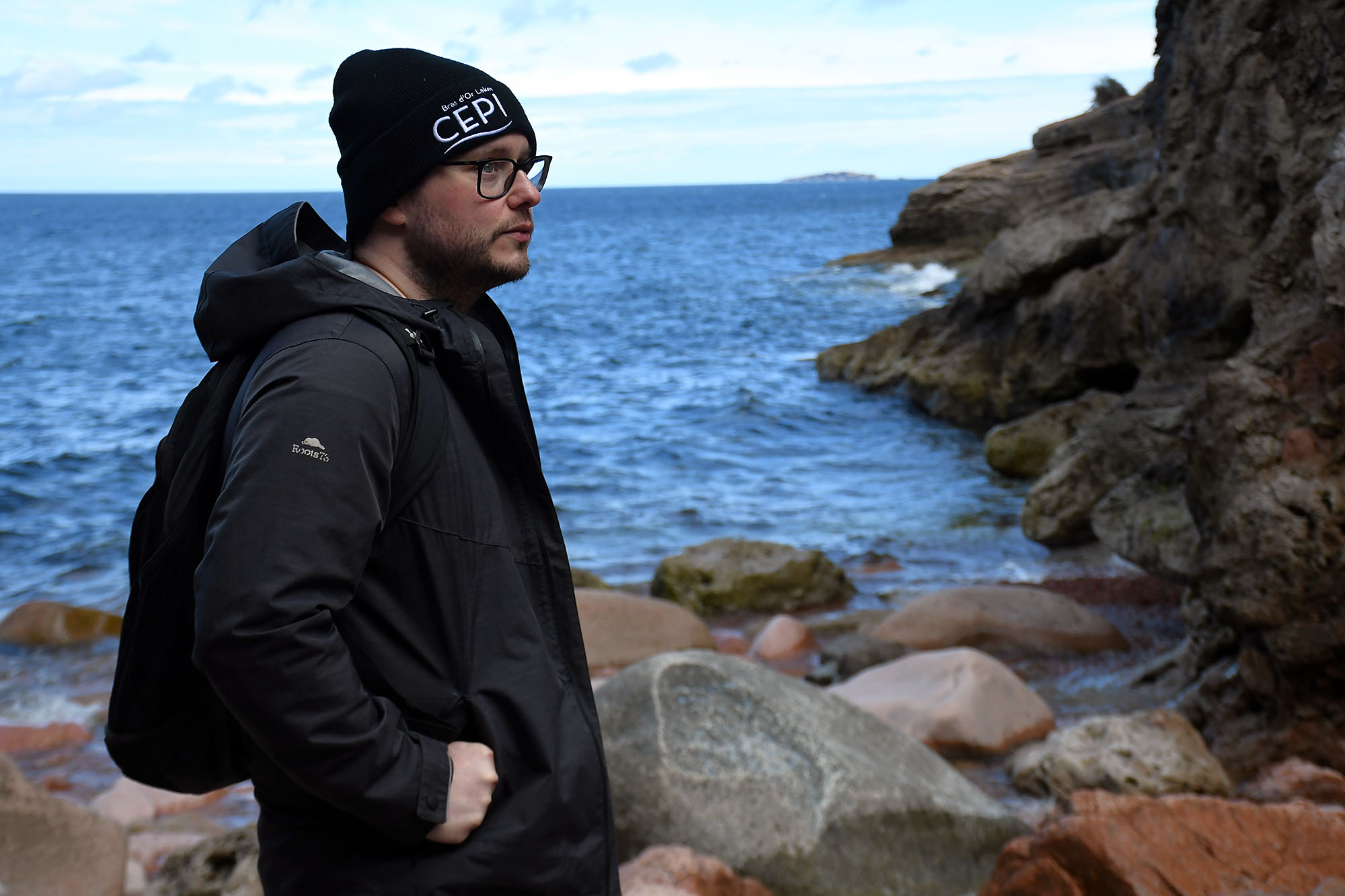
caption
Tristen Simon, IPCA project manager with Unama’ki Institute of Natural Resources, stands near the entrance of Kluskap Cave in Unama’ki/Cape Breton, N.S. on May 13, 2026.Tristen Simon’s childhood love for the outdoors continues to drive his work
The hike to Kluskap’s Cave along the eastern coastline of Unama’ki, N.S. is a welcome change from Tristen Simon’s day-to-day work.
Since taking a leadership role with Unama’ki Institute of Natural Resources (UINR), Simon spends most of his days behind a desk. Even at the foot of the trail, he sits in his car answering emails as he waits for the group hike to begin.
Simon says he loves the work he does and the opportunities it brings him, but misses spending time in the field with his team.
Today is a chance to do just that.
“It’s just been my interest my entire life, protecting nature, being outside as just a very outdoorsy kid,” says Simon.
Simon was raised in Eskasoni as a Mi’kmaw language speaker. Growing up, the rolling hills of Unama’ki, or Cape Breton, were his backyard. He remembers playing outside in the woods, a habit which he says led to his later love of hiking.
Simon received a bachelor of science degree from Cape Breton University. After graduating, he worked with the Bras d’Or Lakes Collaborative Environmental Planning Initiative. He has employed Etuaptmumk, also known as Two-Eyed Seeing, throughout his career in conservation.
“Two-Eyed Seeing is really just that marriage between Western science and Indigenous ways of knowing,” says Simon.
Simon employs Mi’kmaw concepts in his favourite part of his job: bee surveys.
“When it comes to doing conservation work, we do try to maintain those concepts of Msit No’kmaq, All My Relations, so understanding and appreciating just the world and all the ecosystems,” says Simon.
While some researchers will capture amu’k, or bees, to bring back to the lab, UINR sticks with field observations when possible. This helps them maintain their relationships with amu’k and the land.
Soon, summer will be here, and Simon will turn on what he calls his “bug-eyes” and “bug-ears.”
It takes him only a few seconds to identify amu’k as they whizz by. After many years of tuning his bug-ears, he can now tell different species apart just by hearing the pitch of their wings buzzing past his ear.
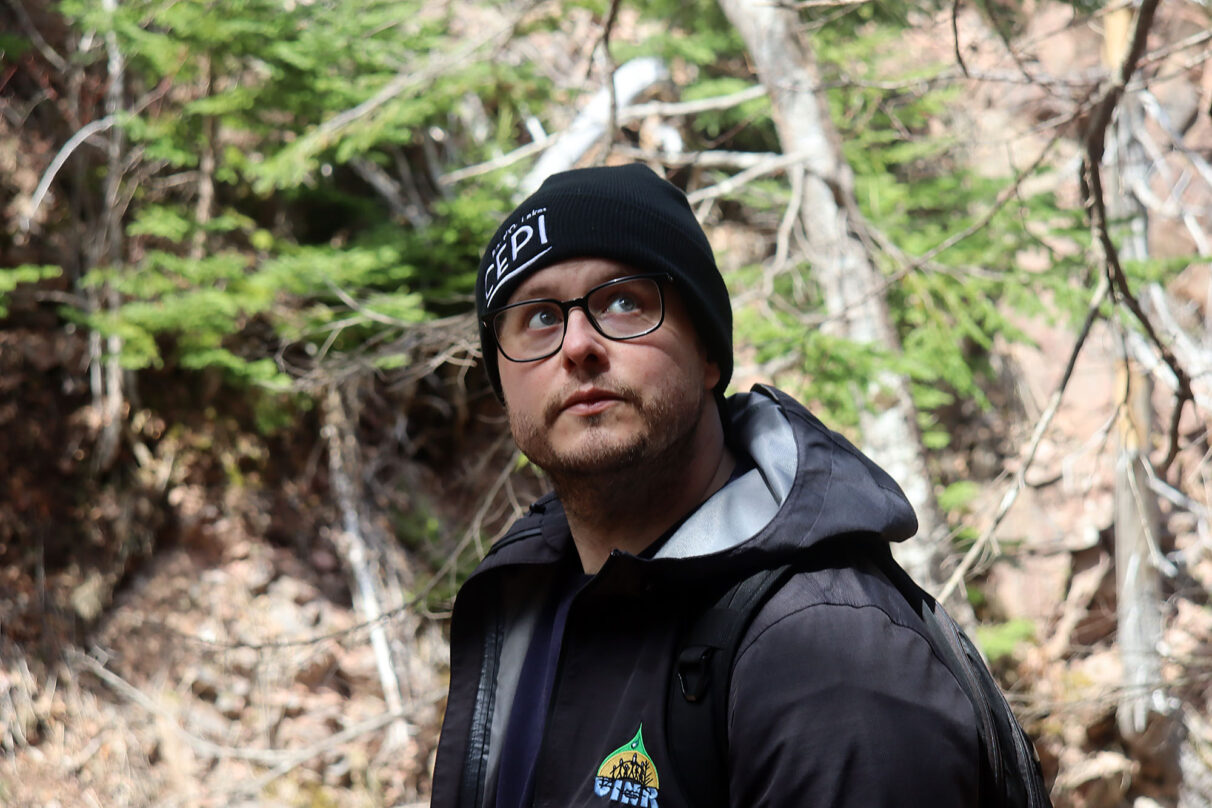
caption
Tristen Simon on a hike in Kluskap Wilderness Area in Unama’ki, also known as Cape Breton, N.S.Simon has been chasing amu’k less often since taking up his new role as UINR’s project manager for Indigenous Protected and Conserved Areas (IPCAs).
IPCAs are lands and waters where Indigenous governments take the lead in conservation and protection. UINR is one channel through which Mi’kmaq administer these areas.
“It’s still a bit in its infancy, but we protect areas based on either a cultural value, some related spiritual value or maybe a conservation value,” Simon says. “Here with this developing IPCA, the Kluskap Cave and adjacent wilderness area, this is more about culture. This is protecting a culturally significant spot to the Mi’kmaq, based on the stories of Kluskap.”
Clifford Paul, a Knowledge Keeper at UINR who led the hike, says Mi’kmaq consider Kluskap’s Cave the centre of the universe.
The ocean-side cave in Unama’ki is a sacred site named after a Mi’kmaw cultural hero.
“Kluskap had to leave us, because people from other lands would not be able to interpret the stories and the legends of what Kluskap is all about,” Paul says.
In Mi’kmaw tradition, this area is where Kluskap is expected to return.
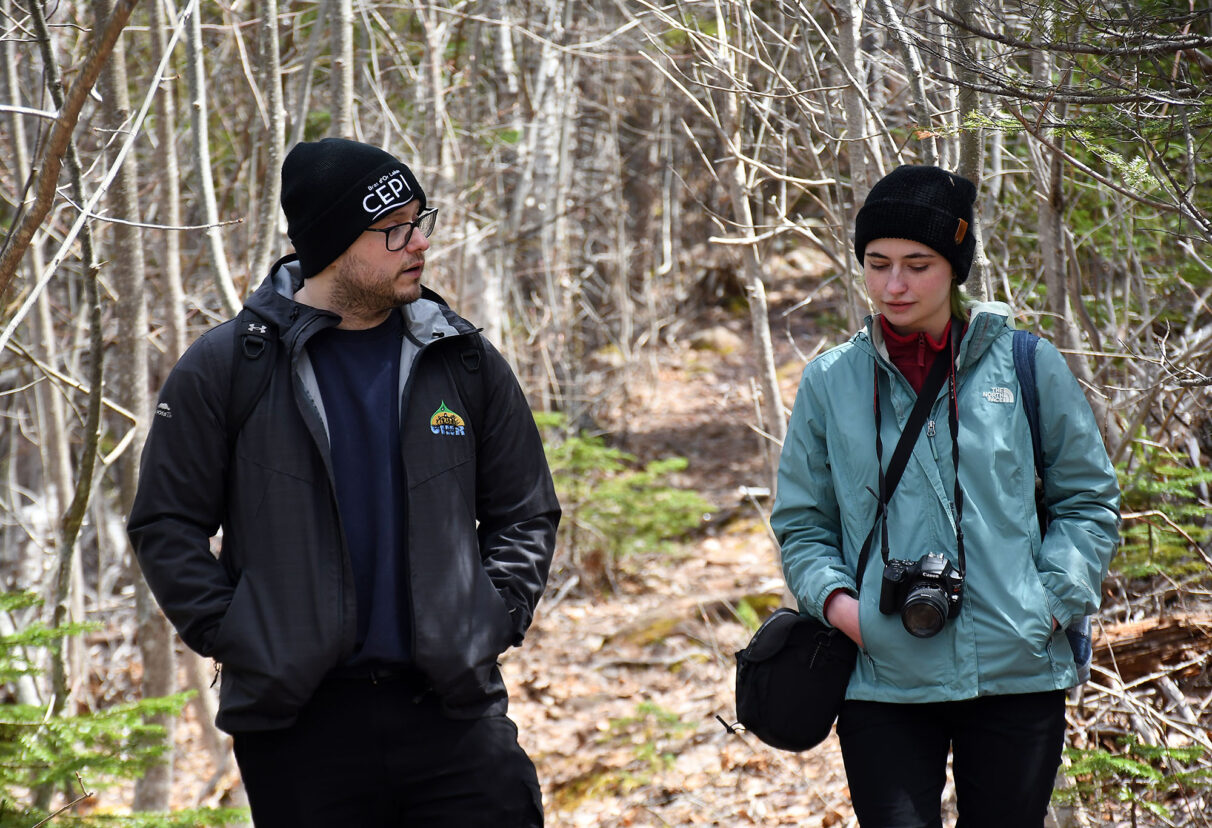
caption
Tristen Simon, a project manager with Unama’ki Institute of Natural Resources, speaks to reporter Holly Lemmon while hiking to Kluskap Cave in Unama’ki/Cape Breton, N.S., May 2026.On the journey to the centre of the universe, Simon brings up the rear of the hiking group to make sure no one gets lost. He describes himself as the “sweep.” He waits for people who get distracted or fall behind to start moving at their own pace before continuing.
Tony Sylliboy, a Land Guardian with Eskasoni Fish and Wildlife Commission, has worked with Simon in the past.
“Tristen, yeah, he’s a hard worker,” he says. “Gets things done.”
He recounts a day they trudged through water in hip waders.
“It was just a really bad day,” Sylliboy says. “You’re sweating and then all of a sudden you’re freezing. It was terrible, but he was just going.”
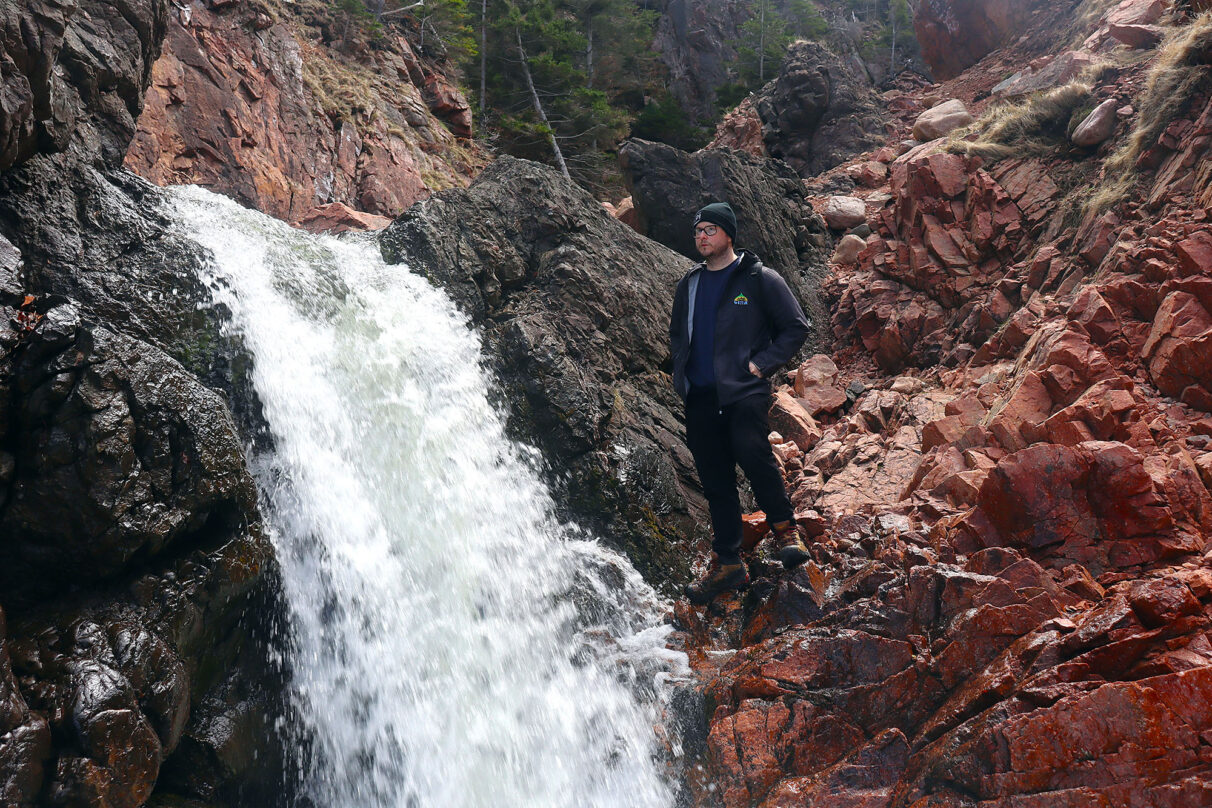
caption
Simon admires the view near Kluskap’s Cave.At the climax of the hike, Simon manages to cross a stream without getting his shoes wet. He then helps others navigate the slippery rocks.
At Kluskap’s Cave, where a waterfall meets the sea and the cliff face of the one of the Stone Maidens dominates the view, the group enjoys a packed lunch while Simon answers work emails.
At the very least, this hike allows him to bring the office to one of his favourite sites. The mouth of the cave is guarded by the ocean. In warmer weather, he would take the plunge.
“Swimming around the bend and getting into the cave, it’s really just amazing,” he says.
Standing on the shore, Simon casually identifies the yellow blur of an amu, a bee, no one else noticed.
About the author
Holly Lemmon
Holly Lemmon is a journalism student and freelance journalist born and raised in Nova Scotia. She is currently pursuing a combined honours degree...

Peter Shokeir