
Mi’kmaw policy leader welcomes budget spend on First Nations housing and infrastructure
10-year, $32 billion federal commitment allows for better planning, says John G. Paul
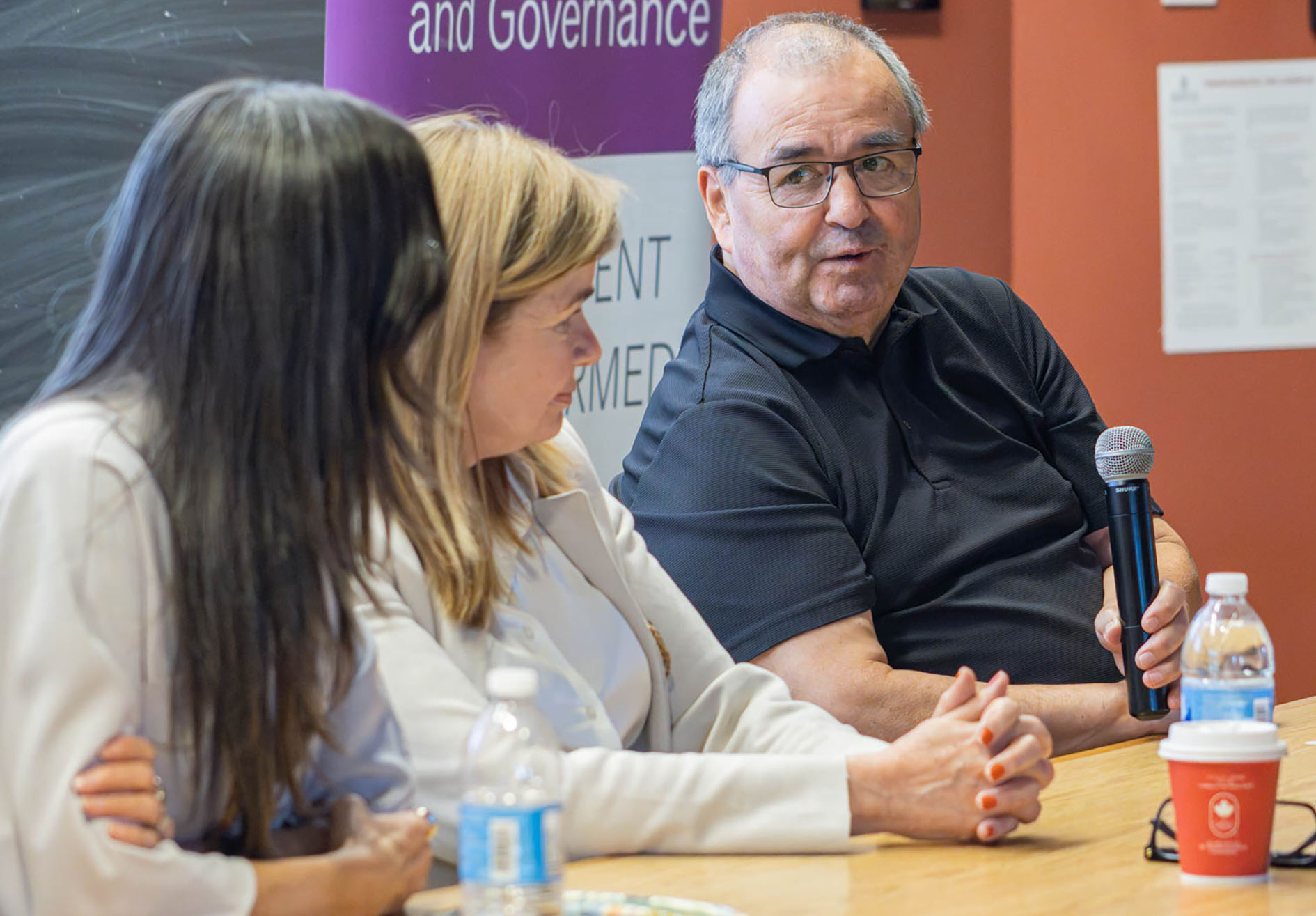
caption
John G. Paul, executive director of the Atlantic Policy Congress of First Nations Chiefs Secretariat, speaks at a panel on Mi'kmaq treaty rights at University of King's College in October 2026.This year’s federal budget commitment of $32 billion over a decade to First Nations reserves takes steps toward addressing the poor quality of infrastructure, but only addresses about 10 per cent of “the infrastructure gap.”
“It’s one of the things that makes your life stable, basically: having a home,” said John G. Paul, the executive director of the Atlantic Policy Congress of First Nations Chiefs Secretariat. “And the quality of that home helps in many other ways in terms of education, health services, and so on.”
On reserves, people are six times more likely than non-Indigenous people to live in homes in need of repair.
The budget allocates $11 billion to improving housing and $1.7 billion to new construction. Another $18.5 billion will go toward building and improving infrastructure like roads, schools and health facilities.
“I’m glad they’re contributing a substantial amount over the next decade,” said Paul. “It doesn’t close the infrastructure gap, though. It makes an investment to address the gap, but it’s only about 10 per cent of what the gap is.”
A 2023 report from the Assembly of First Nations estimated that it would cost $349.2 billion to ensure First Nations and non-Indigenous communities had access to similar infrastructure by 2030.
‘It’s one of the things that makes your life stable, basically: having a home.’
John G. Paul
This year’s budget is the first time the federal government has committed to a decade of funding, something First Nations have been advocating for.
“It’s really a good thing that it’s there for the long term, because I think it’ll give the confidence back to communities to come up with realistic plans for what they can actually do with the financial resources over the next decade,” said Paul.
On-reserve housing has been a long-standing issue in Canada. In 2024, the federal auditor general raised concerns about housing in First Nations communities for the fourth time in 20 years, concluding that “Indigenous Services Canada (ISC) and the Canada Mortgage and Housing Corporation (CMHC) have made little progress in supporting First Nations to improve housing conditions in their communities.”
The same audit found that neither ISC nor the CMHC had prioritized funding for communities with the greatest housing needs.
Funding delivery details scant
In an email response to questions about how the new funding will be administered, Department of Finance spokesperson David Barnabe wrote, “I’m afraid I only have budget text for you at this time.”
The budget said a minimum of 20 per cent of the overall funding will go toward projects in rural, northern, and Indigenous communities. Because Nova Scotia is a relatively small province, none of its reserves are considered remote.
Paul said Mi’kmaw communities across the province are seeing population growth, which puts additional pressure on housing. “People are interested in coming back to communities,” he said.
About the author

Kendra Perrin
Kendra is a reporter from Vancouver, BC in the one-year Bachelor of Journalism at King's.
Leave a Reply