
Veterans Affairs pushed for continued support for N.S. veterans
MLAs grill federal representative on support for current, future veterans as cost of living, political tensions rise
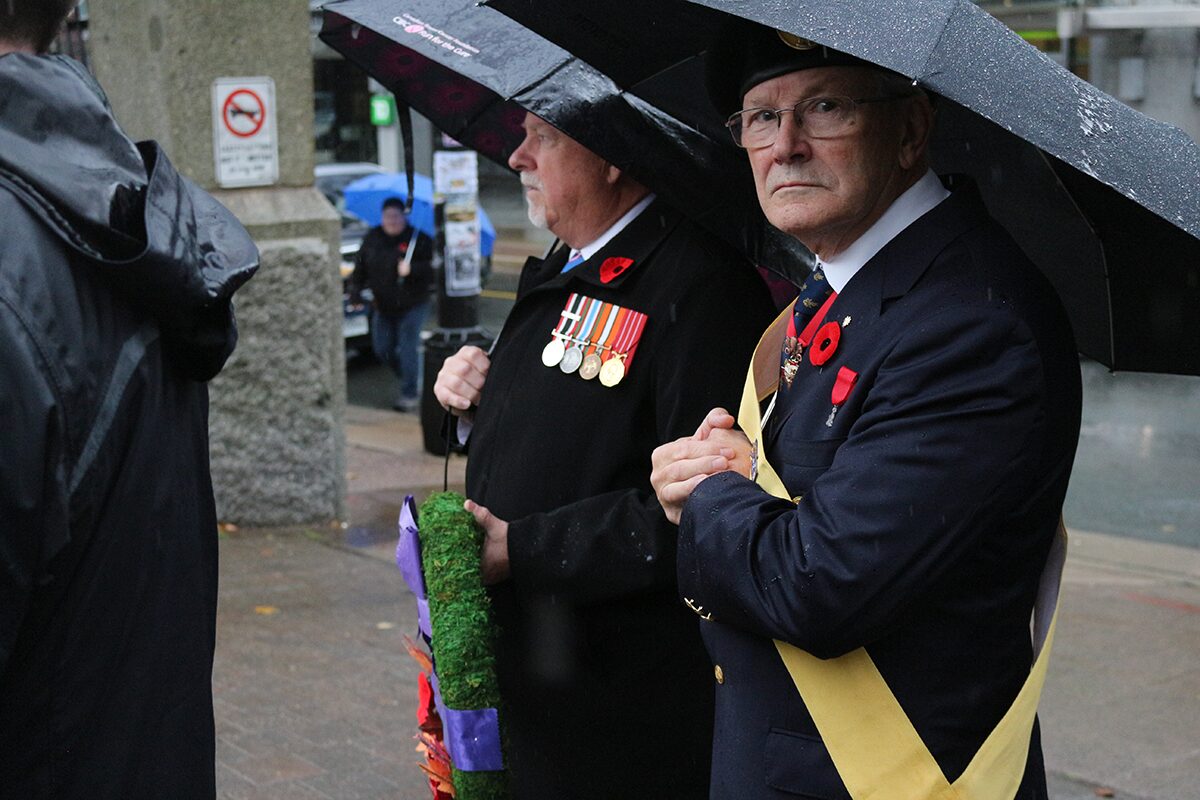
caption
Two decorated veterans enter Halifax’s Grand Parade for the 2024 Remembrance Day ceremony.Representatives from Canada’s three major political parties met in Halifax on Tuesday afternoon to discuss support for Nova Scotian veterans from Veterans Affairs Canada.
Liberal MLA Iain Rankin raised concerns about whether Veterans Affairs will be able to support an expected increase in military personnel in Nova Scotia, and the expected impact on existing support services.
Veterans Affairs official Steven Harris said it is “too soon” to know for sure, but that an increase in military size would likely increase demand for Veterans Affairs services. Harris is responsible for providing direct services to veterans and their families.
“As the government and the country enter into a very high-risk security time frame … the reality is people serving are more likely to be ill or injured.”
Veterans Affairs Canada (VAC) provides support services, pensions, and benefits for current and former members of the Canadian Armed Forces and the Royal Canadian Mounted Police.
Of the 461,000 veterans living in Canada, 194,000 turn to VAC for programs and services. About seven per cent of Canada’s veterans live in Nova Scotia, though the province only makes up about 2.5 per cent of the country’s population.
NDP MLA Suzy Hansen asked what the VAC is doing to provide support for the 33,000 veterans living in Nova Scotia.
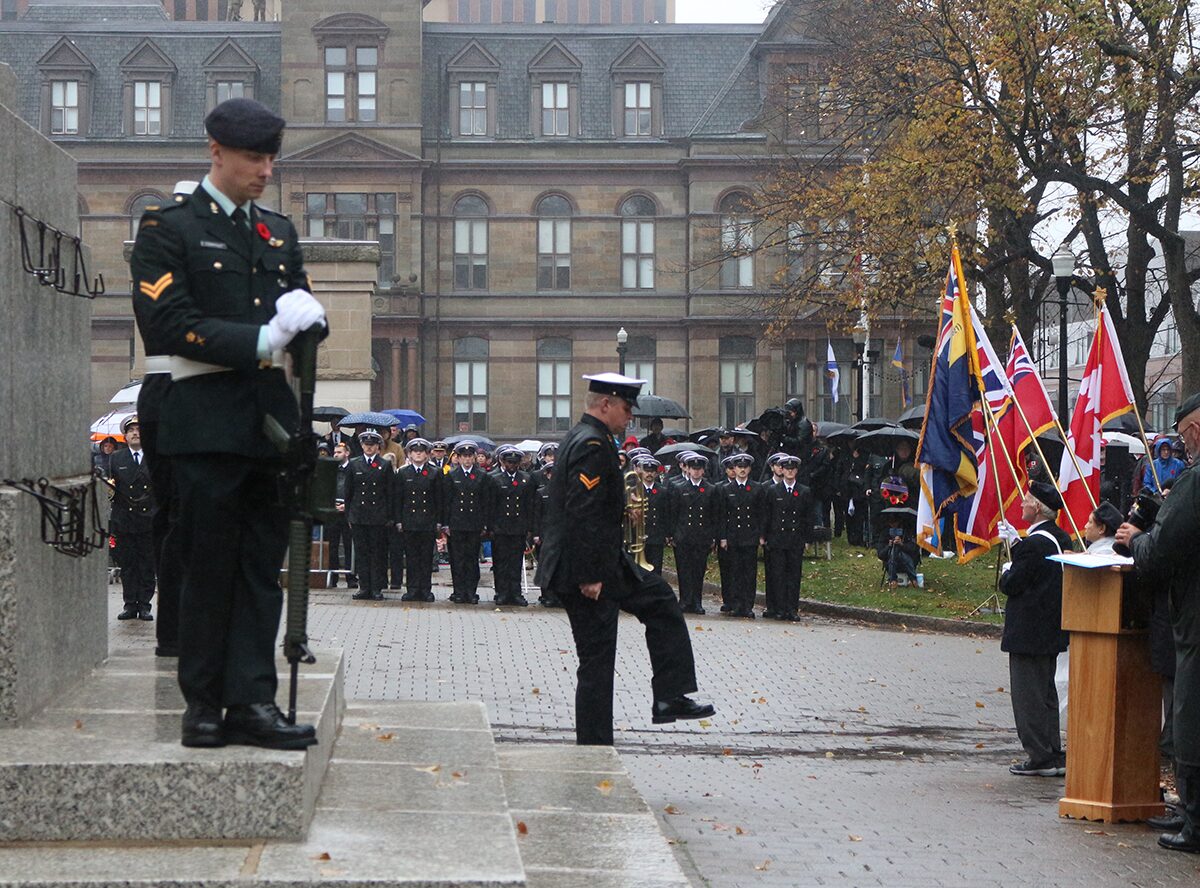
caption
Members of the Canadian Armed Forces at the Halifax Grand Parade for the 2025 Remembrance Day ceremony.Harris said that “almost $100 million” has been invested by Housing, Infrastructure and Communities Canada in the rent supplement program for veterans at risk of homelessness.
In November 2025, the federal government announced it would spend $22.6 million through the Veteran Homeless Program to support ten projects across Canada. None of these projects are based in Nova Scotia.
Hansen asked how many veterans are currently waiting for housing support. Harris said he was unaware of any waitlist.
Harris said this money is meant to “close the gap” between temporary solutions and “stable long-term housing” for veterans.
In 2024, Veterans Emergency Transition Service Canada (VETS Canada) received funding from the federal government through a program run by Housing, Infrastructure and Communities Canada.
VETS chair and co-founder Debbie Lowther told the Nova Scotia Legislature’s veterans affairs committee in September that since receiving this funding, VETS has provided rent supplements to 14 veterans in Nova Scotia.
Lowther told the committee that in 2025, the percentage of Nova Scotian veterans being supported by VETS experiencing “absolute homelessness” had more than doubled from 2022, going from eight per cent to 17.
Harris said on Tuesday the rent supplement program will run for three years, but said in his understanding that there is no particular end date for the program.
PC MLA Ryan Robicheau asked Harris about gaps in services for female veterans.
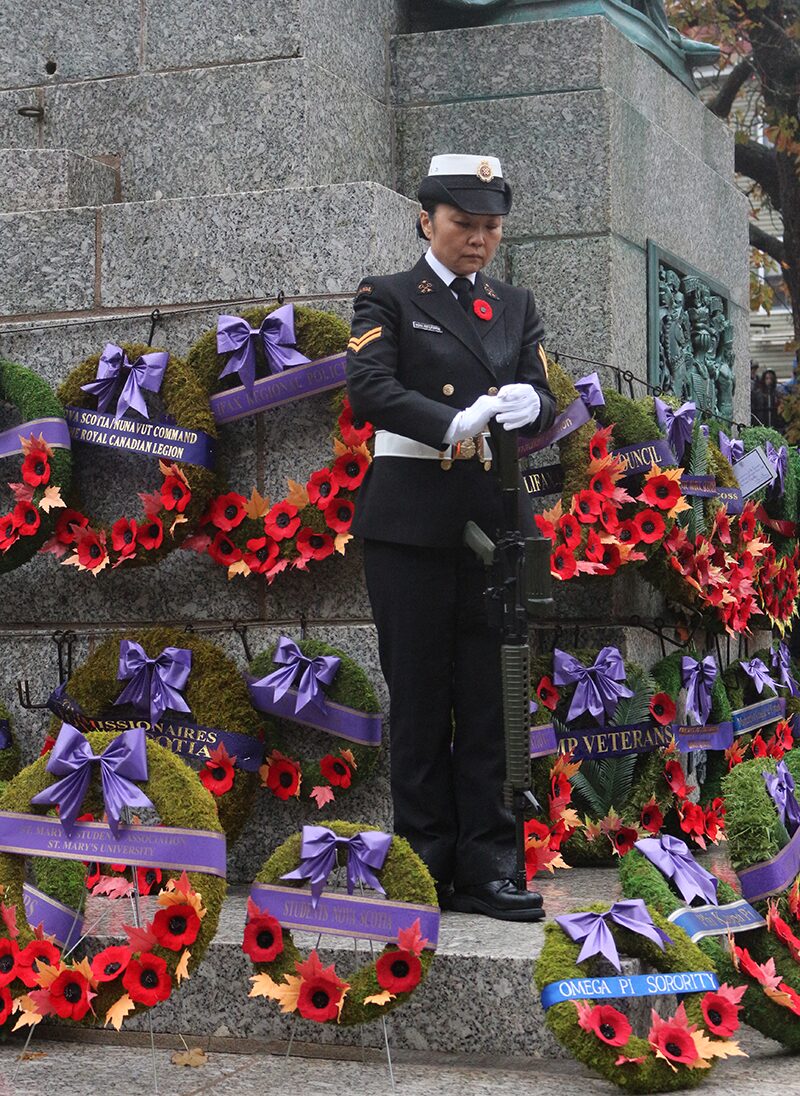
caption
A female soldier stands guard at the Halifax Grand Parade for the 2025 Remembrance Day ceremony.“Veterans Affairs was very male-dominated for a long period of time,” said Harris. “All of our evidence was based on male experience.”
Harris said a committee report with “large-scale” consultations with female veterans was done to re-evaluate how best to treat veterans who “may have had different experiences and may have different physiology.”
VAC spousal supports, Harris said, must also be re-evaluated.
“Most often since it was developed, the veteran was male, the spouse was female,” said Harris. “There was an expectation that the woman spouse at home was going to take care of a lot of the things that may be more affiliated with women’s duties at home from a model of 50 years ago. These are all things that need to change.”
“Veterans are of all ages,” said Harris. “Women, men, Indigenous, all sorts of different ages and abilities.”
“We need to make sure that they’re well aware of the fact that they can come to Veterans Affairs, and then we can support them through whatever transition they might need, whether that’s temporary or longer term,” said Harris.
About the author

Serra Hamilton
...

Leave a Reply