
Government slow to address inequities faced by women veterans, say experts
Nova Scotia can lead the way in responding to federal report, legislative committee told
caption
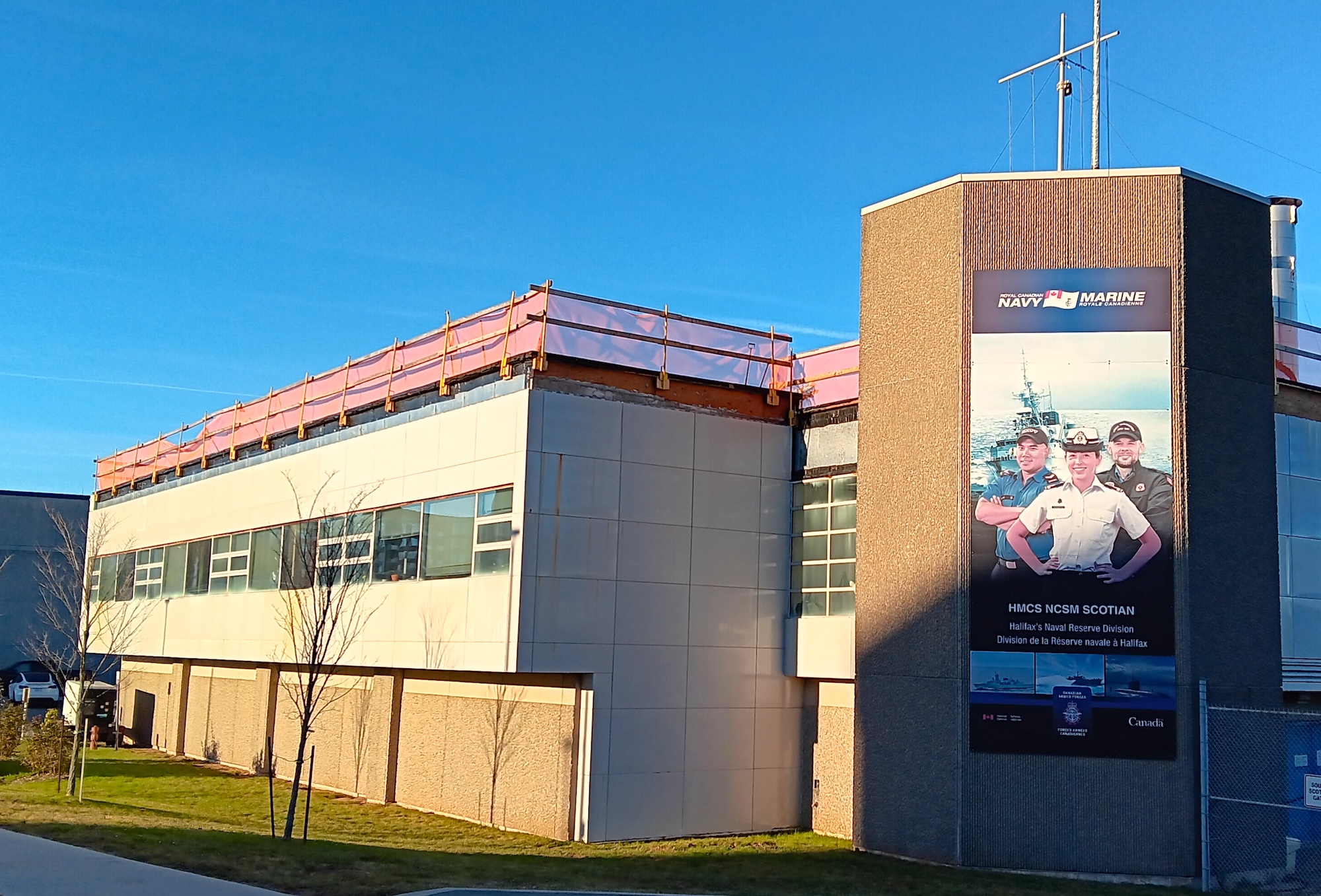
This building on Halifax's waterfront houses HMCS Scotian, the navy's reserve division. Nova Scotia has over 13,000 military personnel and is expected to grow.Two years after a landmark federal report on the inequities faced by women in the Canadian Armed Forces, experts say changes have been slow to materialize.
“There is no question we’re way better than where we were a few years ago, but is (change) fast enough?” asked Dr. Karen Breeck, a retired medical officer with 20 years of military service.
“Especially when we want to be putting so much time and energy into recruiting (service members) more and faster.”
Dr. Breeck was speaking on Tuesday at the province’s veterans affairs committee.
In June 2024, the federal committee on veterans affairs released the Invisible No More Report, which outlined gaps in serving the needs of women service members and veterans.
The report outlined 42 recommendations for change. Example recommendations included increasing research funding to study women veteran’s and servicewomen’s health, increasing access to women-specific health care, reducing the burden required to apply for benefits, and improving the fit of military equipment for women’s physiology.
On Tuesday, the province’s standing committee on veterans affairs met to discuss implementation of the report’s recommendations.
Dr. Breeck and Maya Eichler, a professor at Mount Saint Vincent University, contributed to the original report and provided expert testimony before the committee.
It was the first parliamentary report to dedicated to women veterans.
Nova Scotia is in a strong position to lead the country in implementation as the province serves as a defence hub, benefits from health care education through IWK Health and Dalhousie University, and is the only provincial legislature with a standing committee on veterans affairs, said Dr. Breeck and Eichler.
Nearly 100 women veterans contributed verbal and written testimonies to the report, and it received support from all political parties.
The federal government released a response in October 2024, agreeing with most recommendations and pledging to act.
caption
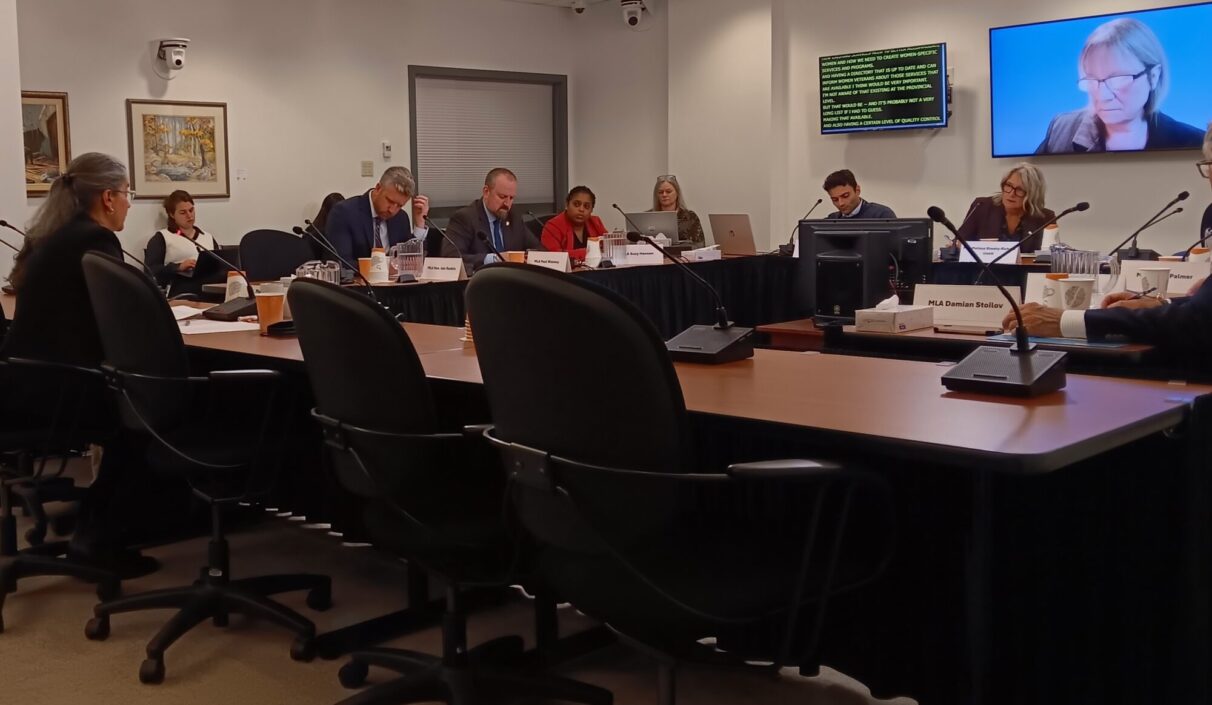
Maya Eichler, left, and Dr. Karen Breeck, on screen, testify at the Nova Scotia legislature’s committee on veterans affairs.Weak government response spurs resignations
One of the government’s responses was to establish a nationwide Women Veterans Council.
But in January five Canadian Armed Forces members of the council resigned, saying in an open letter that the “structures in place did not allow the council’s work to translate into real outcomes.”
They said the council did not have a clear mandate, had no opportunity to influence decisions and didn’t have the necessary resources to fulfill their role.
At Tuesday’s meeting at Province House, Eichler and Dr. Breeck emphasized the importance of measuring progress so the public can see what is being done.
To prevent the province from “box checking,” or prematurely saying a recommendation has been addressed, Eichler said the province should consult women veterans to judge whether change has actually been achieved.
“Veterans have repeatedly shared painful experiences for government reviews and studies, only to see recommendations all too often gather dust, while the same problems persist year after year after the changes were promised,” Dr. Breeck said.
“Women veterans want their testimony to produce practical improvements in their lives and prevent similar harms to those serving today or in the future.”
“Many of these are wicked problems. They are complicated. They are multidisciplinary. They are cross-cutting. And they don’t often fall into one person’s purview to fix. If they were easy to fix, they’d already be fixed.”
Dr. Karen Breeck
Solutions will take real co-ordination
Women veterans more frequently experience health needs such as migraines, mood and anxiety disorders, and suicidal ideation than men, according to a national survey published in 2020.
The 2024 report further underscored harms from women’s experiences with military sexual trauma, which is unwanted sexual activity in a military context.
“Many of these are wicked problems. They are complicated,” said Dr. Beeck. “They are multidisciplinary. They are cross-cutting. And they don’t often fall into one person’s purview to fix. If they were easy to fix, they’d already be fixed.”
Solutions, Eichler and Dr. Breeck said, should involve co-operation among CAF, Department of National Defence, Veterans Affairs Canada and the province. Women service members and veterans should be included at every step, to ensure their experiences are taken into consideration, they said.
“The military was set up as a system designed by men and for men,” Eichler said.
When the Armed Forces began allowing women to serve across all roles in 1989, women were expected to adapt to the system instead of the system accommodating women’s differences, said Eichler.
Women now represent one in five military service members, and Canada is among the top five countries for the highest proportion of women serving in the military, with Hungary, the United States, Greece, and Bulgaria.
Women make up about 15 per cent of the veteran population, according to the 2024 Veteran Health Survey.
About the author
Lauren Denneson
Lauren has a background in mental health research and is interested in reporting on health- and science-related topics.
Leave a Reply