
Analysis
Press *3 if you’re still confused about the data centre
Province spends over $20,000 on three online information sessions that left many questions unanswered
caption
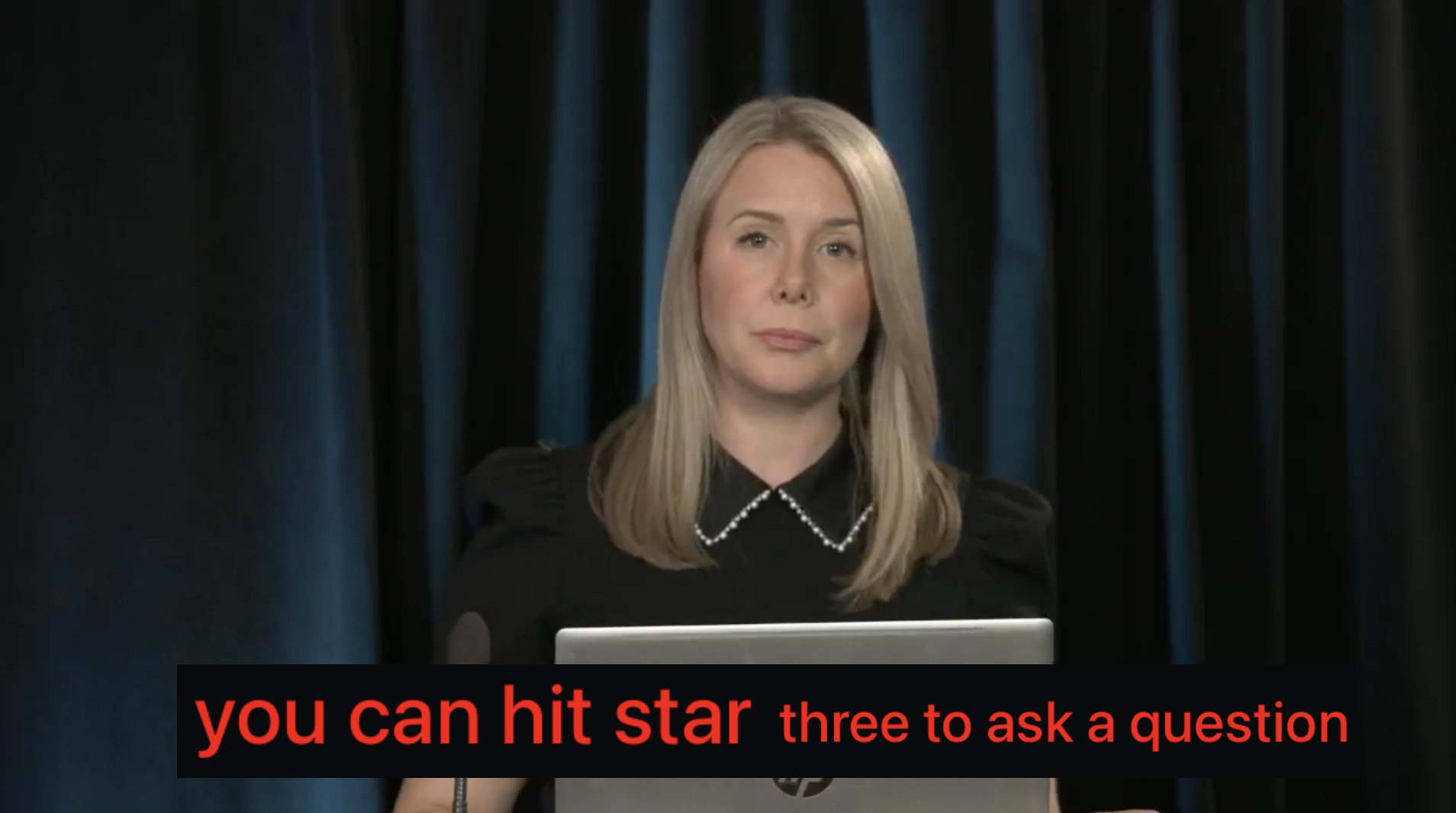
Interested Nova Scotians who received a random call were told to hit *3 to join a queue. Moderator Alyse Hand read the questions to the panellists.The province spent more than $20,000 on three virtual information sessions between Nov. 17 and Nov. 19.
In a release, Premier Tim Houston said the goal of the sessions was to address misinformation and have questions answered honestly and accurately from experts involved in EverWind’s proposed $8 billion data centre in Point Tupper.
The release came just ten hours before the first session began. Plans for the data centre were announced Oct. 16. The centre will provide computing power for American tech giant Anthropic’s AI software Claude.
The Signal reported on all three sessions, and we were left with more questions than answers. Our reporters spoke to panellists and experts to learn more about the process behind the last-minute online sessions.
“Holding online-only information sessions with short notice and pre-screened questions does little to assure Nova Scotians this project will benefit them,” said NDP energy critic Susan Leblanc.
Nova Scotians were invited to email questions to datacentrequestions@novascotia.ca.
‘I think I answered that question five times.’
Lois Landry, warden of Richmond County
Moderator Alyse Hand then asked select questions to a panel of government officials and EverWind executives.
Hand told The Signal the province received 629 questions by email. The Department of Energy and the Department of Environment and Climate Change sorted questions based on theme, she said.
Lois Landry is the warden for Richmond County, which includes Point Tupper. She answered several questions each online session. She told The Signal she wished the panel had been asked a wider variety of questions, citing the number of times questions focusing on water access were asked.
“I don’t know if the third person who asked the water question still had to have that question asked,” she said. “I think I answered that question five times.”
Landry said the province notified her of the themes that some of the questions would touch on.
Hand didn’t confirm whether panellists were sent the questions beforehand.
Premier Tim Houston told reporters Thursday that people repeatedly asked questions that had already been answered. He said people “ran out” of questions when experts were still available to answer them.
The sessions also featured live questions from callers who were contacted at random by the province.
Landry says these questions were “total surprises.”
Hand told The Signal the province called around 50,000 Nova Scotian numbers. Those who received a call heard a message telling them to call a toll-free number during the session and join a queue of callers by pressing star three.
Eleven live-callers asked a question across the three sessions.
The Signal spoke with Rob Barrs, co-founder of MODUS, a Vancouver-based company that advises local governments on public engagement.
He says random calling isn’t something he’s heard of doing, though it may not be a “terrible idea.”
“You are hopefully going to get a good range of questions that the typical Nova Scotian may wish to ask,” he says.

caption
Reporters from The Signal sent questions to datacentrequestions@novascotia.caThe sessions were livestreamed through the province’s Facebook and YouTube pages.
According to Hand, about 1,900 people watched the sessions live and about 43,000 watched later, over the following week.
Comments on the YouTube stream were closed, but Facebook received hundreds of comments on each live session.
Landry says the overwhelming number of negative comments do not reflect the feedback she hears in person.
“I go to the grocery store, and the lady stocking shelves stops me and says, ‘Look, I’m not posting this on Facebook because I’m not fighting the crazy, but my family is really supportive’,” she says.
Ruben Zaiotti is a political science professor at Dalhousie University with expertise in social media and politics.
He says the virtual information sessions do not mirror town halls, where participants can confront decision makers.
“The fact that you have to sit at your desk with thousands of people, not really being able to show your anger, I mean, that’s a way to limit the scope of the impact of these town halls,” he says.
On Thursday, Houston referred to the online sessions as “extensive town halls with experts.” Each cost around $7,000, he said. They were “good value” for taxpayers.
He also told reporters that media coverage on the data centres appears to include more “factual evidence.
“The facts are starting to catch up with, and in many cases, overcome the emotions,” he said.
What matters most when approaching public engagement is the government’s intent, Barrs said.
“When you’re doing something so groundbreaking as this and so meaningful for the future (…) it does deserve a public conversation about it and people clearly want to be involved,” he says.
“If they want to do it properly, they would put a pause on the project,” Barrs says.
The Signal has requested the records of all the questions submitted to datacentrequestions@novascotia.ca.
About the author

Kendra Perrin
Kendra is a reporter from Vancouver, BC in the one-year Bachelor of Journalism at King's.
Nick Wells
Nick is a master of journalism student at King's. He is passionate about politics, environment and sports.

Jackie Shirokov
Jackie Shirokov is a journalist from Halifax, Nova Scotia.
Leave a Reply