
Drought in water-rich Nova Scotia: Dal researchers call for perspective shift
Half the province’s residents' primary source of drinking water is at risk, study says
caption
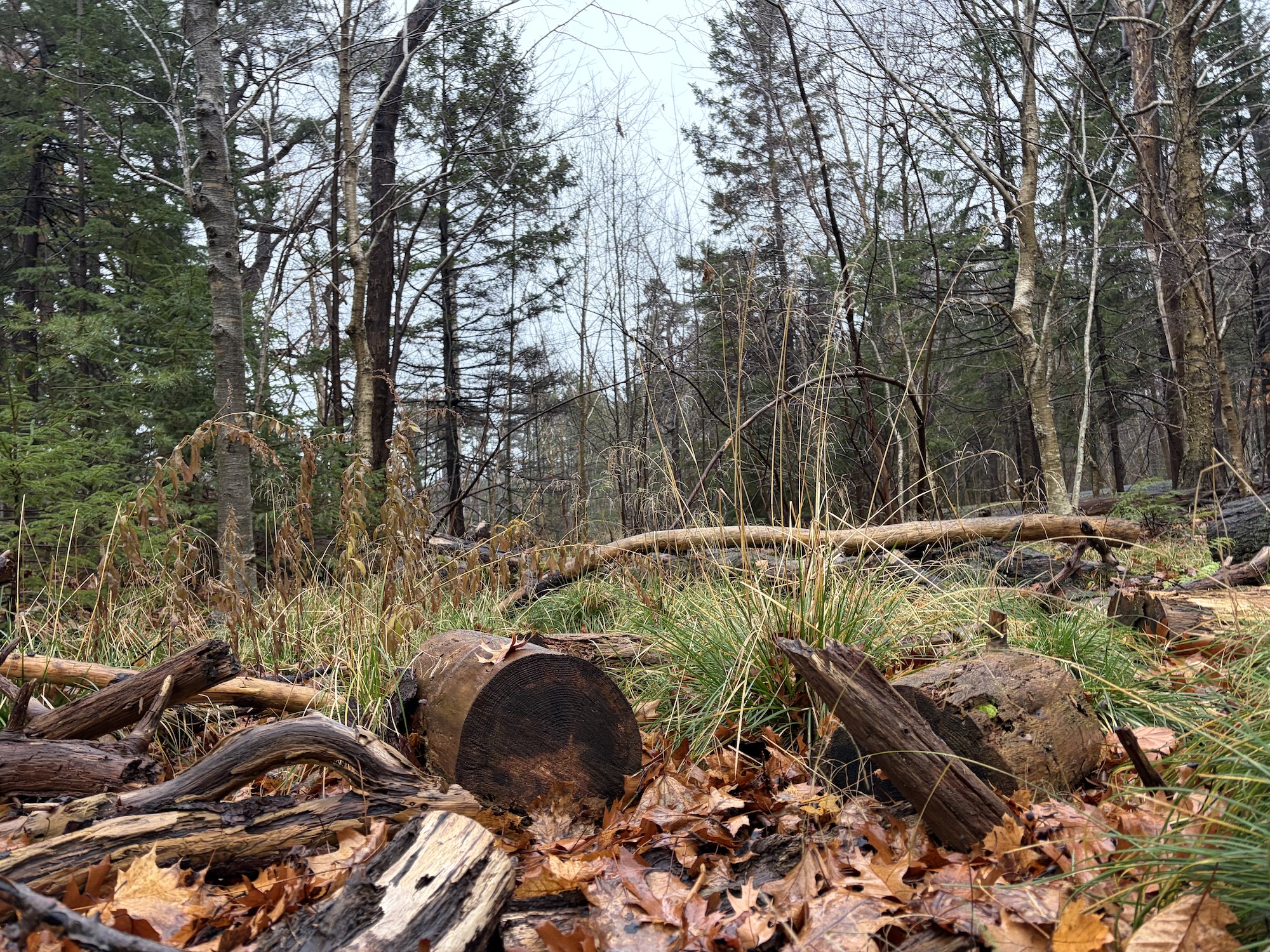
Rain falls onto a layer of fallen trees, leaves and grass in Point Pleasant Park in Halifax. We think of Nova Scotia as a wet place but that doesn't mean we are free from drought.A study carried out by the Dalhousie Coastal Hydrology Lab is making waves, and its findings make it clear: drought is a growing concern in Nova Scotia.
The coastal province is a small part of a country known for its abundance of water.
But the study’s authors say water-rich regions are not immune to dry periods.
“It’s not just about changes in precipitation. It’s also about how you view drought,” said Armita Motamedi, a PhD candidate and the study’s lead author, in an interview with The Signal on Wednesday.
Planning in advance
Barret Kurylyk, a professor at Dalhousie and Canada Research Chair in coastal water resources, was the supervising author on the study.
“We have a lot of water in Nova Scotia — that’s not really the challenge; it’s just not where we want it when we want it,” Kurylyk said.
“We’ve been really reactive to how we address water challenges in Nova Scotia,” he said.
“When we have a drought, we think about water, and then we never do again until the next drought happens.”
He said planning can help mitigate the impact of periods of drought.
“Whether that is better water storage, water management or more drought resilient water extraction systems — deeper wells, for example.”
Water storage units, such as cisterns, are a preparatory option worth considering, he said.
He said some communities have trucked in bottled water for their residents during periods of drought.
Some municipalities have also drilled centralized wells to provide sustainable access to water when individual wells are dry, he said.

caption
The study’s research team carried out their work on Dalhousie’s Sexton Campus.Data analysis shows significant trends
“Since 2016, every second or third year, there’s been what appears locally as major droughts,” Kurylyk said about the study’s findings.
The team looked at historical data to see if there were significant drought trends.
“And then 2025 was the most extensive — most severe — drought.”
When considering seasonal trends, Kurylyk said the research team found that, “in general, things are getting dryer in the fall.”
Kurylyk echoed Motamedi’s recommendation to reconsider how water is viewed.
“We assume there’s always going to be water because Canada is the place that has the most fresh water, certainly per capita in the world so we are a really wet country,” he said.
“We’re not used to dealing with water shortages, and that would certainly also be true in Nova Scotia in general.”
Rural homeowners with shallow wells
Kurylyk said the most vulnerable wells are those that are dug out and shallow. Often, wells that are drilled are deeper.
This means that periods of drought are especially significant for rural homeowners who depend on precipitation to replenish their shallow wells.
The study said about half of Nova Scotians rely on groundwater as their primary source of drinking water.
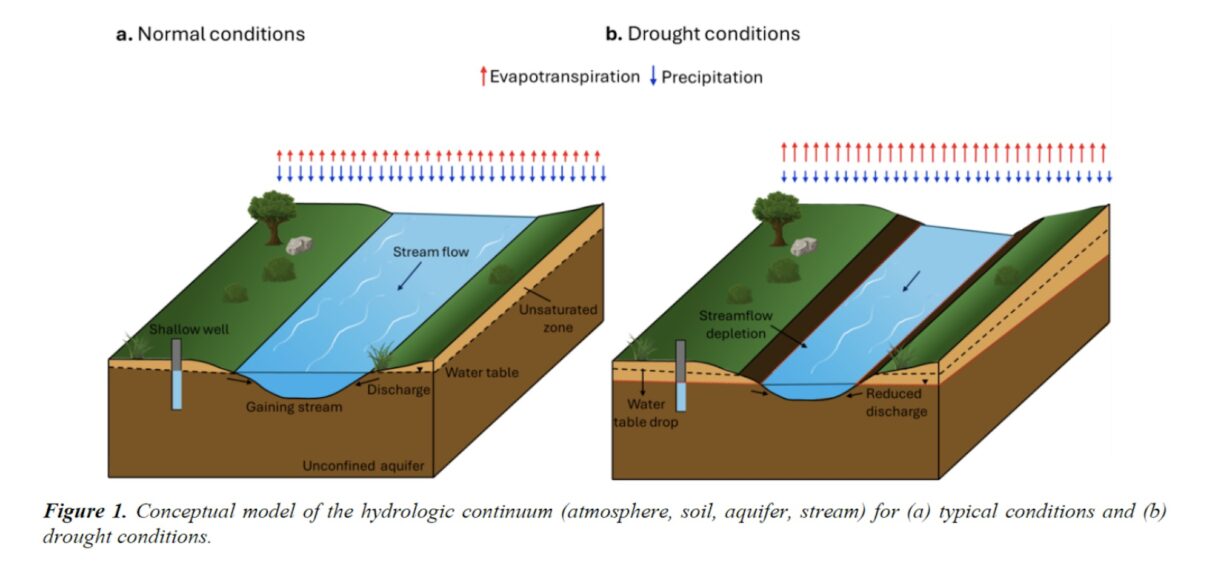
Kurylyk explained that the way aquifers replenish depends on infiltration (the amount of water that goes into the ground) and recharge (the amount of water that makes its way down to the water table).
caption
Dr. Kurylyk provided a figure to show the relationship between the atmospheric, hydrogeologic (groundwater) and hydrologic (surface water) conditions during typical conditions and drought conditions.‘We assume there’s always going to be water because Canada is the place that has the most fresh water, certainly per capita in the world so we are a really wet country.’
Barret Kurylyk, the study’s supervising author

caption
PhD candidate Armita Motamedi, the study’s lead author, holds a doctoral Nova Scotia graduate scholarship and a Killam scholarship.Motamedi was born and raised in Isfahan, a historical city built along the largest river in Iran – the Zayandeh Rud, which translates to “life-giving river.”
When asked about her motivation for studying drought, she said, “It was my lived experience.”
Most drought research focuses on warm, arid regions, Motamedi said, but her team’s analysis of drought trends in Nova Scotia challenged that tendency.
After an HRM council meeting on Nov. 10, Mayor Andy Filmore said that water protection is “increasingly a very important factor in all of the decisions we make, and conservation is a big part of that as well.”
“It used to be true, 20 years ago when I was a young planner working on the regional plan, the senior planners told me at that time that HRM will never have to worry about water. We’re blessed with an abundance of fresh water . . . well we know that’s changed now.”
Motamedi said drought is important for everyone, not just those used to living in dry climates.
She recalled a memory from her childhood home. “I could see the water from my window,” she said of the Zayandeh River. She said the river used to flow year-round. Now, the riverbed runs dry for years at a time.
About the author

Casey Balon
Casey is in the Master of Journalism program at University of King's College.
Leave a Reply