
Nova Scotia forest report is overdue, say critics
DNR is less informative since 2016 report: forestry author
caption
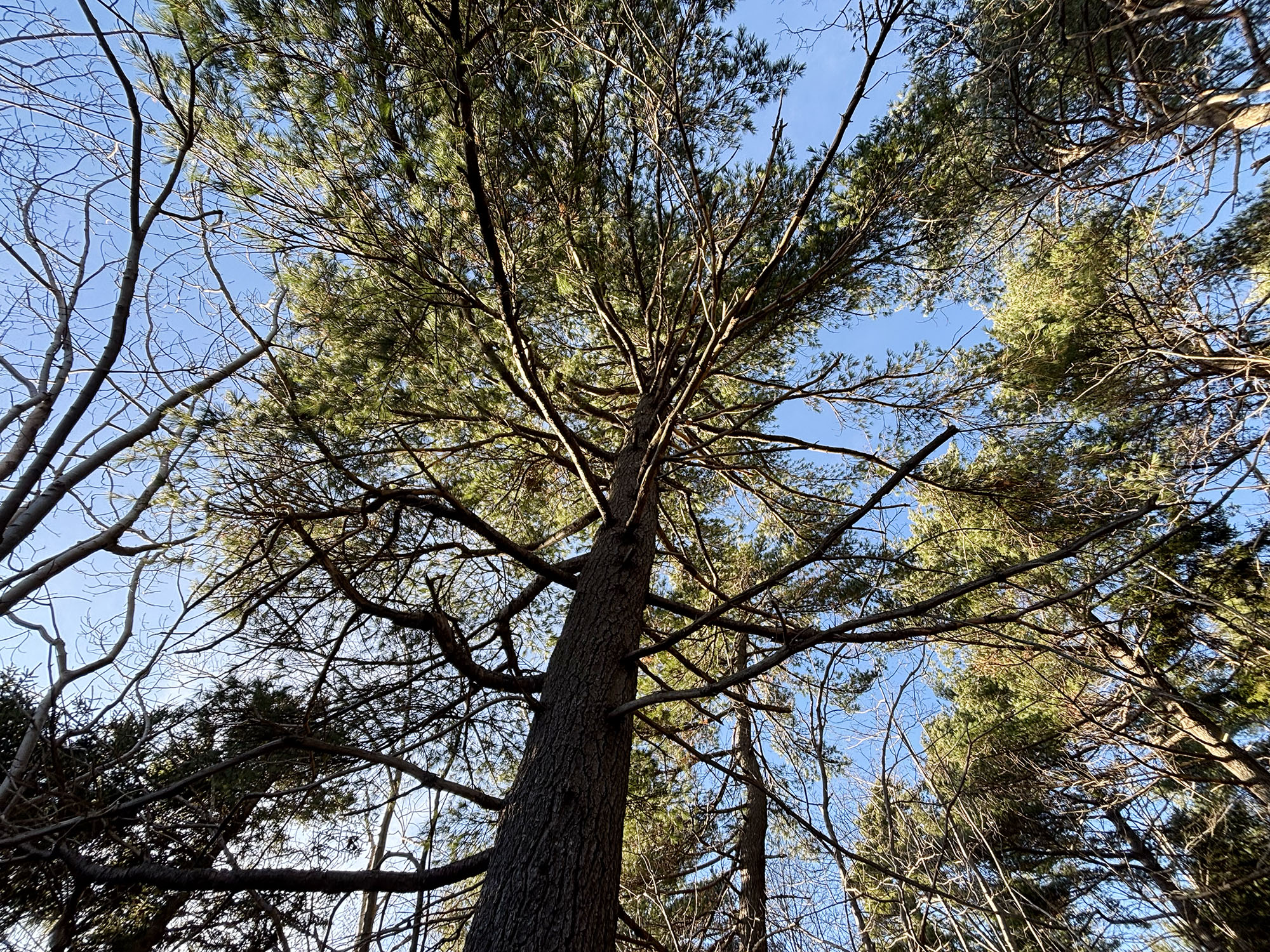
Pine trees are one of the primary conifers harvested in Nova Scotia. The province hasn't issued a state of the forests report in 10 years.Nova Scotia’s Department of Natural Resources has not released a “state of the forest” report since 2016, and critics say they have not implemented recommendations laid out two years later.
In 2018, an independent review (often referred to as the Lahey report, named for the report’s author and former University of King’s College president William Lahey) gave recommendations for forest protection.
The Tim Houston government said they accepted those recommendations when they assumed office in 2021, but author and activist Nina Newington says they have not followed through on these recommendations.
Newington, who has written about Nova Scotia forestry for The Halifax Examiner, says the Lahey report “calls for a provincial forester, and for DNR to provide more information to the public . . . none of that is happening. In fact, I would say quite the opposite.”
In an emailed statement, the Department of Natural Resources says state of the forest reports “are typically released about every 10 years, with the last one released in 2016. Work on an updated report is well underway, and we hope to share it with Nova Scotians in the coming months.”
In the decade since the last report, there have been hundreds of wildfires, increased drought and changes to herbicide spray reporting.
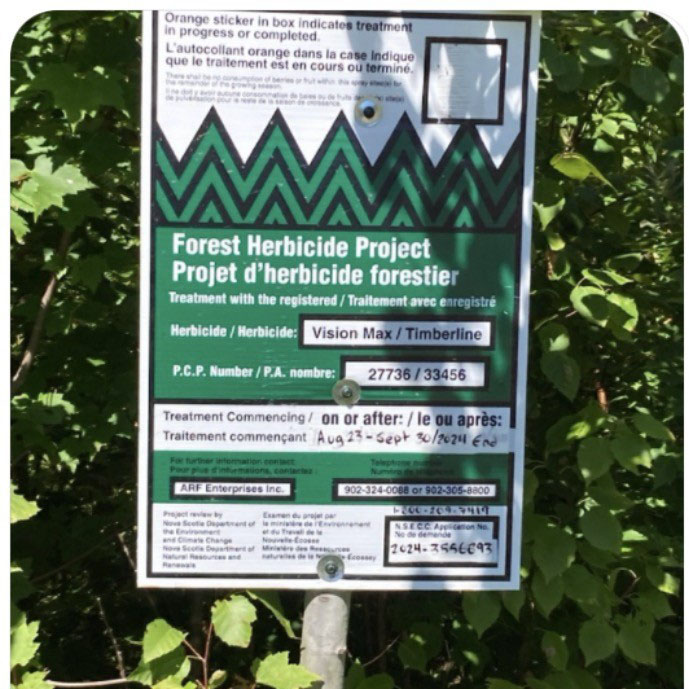
While maps depicting where glyphosate-based herbicide spraying occurred were publicly available until 2023, the province now only lists companies that have received a spray permit.
caption
The Department of Environment posts signs in the forest showing where spraying is going to occur.“It’s very hard for people to even figure out whether the property next to theirs is scheduled to be sprayed,” said Newington. “Now they put out so little information that it’s extremely hard for people to work out unless they happen to bump into a sign that’s often buried in a thicket of saplings.”
Anthony Taylor, a professor of forestry and environment at the University of New Brunswick, says that glyphosate-based herbicides help conifer trees like spruce grow. They also kill some of the hardwood trees that inhibit spruce growth, and there are indirect climate impacts.
“It’s not like the glyphosate itself doesn’t have any impact on climate change,” Taylor said. “I just see it as a tool in the toolbox, but we just have to be cognizant and aware of how much we use it.”
Sections of the 2016 state of the forest report notes that forest managers should be aware of the impacts of their actions on climate change.
“If you want to help mitigate climate change by promoting more forests . . . that are able to sequester more carbon, then maintaining diversity, specifically maintaining those hardwoods is important,” said Taylor.
Marcus Zwicker, an executive at Freeman Lumber, a business based in Greenfield, Queens County that received a spray permit this year, says that his operation sprays glyphosate every year, but individual woodlots might only be sprayed every 50 to 80 years, and “it gives those seedlings that you plant the greatest chance of survival.”
Zwicker thinks the province doesn’t release a state of the forest report more often because “it would show that we’re drastically underutilizing our forest resource in the province. We’re harvesting far less than what we’re growing every year and that our actual natural mortality from insects, windthrow, disease far exceeds our harvest levels.”
While he would like to see the state of the forest reports more frequently, Zwicker says it “doesn’t really have any impact on our business if we don’t,” as the majority of the forests they work on are privately held.
About the author

Kendall Nestor
Kendall is a King's Bachelor of Journalism student. She is passionate about politics and pop culture.
Leave a Reply